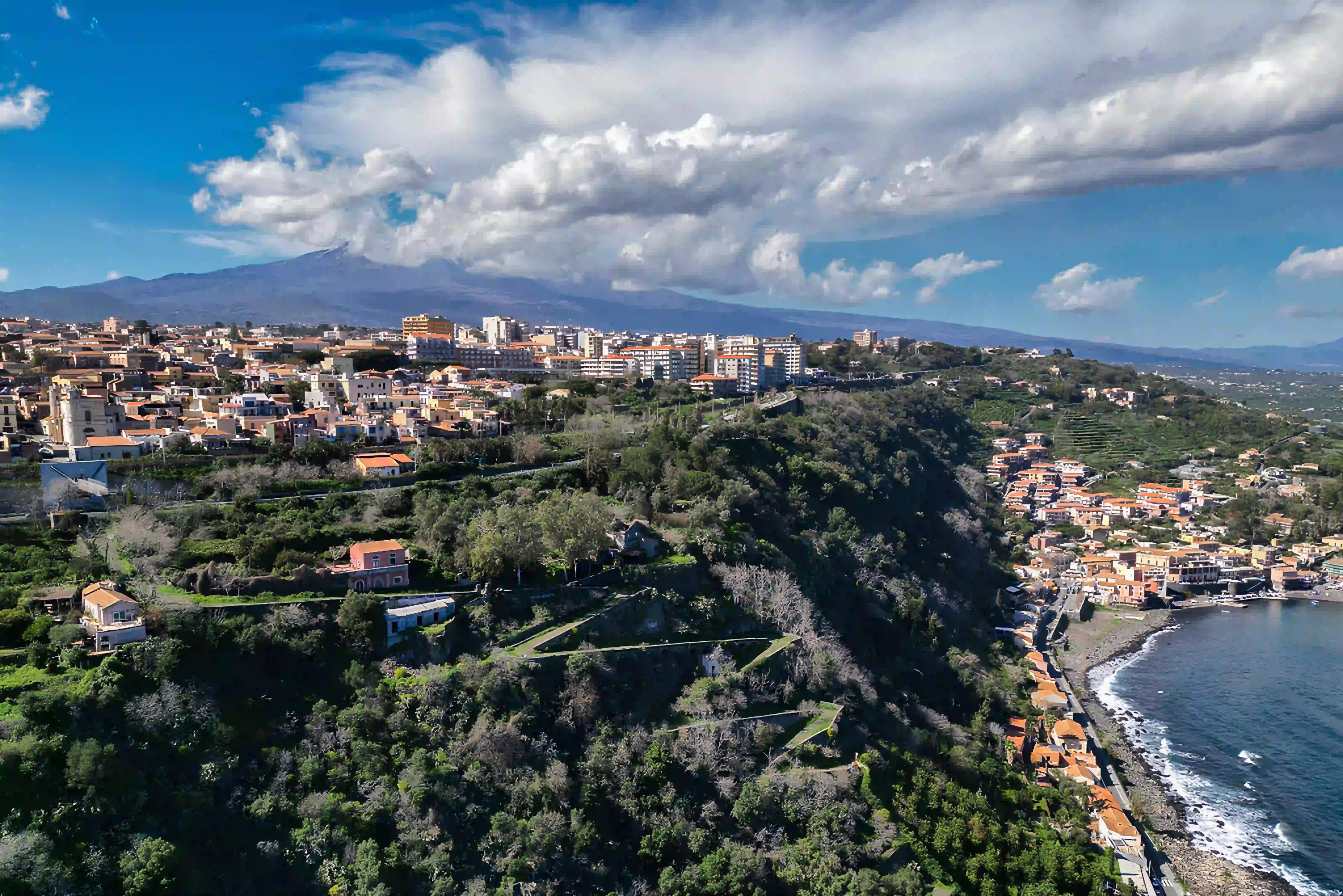
In the heart of the Etna territory, between Mount Etna and the sea, lies Aci Sant’Antonio, the “City of the Sicilian Cart.” Legend has it that, like the other Aci towns nestled in the lushest greenery of Sicily, it traces its origins back to the mythical Xiphonia, and its name is connected to that of the shepherd Aci mentioned by classical sources. Beyond legend, historical records date back to 1169, when the first settlement in the area of Greek origin (“Jachium”) was destroyed by an eruption: the inhabitants of the devastated area, retreating partly to a verdant district, gave rise to the village of Casalotto.
Almost five hundred years later, following an increasing demand for autonomy, the village obtained from the Viceroy of Palermo its separation from Aquilia (today Acireale), which had grown to incorporate several centers that over time managed to assert their self-determination. Thus, Aci Sant’Antonio was born, which continued to grow, earning the epithet “totius Acis mater et caput.” In 1826, a Royal Decree then separated it from Aci San Filippo and Aci Catena, granting it the status of head of the district. The 18th century represented a flourishing period, especially in trade, with the prosperous development of cart drivers giving rise to the art of the Sicilian cart, from construction to decoration, which reached its peak over the decades thanks to the internationally renowned master Domenico Di Mauro, who passed away at the age of 103 in 2016. The cart, having become almost a canvas for artists whose names have crossed seas, the Alps, and continents, now has a dedicated museum, which, in addition to several highly valuable specimens, also preserves a small workshop where some young and already established masters work. Finally, the definitive configuration of the municipality dates back to 1951, the year of the detachment of the Valverde territory.
Today, the historic center radiates from one of the most important palaces, which has also served as a film set: Palazzo Riggio-Carcaci, from which a street, Via Vittorio Emanuele, begins and, if traveled in its entirety, would lead all the way to Mount Etna. Ideally, however, the street, passing through an intersection known as Quattru Cantuneri (with buildings featuring a typical Sicilian urban motif, with symmetrical windows, corbels, and balconies), a former cloistered convent from 1812, and a marvelous example of Baroque architecture such as Palazzo Puglisi (with a main entrance whose stone bears the year 1799), culminates with the façade of the Church of San Michele, which on its right faces the Church of San Biagio (with an irregular façade that makes its structure captivating) and on the left Piazza Maggiore and the third and most important of the nearby central places of worship, the imposing Mother Church with its façade (designed by architect Battaglia) divided into two levels with semi-columns connected by pediments.
The church is dedicated to the patron saint, Anthony the Abbot, celebrated on January 17 and honored every other summer with a grand event capable of attracting thousands of devotees: in August, with its ancient statue, the four candelore—enormous works of art typical of the Catania area—are carried through the streets by several bearers. One of these, considered the most imposing in the territory, is called ’U Tronu, and its bearers are admired as much as the structure itself.
Finally, numerous historic and religious buildings are scattered throughout the territory, which, with its fifteen square kilometers, almost reaches the Ionian coast and enjoys the mountain air.
Today, the historic center radiates from one of the most important palaces, which has also served as a film set: Palazzo Riggio-Carcaci, from which a street, Via Vittorio Emanuele, begins and, if traveled in its entirety, would lead all the way to Mount Etna. Ideally, however, the street, passing through an intersection known as Quattru Cantuneri (with buildings featuring a typical Sicilian urban motif, with symmetrical windows, corbels, and balconies), a former cloistered convent from 1812, and a marvelous example of Baroque architecture such as Palazzo Puglisi (with a main entrance whose stone bears the year 1799), culminates with the façade of the Church of San Michele, which on its right faces the Church of San Biagio (with an irregular façade that makes its structure captivating) and on the left Piazza Maggiore and the third and most important of the nearby central places of worship, the imposing Mother Church with its façade (designed by architect Battaglia) divided into two levels with semi-columns connected by pediments.
The church is dedicated to the patron saint, Anthony the Abbot, celebrated on January 17 and honored every other summer with a grand event capable of attracting thousands of devotees: in August, with its ancient statue, the four candelore—enormous works of art typical of the Catania area—are carried through the streets by several bearers. One of these, considered the most imposing in the territory, is called ’U Tronu, and its bearers are admired as much as the structure itself.
Finally, numerous historic and religious buildings are scattered throughout the territory, which, with its fifteen square kilometers, almost reaches the Ionian coast and enjoys the mountain air.
The feast of the patron saint of Aci Sant’Antonio, Saint Anthony the Abbot, is a deeply felt celebration that takes place every year in January, on the solemnity of the hermit of the Thebaid, and every two years in August, on the third Sunday of the month, when the event known by the locals as “’A festa ranni” is celebrated.
It is a patronal festival with very ancient origins, actively involving the entire local community. During the celebrations, managed every two years by a different organizing committee, the statue of the Saint is carried in procession through the streets of the town, accompanied by songs and prayers, and includes, among other things, the blessing of animals, over which Saint Anthony is traditionally considered protector.
The central festive day begins with the ringing of the bells and cannon fire. This is followed by Eucharistic celebrations and the blessing of bread, with the climax being the unveiling of the statue of the Saint, which is displayed for the veneration of the faithful.
The evening procession then sees the statue of Saint Anthony the Abbot carried on an artistic “vara,” a decorated platform with Corinthian columns, arches, and silver lamps. Along with the “vara,” the four cerei—the “candelore,” enormous wooden works of ancient historical memory—parade through the streets of the town center, representing four civic categories: the Peasants’ Cereo, also known as “’U Tronu” for its size, making it the largest in the territory, dating back to 1896; the Master Artisans and Workers’ Cereo, dating back to 1911, also called “’A Signurina”; the Cart Drivers/Merchants’ Cereo, also from 1911, which preserves elements recalling the Sicilian cart; and finally, the Farmers’ (or Employees’) Cereo, built in 1947, also called “La Bomboniera” for its refined style. It is customary that, during a grand fireworks display, the cerei perform dances, with the bearers almost competing to execute the best movements for an extended duration, despite the weight of the works they carry. At the end of the fireworks, each cereo is positioned in front of the saint’s platform as a sign of devotion. A truly spectacular event, capable of attracting a large number of visitors.

Visitare le Aci significa immergersi in un angolo di Sicilia incantevole in grado di concentrare una ricchezza di attrazioni e peculiarità così vicine da avere ben pochi eguali nel mondo per unicità. Incastonate tra il blu del mar Jonio e l’imponenza dell’Etna con le sue piste, i suoi rifugi e i suoi scorci mozzafiato, le terre di Aci rappresentano un inimitabile mix di natura, cultura e tradizione.
You can be swept away by the joy and colors of the most beautiful Carnival in Sicily, set in the open-air museum that is the historic center of Acireale—the city of a hundred bell towers, also renowned for its refined Baroque style and majestic basilicas. At the same time, you can embrace the contemplative silence of the Hermitage of Sant’Anna in Aci Catena, the Sanctuary of Our Lady of Valverde, or the evocative 18th-century life-size Nativity scene set within one of Aci’s lava caves.
You can embrace the sea along the Acireale coastline, with its diving spots, fishermen and their boat tours, as well as its watchtowers and natural pools, for a summer that here lasts at least five months each year. You can relax in farmhouses and elegant villas in the Valverde area or ride along the cycling paths of Aci Bonaccorsi and Aci Sant’Antonio—the town of artists and an unmissable stop for its Museum of the Sicilian Cart. You can experience intense religious and folkloric traditions, wandering through Baroque alleys or retracing ancient paths such as the famous Chiazzette in the Timpa nature reserve, the watermill route of Aci Catena, or its Thermal Baths of Santa Venera al Pozzo.
By staying in boutique hotels or delightful farmhouses, it is easy to enjoy the warm hospitality of Sicily, where every stay holds unique and memorable experiences. The Lands of Aci are not just a tourist destination, but an experience to live—through excursions, relaxation, or immersion in the local culture—where every corner tells a story waiting to be discovered.
In the meantime, we recommend contacting the I.A.T. Tourist Information and Welcome Office, located at Via Vittorio Emanuele II No. 133, Acireale (CT), by phone at 0952282031 or via email at iat.acireale@gmail.com
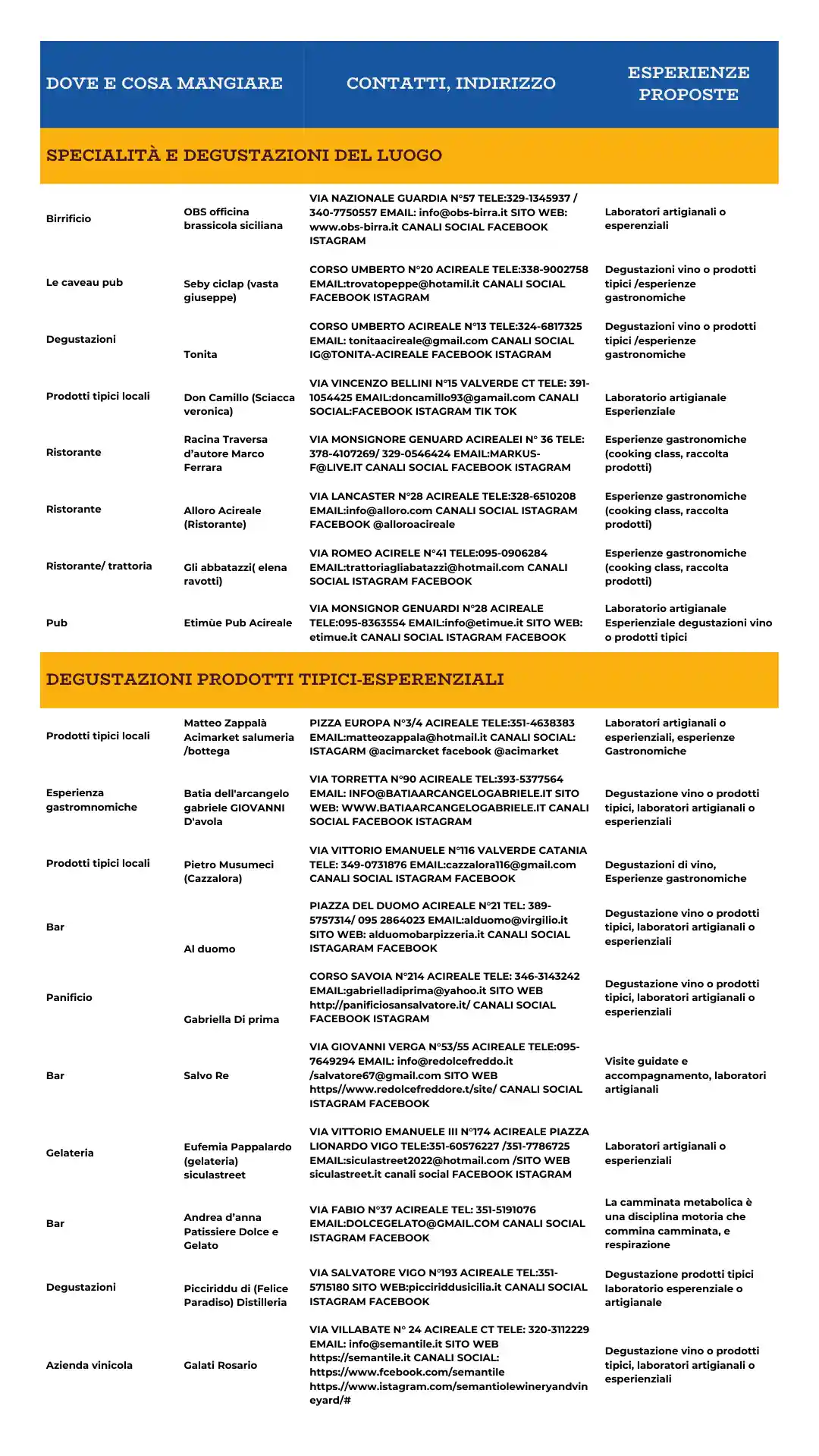
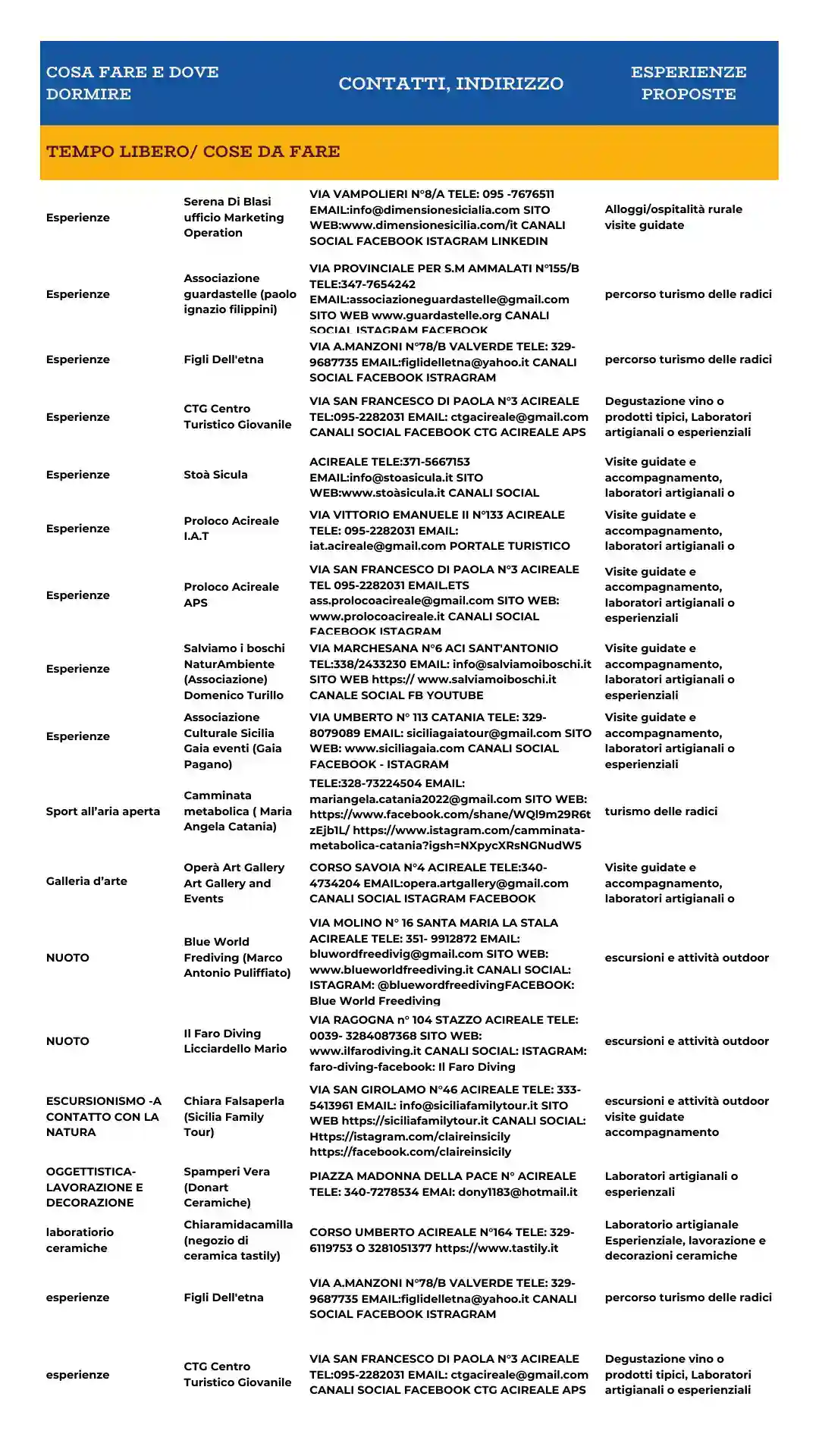
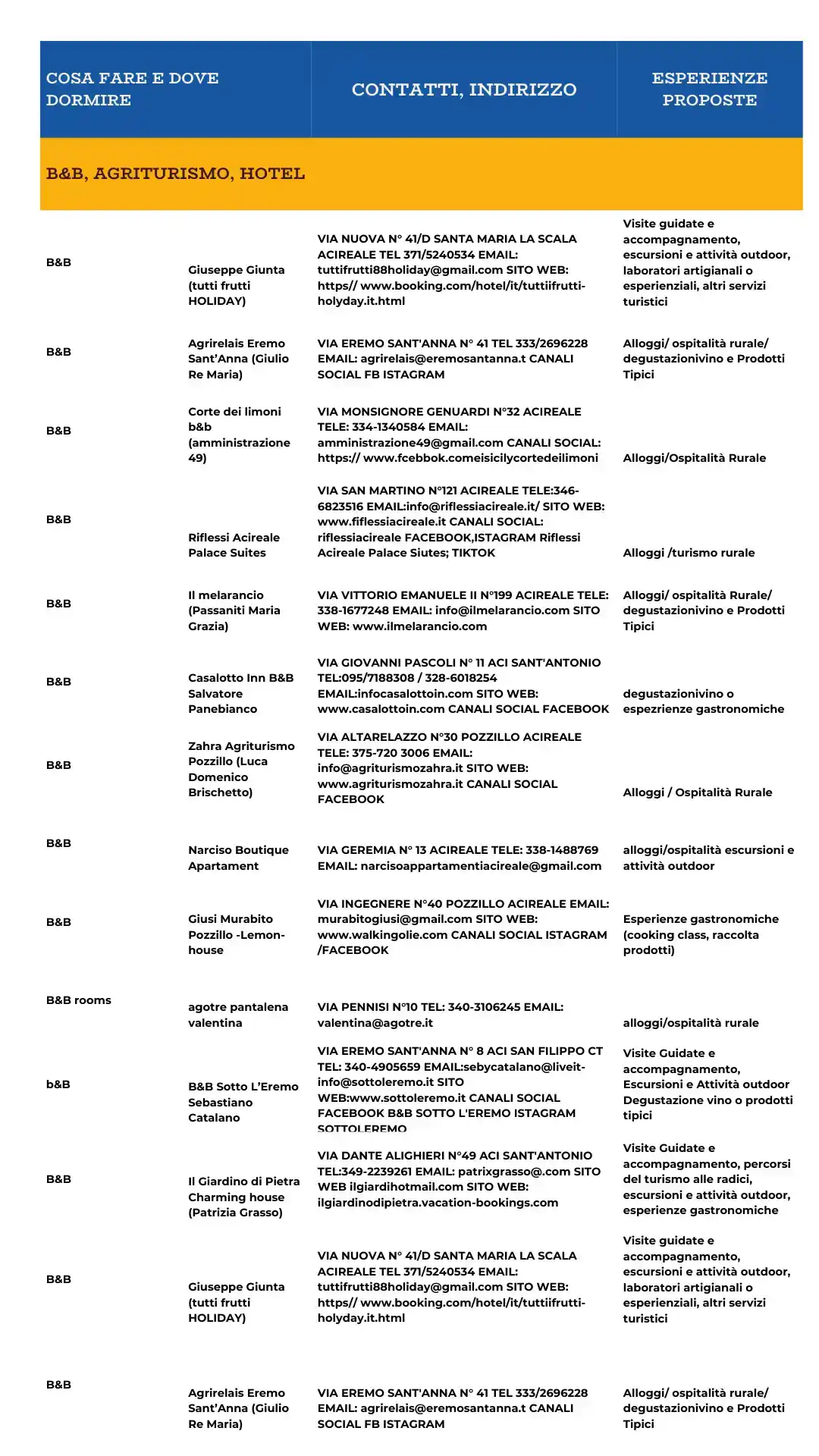
Here is a selection of recommendations from local operators who have made their contacts available to travelers thanks to GAL Terre di Aci:
Nel cuore barocco di Acireale, tra la pietra nera che racconta storie e il profumo dell’attesa natalizia, un capolavoro senza tempo...
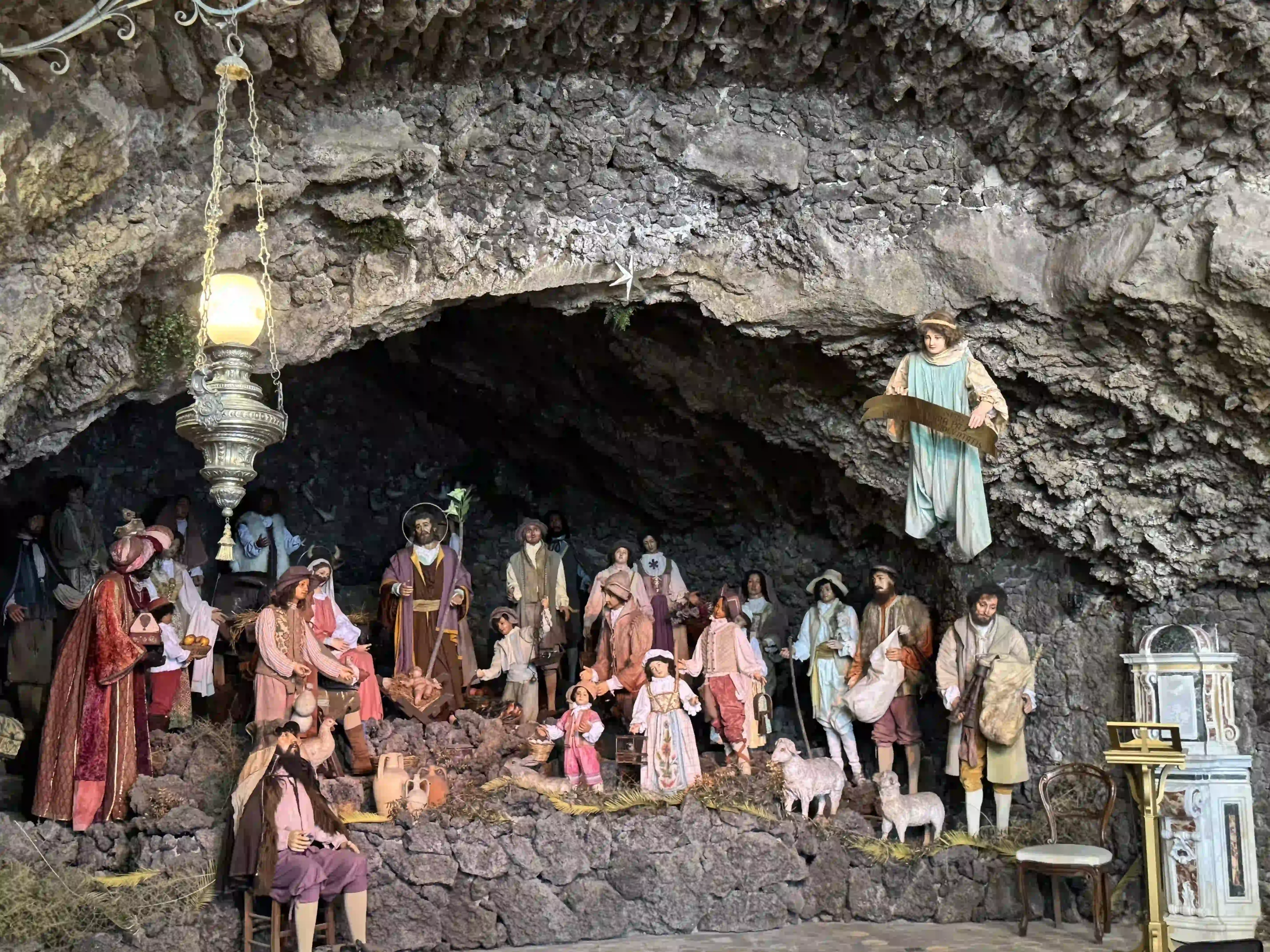
There is a place in Acireale where the black stone and the light speak to each other in silence, and art is not displayed, but preserved by the earth itself. It is the natural lava-flow cave, formed centuries ago at the foot of Mount Etna, which today houses a rare and precious treasure: the 18th-century Nativity scene of Acireale. Protected within the Church of Santa Maria della Neve, between volcanic shadows and sacred stillness, it takes shape like a dream suspended between art and devotion. What makes it unique is not only the natural environment that hosts it, but also its very composition.
The statues, at life size with wax faces, are dressed in traditional peasant attire, crafted with artisanal care and moving sensitivity: shepherds, vendors, artisans, and children, as if frozen in a suspended moment in time. The rocky setting and the living lava material enveloping the scene create an unrepeatable atmosphere: a place of the soul, where the sacred and the popular coexist among scenes of daily life, in a harmonious balance between realism and spirituality, where every detail enhances an intense experience that is not only visual but emotional. The 18th-century Nativity scene, a cultural and spiritual heritage of the city, is open daily during the Christmas season, but guided tours can also be booked throughout the year.
Paola Riccioli
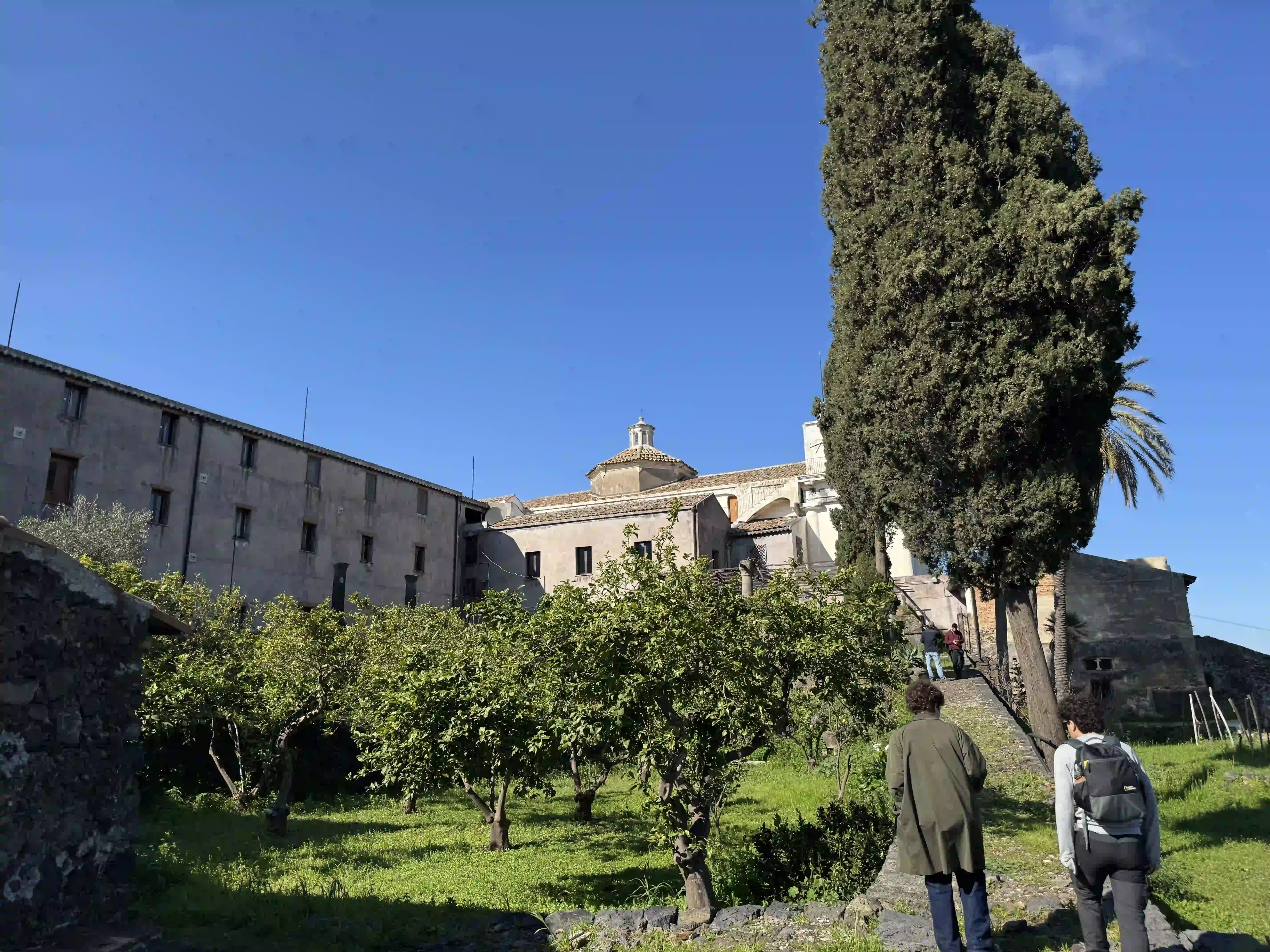
In 1776, a French traveler, Jean-Marie Roland de la Platière, economist and future Minister of the Interior under Louis XVI, lamented not finding the famous Aci that flowed in front of the hermitage of St. Anna and which some lava, as barbaric as the Cyclops, would have destroyed again.
He, recalling that he had been kindly hosted by the hermits, was enchanted by the stunning panorama he glimpsed from above, immersed in the forest which, according to his description, stretched to the gates of Aci. Roland de la Platière spoke of 15 hermits and described them as vigorous men who plowed the fields, carded, spun and wove wool, worked wood, and used the lathe.
In a deed by notary Francesco Rossi of Aci Sant’Antonio and San Filippo, mention is made of a small church dedicated to Saint Anna, located in the Aci San Filippo district. In the Menologio of the hermitage, a manuscript by one of the first hermits—Fra Andrea Musumeci of Acireale—it is written that in 1740, the founder of the hermitage, Fra Rosario Campione, and Father Mariano Patanè went to that place where two hermits lived, Fra Mario Finocchiaro and Fra Giuseppe Piscitelli, and there found a small church, poor and lacking everything, covered inside and out with ivy, with one or two rooms poorer than the church itself and in very poor condition.
Thanks to the generosity of Canon Mario Finocchiaro, cantor of the Collegiate Church of Aci S. Filippo, who in 1744 had donated a plot of land to Campione, other cells began to rise around that church. There were further donations: even the Princes of Campofiorito, according to Monsignor Salvatore Bella, contributed significantly to the construction of the hermitage.
The work, completed in 1756, was carried out by the hermits, who in the meantime had followed Campione, under the guidance of two masons from Aci S. Antonio: Alfio Grasso and his son Concetto, who in 1761 also became a hermit, taking the name Fra Arcangelo.
The hermitage of Saint Anna is mentioned by Canon Giuseppe Recupero in his Storia naturale e generale dell’Etna (1815): “I cannot help but mention a church that stands above Aci S. Filippo with the title of St. Anna, which, although surrounded by a dense oak forest, is still in a very elevated and pleasant place, because it overlooks the underlying countryside, from where one enjoys a delightful and wide perspective. In 1734, a very devout man, dressed in hermitic attire, called Fra Giuseppe Piscitelli from the city of Cerreto, Kingdom of Naples, retired there. He led an exemplary life there until 1740, when Fra Rosario Campione, then a hermit of the Church of Loreto near the city of Acireale, arrived”.
In September 1904, an article appeared in the magazine Emporium, Luoghi romiti: su e giù per il Bosco Etneo by Giovanni Paternò Castello, in which the Hermitage of Saint Anna was discussed.
“And now we come to the Hermitage of Saint Anna, the quintessential solitary and picturesque place. The road from Valverde leading there is a continuous succession of superb views and marvelous chasms. Holly and oak everywhere, clinging among the gaps of erratic boulders forming the hills on the right and left of the path, if one can call it a road, a steep and rocky trail difficult even for pedestrians, but making the place even more solitary. The position of the hermitage is enchanting. From the terrace of the church one enjoys a splendid horizon! The towns of S. Filippo, Aci-Catena, Aci-Reale, S. Lucia, and Platani lie cheerfully among the dark tropical vegetation like pure white patches of snow. In the distance, Capo Mulini stretches into the sea with the watchful tower of Saint Anna, still ready to signal corsairs. To the left, Taormina, over which rises the cliff of Mola always surrounded by clouds, reflects gently on the waves. Behind, majestic Etna, the mountain of the Cyclopes, dominates with its peak, land, and sea, and serves as the backdrop to the scene below; in front, at noon, the Ionian Sea, the bluest of seas, and the far-off mountains of the Calabrian coast, barely visible as faint clouds between atmospheric layers. A more fitting place for a man to remain ecstatic before the divine work could not have been found by the founder of the hermitage.” The Hermitage, recently restored and owned by the Episcopal Curia of Acireale, still stands today as a unique place in all of Sicily and is visitable by appointment or on certain liturgical occasions.
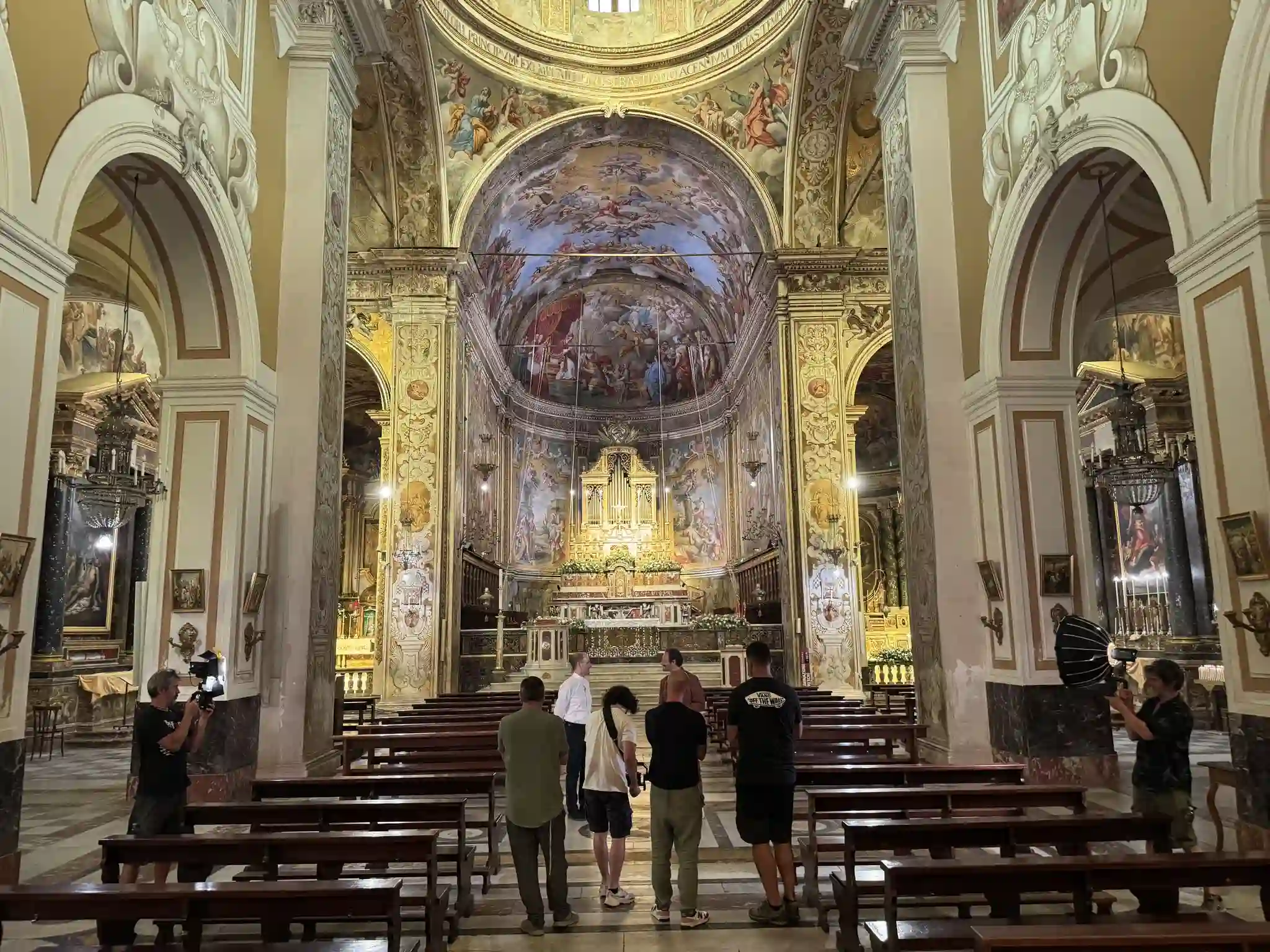
In the Baroque heart of Acireale, a must-see itinerary in the “city of 100 bell towers” takes us through the three basilicas, exploring the iconic sites of faith and the distinctive art of the Aci area.
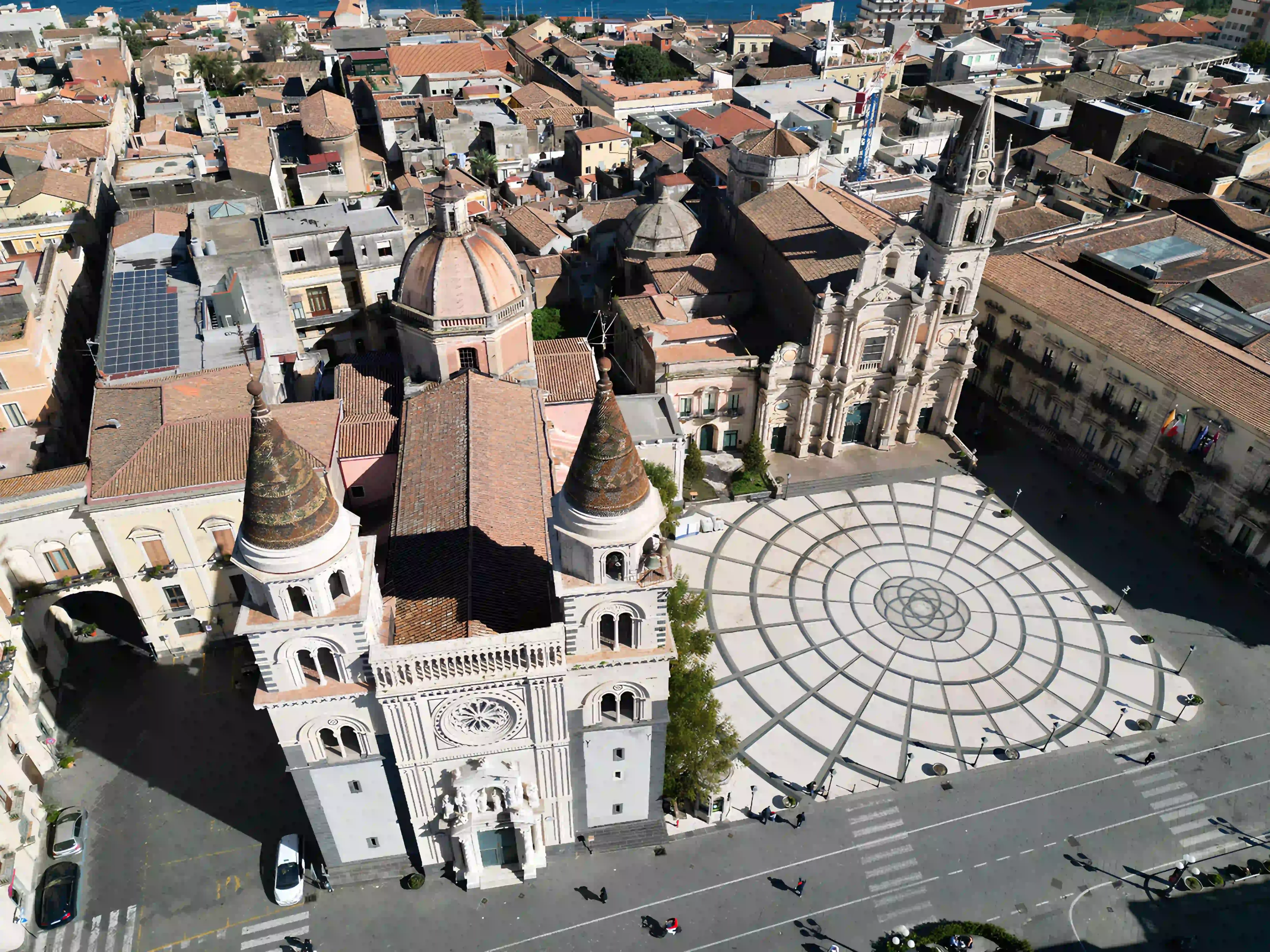
The foundation of the Basilica Cathedral dedicated to Mary Most Holy of the Annunciation dates back to the early 15th century, but already in the previous century a small chapel dedicated to the Annunciation had been built nearby. At the beginning of the 16th century, just a few meters from the chapel, a small single-nave church with a bell tower was constructed, whose plan corresponds to the current central nave. After several expansions, which saw in 1651 the holy virgin and martyr Venera proclaimed patroness of the city of Acireale, and in 1683 the beginning of works for the construction within the basilica of a chapel intended to house the sacred relics and the precious statue of the Saint, on January 11, 1693, a terrible earthquake devastated southeastern Sicily, destroying much of its historical and artistic heritage, including a large part of the Mother Church, whose restorations were completed at the beginning of the 18th century. Following the establishment of the Diocese of Acireale, between 1887 and 1890, at the behest of the first bishop, Monsignor Gerlando Maria Genuardi, the main façade was completed with the construction of the northern bell tower, the rose window, and a connecting gallery composed of small columns and arches. Between 1905 and 1907, the painter Giuseppe Sciuti from Zafferana Etnea created the frescoes on the vault. The current façade is the result of interventions that took place over the centuries, featuring bell towers, Corinthian capitals, polychrome glazed bricks, a white stone portal consisting of four Corinthian columns, and, of course, the indispensable lava stone.
Crossing Piazza Duomo upon exit, the Basilica dedicated to Saints Peter and Paul rises, connected to an ancient confraternity that, to practice devotion in honor of the two Princes of the Apostles, used to gather in a small church located next to the then Mother Church of Acireale. The construction of the church dates back to the 16th century, but the violence of the 1693 earthquake destroyed the dome and caused serious damage to the entire structure. Starting in 1705, the church governors commissioned Pietro Paolo Vasta to design the new façade, which began in 1740. The bell tower, still admirable today, is decorated with floral motifs and masks placed at the end of each level. The main portal is topped by a broken pediment supported by two smaller columns, also in Corinthian style. The second level is enriched by six composite-style columns framing the central window, whose stained glass displays the basilica's emblem. Following are two circular plaques and the statues of Saint Peter on the left and Saint Paul on the right. The second level is closed by a triangular pediment of clear classical influence.
Continuing past the City Palace southward with just a few steps, the majestic Basilica dedicated to the veneration of the city’s co-patron, Saint Sebastian rises. It developed between the late 16th and early 17th centuries and was invoked as protector against the 1577 plague, when a terrible epidemic struck the Aci territory and the statue of the saint was placed on the altar as an object of supplication by the faithful. The city remained immune to the contagion, and the devotees, confident in the Saint’s intercession, increased to the point that they could no longer be accommodated in the small church. The rectors of the confraternity then decided to build a monumental three-nave basilica. The approximately 60,000 victims of the mentioned Val di Noto earthquake, including 739 in the city of Aci, saw much of the building collapse, which, as an inscription on the right side of the façade recalls, was rebuilt between 1695 and 1699. The façade was completed in 1715, and in 1732 Pietro Paolo Vasta painted the frescoes of the choir and presbytery, while between 1899 and 1901 Francesco Patanè executed the frescoes on the two sides of the transept using encaustic technique. The basilica’s façade is a perfect example of Sicilian Baroque: designed by the Acireale-born Angelo Bellofiore, it is adorned with columns decorated with acanthus scrolls and anthropomorphic figures. Its view abounds with statues of saints and cherubs holding garlands of flowers and fruits, representing a true hymn to life. Not surprisingly, UNESCO has declared the basilica a “monument conveying a culture of peace.”
È online la graduatoria delle selezioni per “Belìce a 1 Euro”!
Un’esperienza autentica nel cuore della Sicilia, al costo simbolico di un euro: questo è lo spirito di “Leisure-learning weekend a 1 Euro nella Valle del Belìce”, l’iniziativa promossa dal GAL Valle del Belìce con operatori turistici e culturali locali.
Dal 22 al 24 agosto 2025, 20 partecipanti vivranno tre giorni tra laboratori pratici guidati da artigiani, cuochi, contadini e produttori, pernottamenti, pasti, escursioni e visite culturali, scoprendo in prima persona i saperi e i sapori della Valle del Belìce.
La graduatoria ufficiale è ora disponibile: scopri se sei tra i selezionati e preparati a un’esperienza indimenticabile tra paesaggi rurali, tradizioni e comunità accoglienti.
Un’esperienza autentica nel cuore della Sicilia, al costo simbolico di un euro. È questo lo spirito di "Leisure-learning weekend a 1 Euro nella Valle del Belìce", l’iniziativa promossa dal GAL Valle del Belìce in collaborazione con operatori turistici e culturali del territorio.
From August 22 to 24, 2025, 20 adult participants will have the opportunity to take part in a leisure-learning experience — a format that combines travel and education. Participants will engage in hands-on workshops totaling 12 hours, led by local experts — artisans, chefs, farmers, and producers — to explore the traditions and skills of the Belìce Valley in a tangible way: from ceramics to bread making, from coral craftsmanship to Sicilian pastry.
The experience also includes accommodation, meals, excursions, and cultural visits, offering total immersion in the life, landscapes, and communities of the Belìce Valley, located between the provinces of Trapani and Agrigento.
To apply, candidates must fill out the online form between July 28 and August 5, attaching a short motivational video. Selected participants will be asked to document the experience through social media content and take part in a collective video story.
Una proposta originale e inclusiva per raccontare la Sicilia dei borghi, dei mestieri e dell’accoglienza.
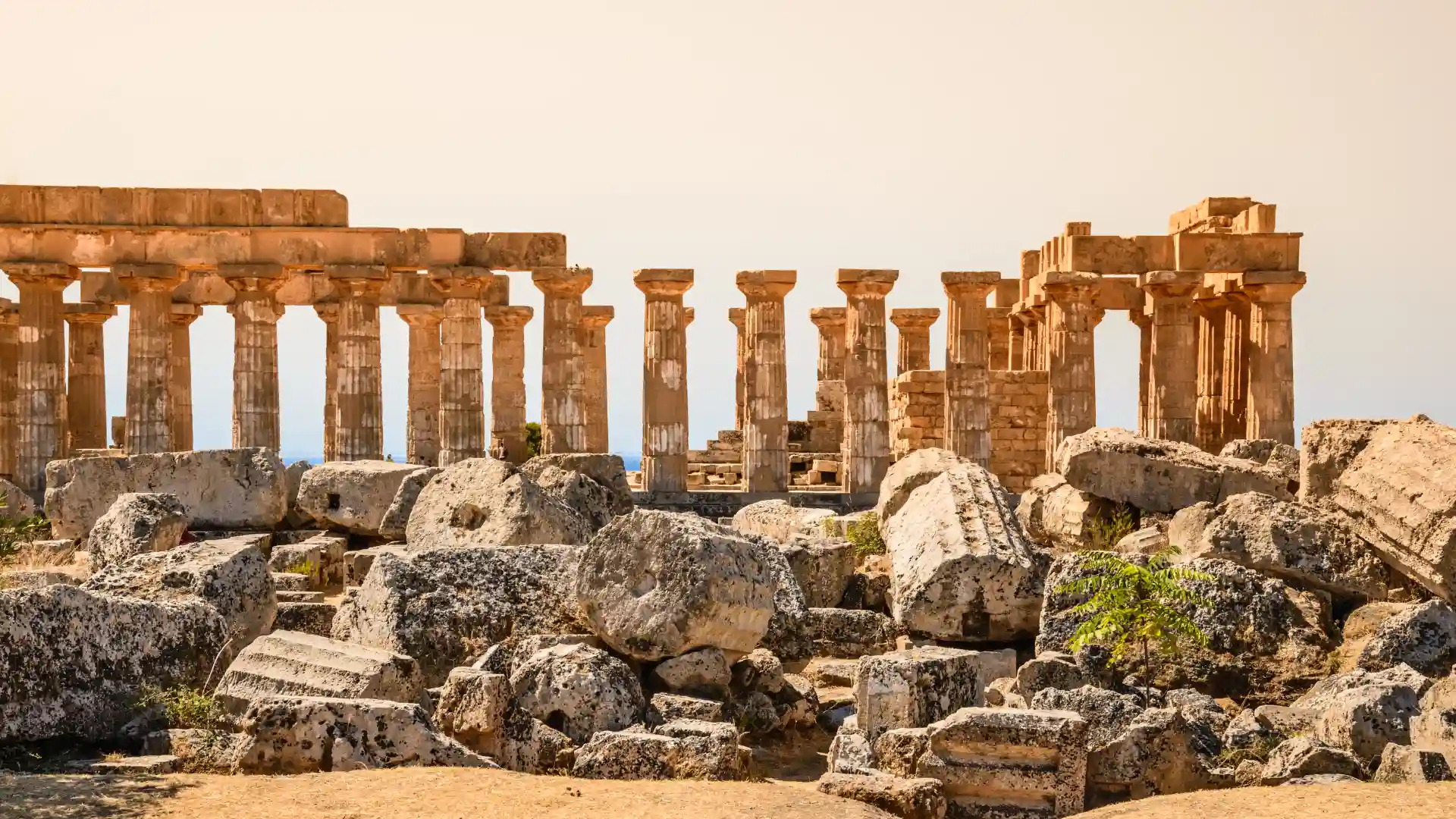
Nel cuore della Sicilia sud-occidentale, il Parco Archeologico di Selinunte è uno dei siti più estesi d’Europa. Qui, il silenzio della campagna siciliana si intreccia con le imponenti rovine dei templi dorici, offrendo un’esperienza unica che unisce cultura, natura e mobilità sostenibile.
Grazie al progetto Archeobike, oggi è possibile scoprire Selinunte in bicicletta. Un percorso cicloturistico pensato per chi ama esplorare lentamente, respirando il paesaggio e godendo della bellezza di un patrimonio archeologico straordinario. Il tour prevede tratti pedalati e camminati, accompagnati da audioguide multilingua e segnaletica dedicata.
Il tragitto in bici parte dalla collina orientale, dove si erge il maestoso Tempio E, passando per i resti dei Templi F e G. Tappa imperdibile è la mostra Ars Aedificandi, con fedeli riproduzioni delle tecniche costruttive usate dagli antichi greci. Il percorso prosegue verso Baglio Florio e culmina nella suggestiva Acropoli, affacciata sul mare e immersa nella vegetazione mediterranea.
Il Parco di Selinunte è stato il primo in Sicilia a promuovere il cicloturismo nei siti archeologici. Un modo autentico e sostenibile per valorizzare il territorio, rispettando l’ambiente e incentivando forme di turismo lento e consapevole. Gli itinerari si snodano tra strade sterrate, uliveti e paesaggi rurali, offrendo scorci ideali per fotografia, birdwatching e meditazione.
Durante l’anno, il Parco organizza giornate a ingresso gratuito, visite guidate speciali e attività stagionali dedicate a famiglie, scolaresche e viaggiatori slow. Occasioni perfette per unire la scoperta del patrimonio storico con la bellezza naturale della costa selinuntina.
Su Rural Sicily trovi idee, itinerari e consigli per esplorare la Sicilia rurale in modo autentico e sostenibile. Il tour in bici nel Parco di Selinunte è solo una delle tante esperienze che ti aspettano: dalle vie del vino alle strade del grano, dalle riserve naturali ai borghi marinari.
Che tu sia un cicloturista esperto o un viaggiatore curioso, Selinunte è una meta ideale per vivere la Sicilia con lentezza. Prenota ora il tuo tour Archeobike e lasciati guidare tra rovine antiche e profumi di macchia mediterranea.
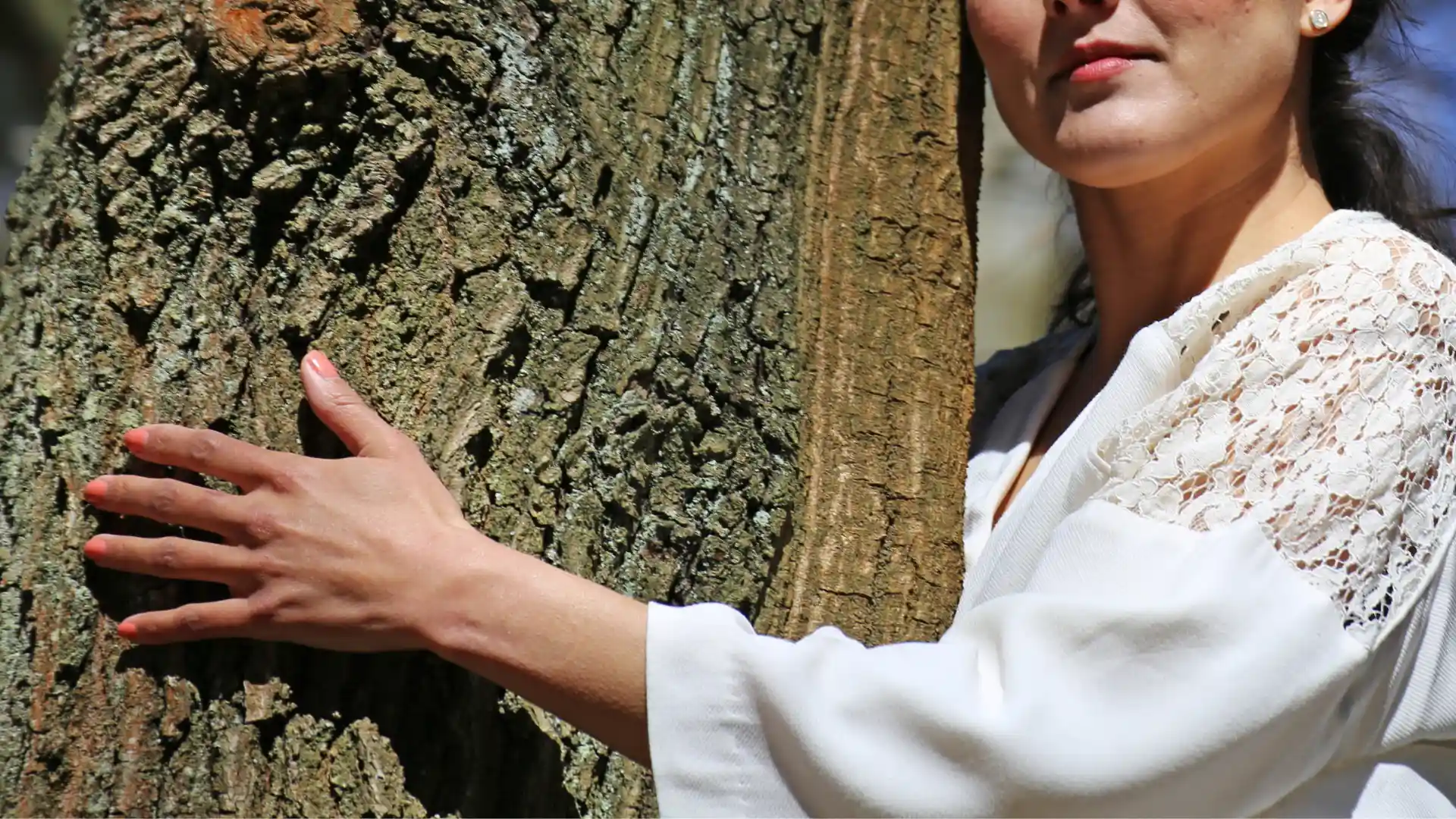
Lo Shinrin Yoku, o "bagno nella foresta", è una pratica giapponese che promuove il benessere attraverso l'immersione consapevole nella natura. Camminare lentamente tra gli alberi, respirare profondamente e ascoltare i suoni del bosco aiuta a ridurre lo stress, migliorare l'umore e rafforzare il sistema immunitario.
Gaspare Armato, psicologo e psicoterapeuta cognitivista, ha introdotto lo Shinrin Yoku in Sicilia, in particolare tra Palermo e Montevago. La sua formazione, influenzata da esperti come Stefano Mancuso e Gianni Liotti, lo ha portato a integrare la Psicologia Ambientale e la Medicina Forestale per promuovere il benessere attraverso la connessione con la natura.
Montevago, situata nella Valle del Belice, è un luogo simbolo di resilienza. Dopo il devastante terremoto del 1968, la comunità ha lavorato per ricostruire non solo le strutture, ma anche il legame con l'ambiente circostante. Oggi, Montevago offre un contesto ideale per praticare lo Shinrin Yoku, grazie ai suoi paesaggi naturali e alla tranquillità che li caratterizza.
Praticare lo Shinrin Yoku a Montevago significa vivere un'esperienza autentica nella Sicilia rurale. È un'opportunità per rallentare, riconnettersi con se stessi e con l'ambiente, e riscoprire il valore del silenzio e della contemplazione.
Scopri come la natura può diventare una fonte di benessere e spiritualità, e pianifica la tua esperienza immersiva nella Sicilia più autentica.
Situata a 6 km da Sambuca di Sicilia, MaMaTerra Casa SanGiacomo è un'azienda agricola biologica a conduzione familiare che si estende su 18 ettari di colline coltivate a grano, sulla, ulivi e ospita 15 animali tra pony, asini e altri. Dal 2004, l'azienda adotta pratiche agricole sostenibili e, dal 2024, ha intrapreso un percorso per diventare una fattoria sociale, offrendo esperienze educative e inclusive per tutte le età.
MaMaTerra propone una varietà di attività che combinano apprendimento, manualità e contatto con la natura:
Le attività di MaMaTerra sono pensate per un massimo di 14 partecipanti, garantendo un'esperienza personalizzata e coinvolgente. Le giornate in fattoria sono ideali per famiglie, scuole e gruppi che desiderano vivere un'esperienza autentica nella campagna siciliana.
Un'opportunità unica per avvicinarsi alla natura, apprendere pratiche sostenibili e vivere la Sicilia rurale in modo autentico.

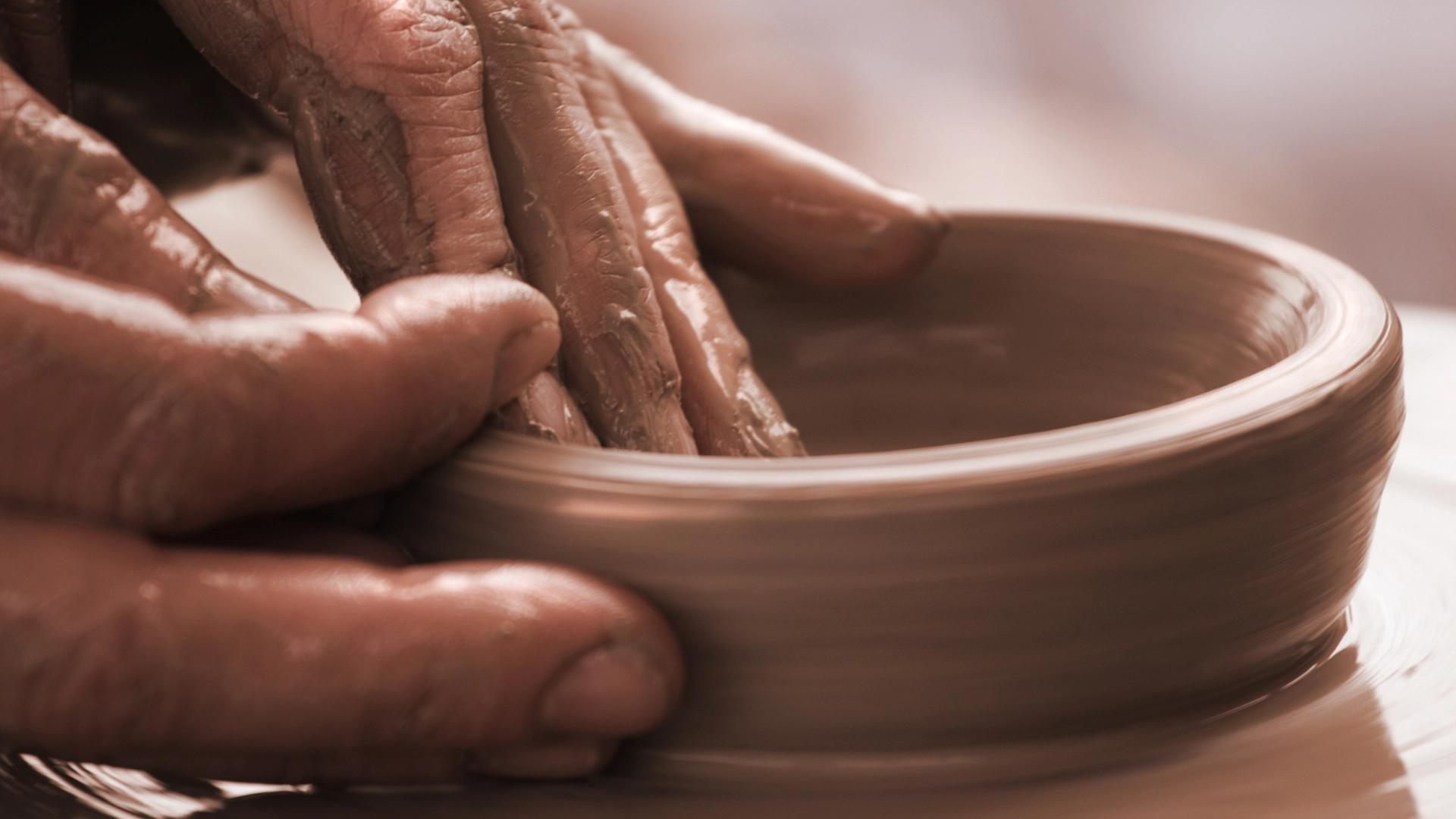
Nel cuore della Valle del Belice, dove il paesaggio racconta storie millenarie di pietra, ulivi e luce, nasce Salemi Ceramics: un laboratorio di ceramica internazionale che unisce il fascino dell’<strong’artigianato contemporaneo con l’atmosfera unica di uno dei borghi più affascinanti della Sicilia.
Gli spazi del laboratorio sono ospitati all’interno del Chiostro di Sant’Agostino, un gioiello architettonico risalente al XV secolo. Tra colonne in pietra, archi gotici e silenziosi cortili interni, prende forma un’esperienza creativa profonda, che si nutre del ritmo lento della natura, della cultura siciliana e dell’energia dell’argilla.
Salemi Ceramics propone corsi intensivi per ogni livello, pensati per trasformare il tempo in Sicilia in un momento di scoperta personale. I programmi includono:
Ogni percorso è accompagnato da momenti di relax, con pratiche di yoga, passeggiate nella campagna trapanese e degustazioni locali.
A Salemi si incontrano viaggiatori, artisti e appassionati provenienti da ogni parte del mondo. Il laboratorio è anche uno spazio di dialogo, dove la tradizione ceramica siciliana si intreccia con linguaggi contemporanei e visioni globali, restituendo oggetti unici che raccontano esperienze, emozioni e connessioni.
Partecipare a un corso di Salemi Ceramics significa molto più che apprendere una tecnica: è un invito a rallentare, a toccare con mano la bellezza della semplicità e a lasciarsi ispirare dai ritmi autentici della Sicilia rurale. Dalla terra nasce la creta, dalla creta nasce la forma, e dalla forma nasce una storia che profuma di Mediterraneo.
The Sanctuary of the Madonna di Valverde, Between Faith and Legend The Sanctuary of the Madonna di Valverde, located in the inland area of the Aci territory, is one of the oldest Marian places of worship in Sicily. Its origin is intertwined with a fascinating legend: the conversion of the bandit Dionisio, who was touched by divine grace following an apparition of the Madonna.
This story, handed down through the centuries, has made the sanctuary a pilgrimage destination and symbol of spiritual rebirth, deeply rooting it in Sicilian folk tradition.
Nel giugno del 1038, durante l’ultimo periodo della dominazione araba in Sicilia, un viandante di nome Egidio fu assalito da un brigante, Dionisio, nell’altopiano della Vallis Viridis. Egidio, devoto della Vergine Maria, invocò la sua protezione. Una voce celeste risuonò nella valle: «Dionisio, deponi quell’arma… e cessa questa vita di brigantaggio».
Il miracolo avvenne: Egidio fu salvo e Dionisio si convertì, scegliendo la via dell’eremitaggio.
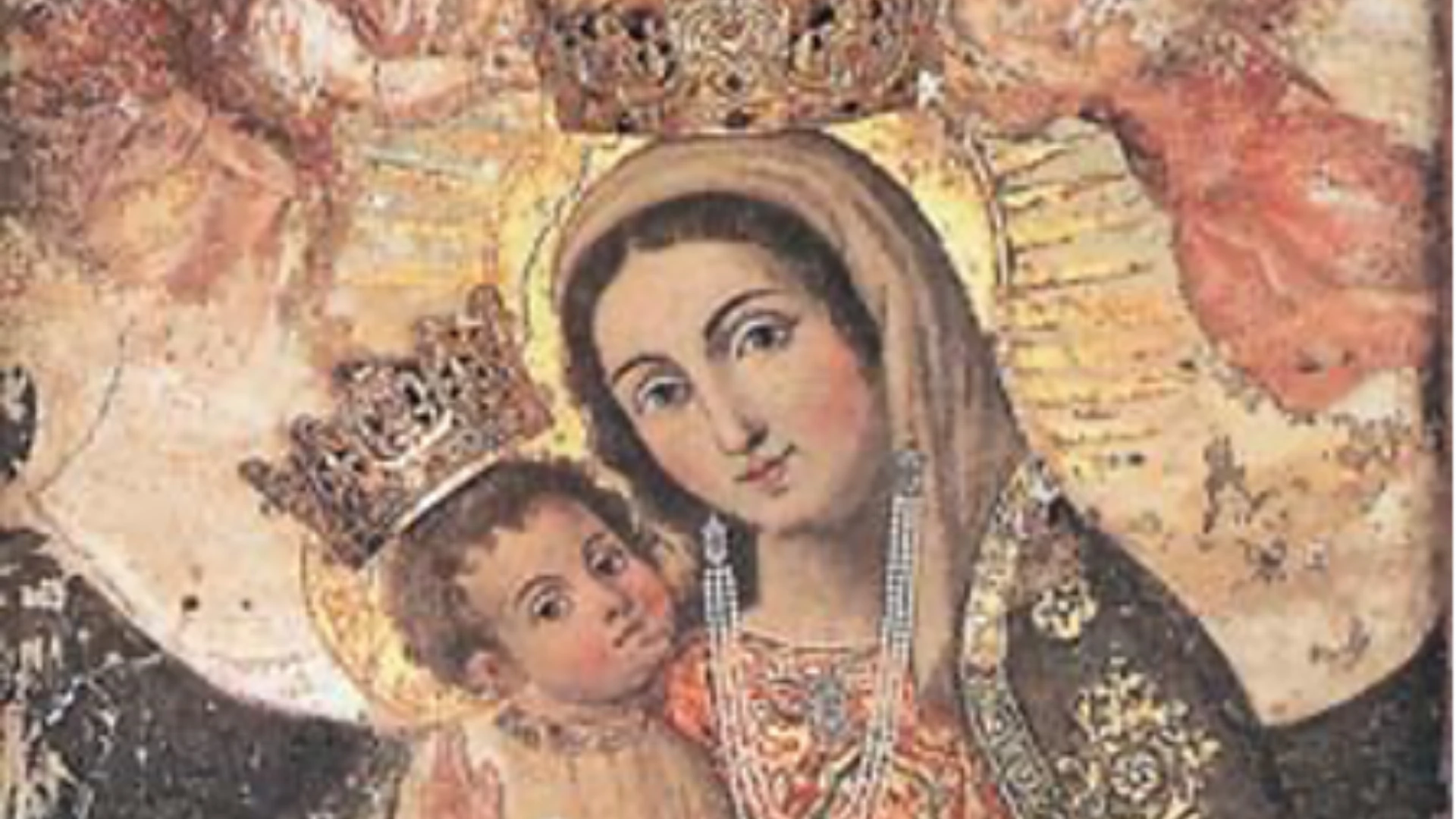
Dionysius had three visions of the Virgin Mary: in the first, she asked him to build a church and involve the priests and the people; in the second, she showed him a miraculous spring that can still be seen today in the Fontana district; in the third apparition, the Virgin Mary appeared to him on a cloud, crowned and holding the Child in her arms. Her image was miraculously imprinted on a pillar of the sanctuary, which is now venerated with great devotion.
The sanctuary has its roots in the 13th century, when the population built a small church around a votive shrine dedicated to the Virgin Mary. The presence of the Confraternity of Mercy is documented as early as 1223, confirming the long history of worship.
In 1296, the sanctuary was consecrated at the behest of Frederick II of Aragon. In 1446, it was granted the title of sacramental church. A major expansion followed in the 16th century and, after the disastrous earthquake of 1693, it was rebuilt with the addition of a convent, at the behest of Prince Stefano Riggio, and entrusted to the Discalced Augustinians. The miraculous pillar remained intact, with only a single crack on the Virgin's halo.
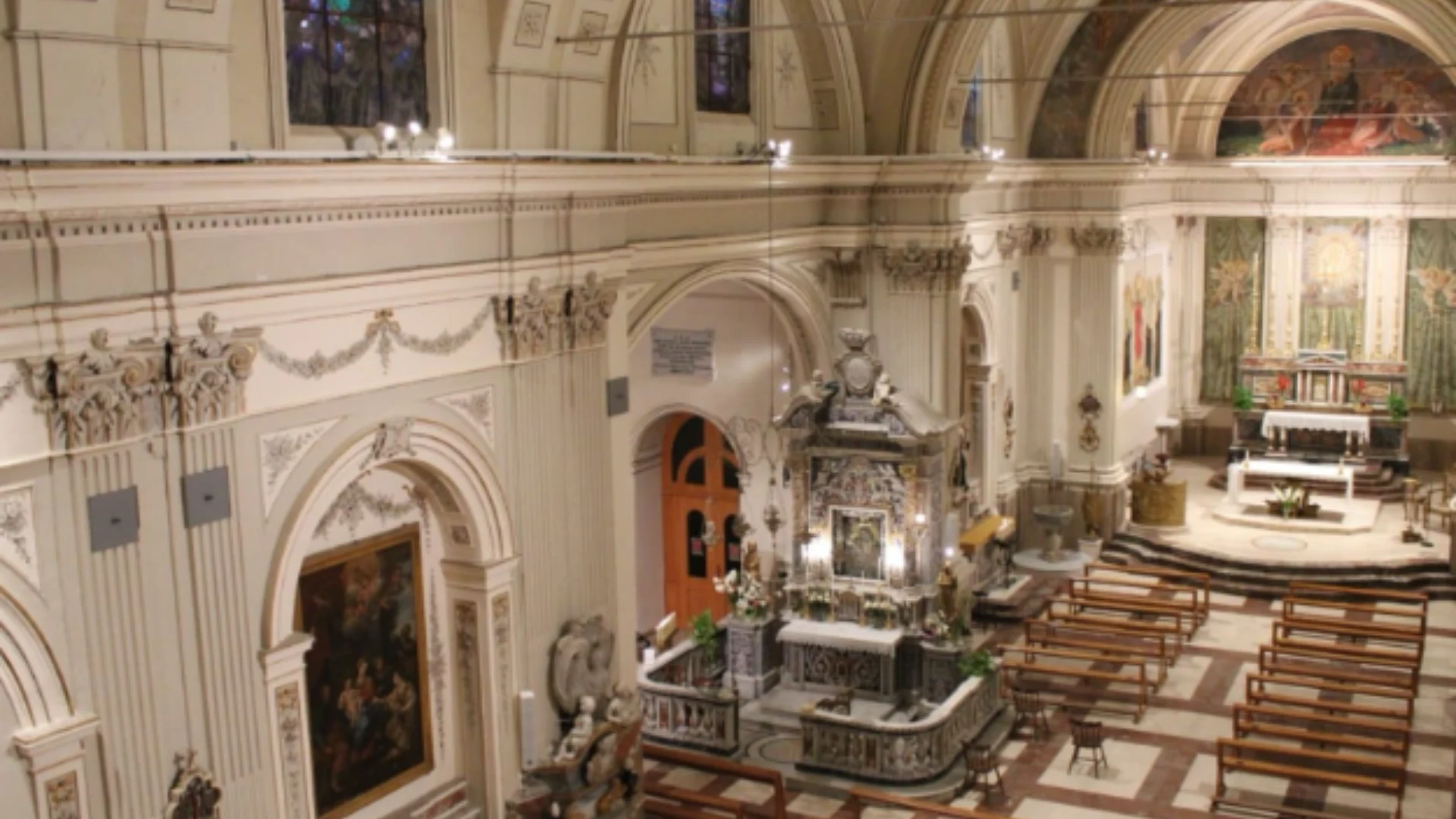
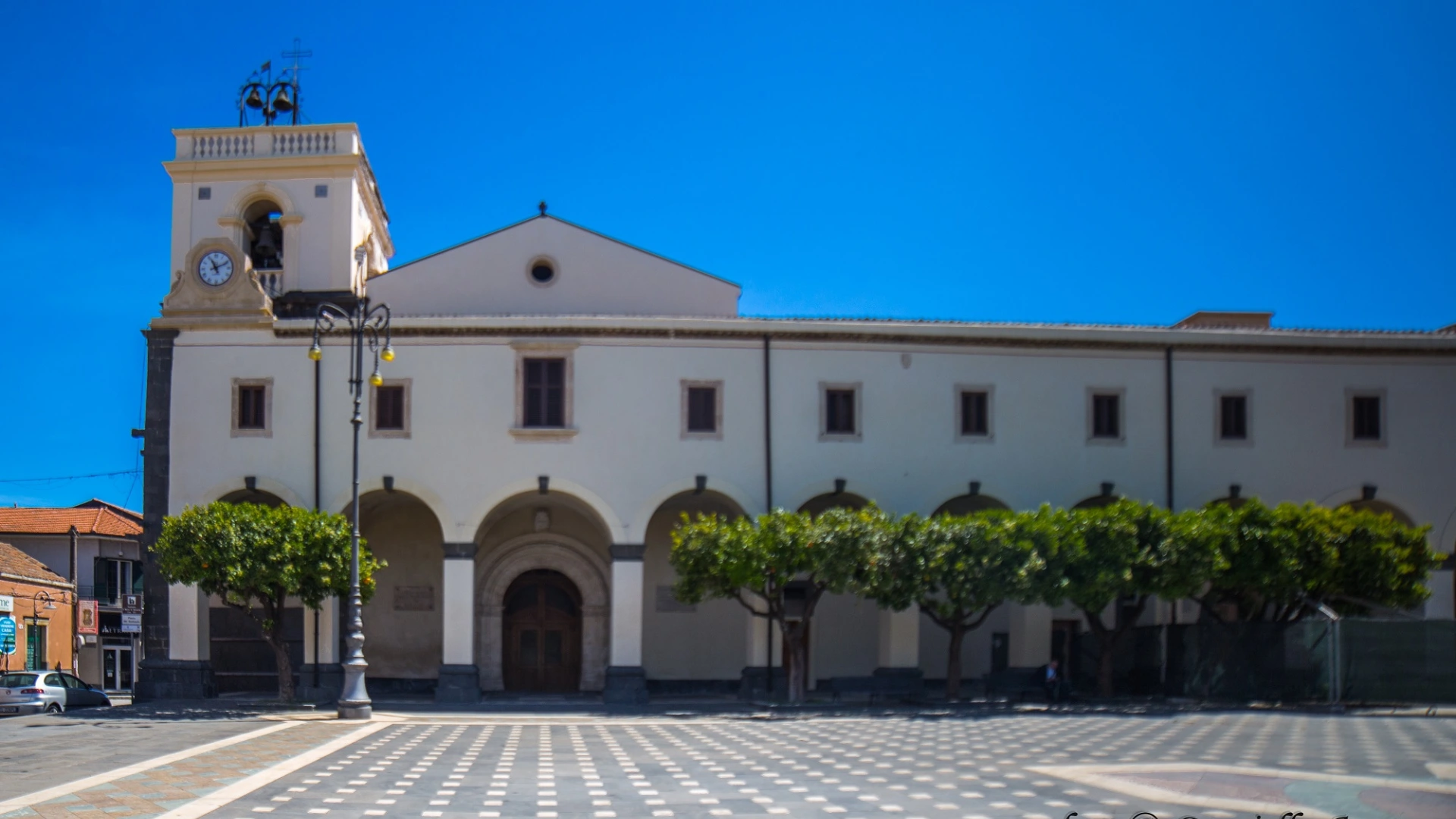
The current architecture of the sanctuary is the result of various interventions between the 16th and 18th centuries. Among the most characteristic elements are:
The colonnade with columns in lava stone and thirteen convent windows;
The harmonious façade with arches and columns;
The late 15th-century portal, decorated with floral motifs and twisted columns;
The white stone crest of the Riggio princes.
Next to the bell tower is a lava stone base engraved with the date 1559, evidence of the complex's long history.
Inside, the sanctuary houses numerous polychrome marble altars. Among the most important are:
The high altar is made of precious marble, while the altar of the miraculous pillar is in Baroque style. The painting is protected by a finely crafted silver door.
Also worth mentioning:
The cloister contains monochrome paintings on the Mysteries of the Rosary, a statue of St. Augustine, and modern panels dedicated to pilgrimages.
Every year, on the last Sunday of August, Valverde celebrates the Madonna with three days of festivities that blend spirituality and tradition. The procession, liturgical celebrations, fireworks, and illuminations transform the town into a vibrant center of devotion.
The Santuario di Maria Santissima di Valverde represents a veritable unicum in the Sicilian religious panorama. A place of history, art and faith, it continues to be a point of reference for the faithful and a treasure chest of collective memory.
A place that tells a story of conversion, resilience and hope, handed down from generation to generation.
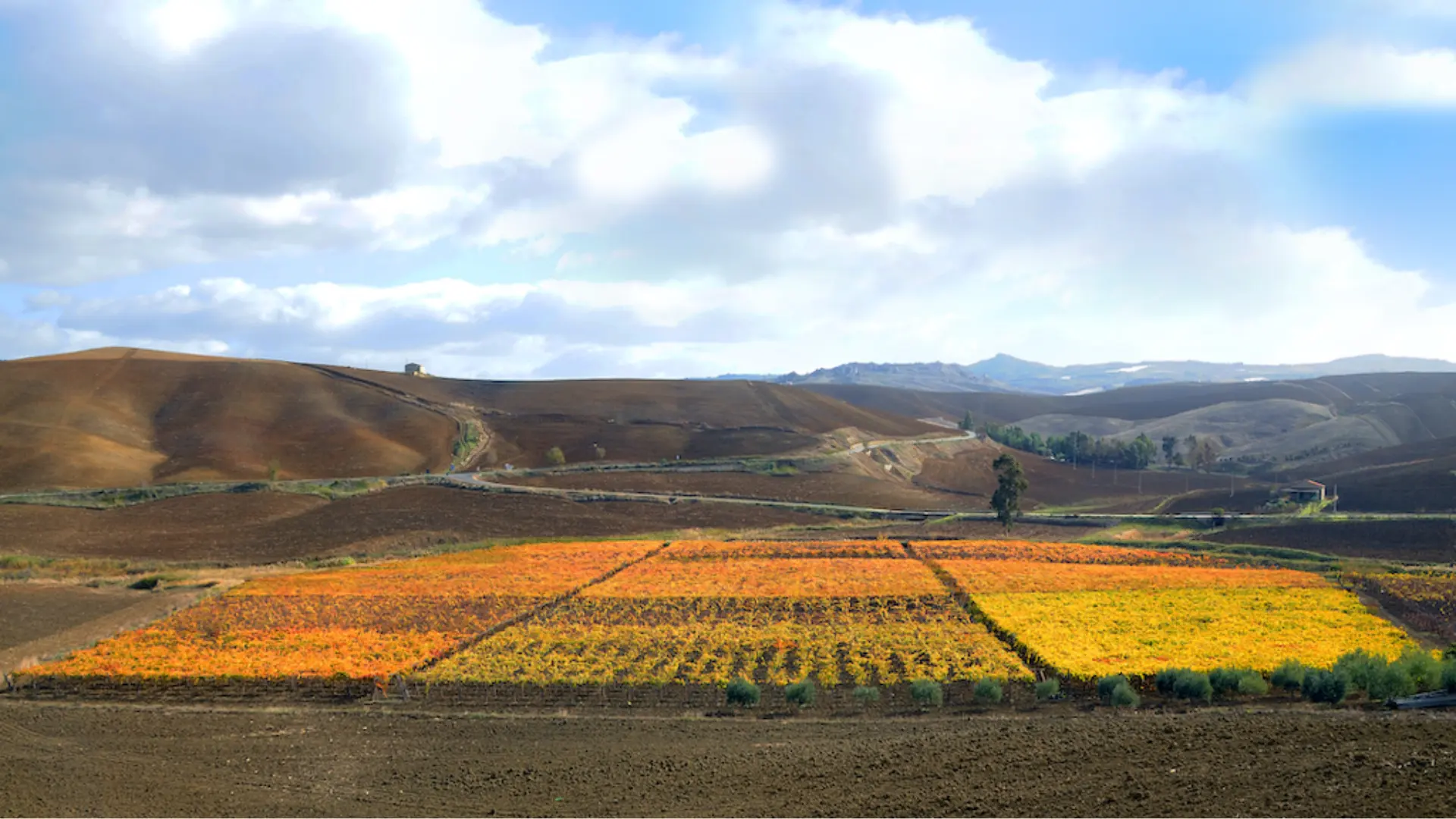
The Lands of Nisseno, located in the heart of Sicily, are one of the ideal destinations for those seeking an authentic rural tourism experience. Here, every journey becomes an immersion into unspoiled hilly landscapes, farming traditions, local craftsmanship, and genuine flavors. Still far from mass tourism, this area is perfect for travelers looking for a direct connection with the region’s nature, culture, and people.
In the Lands of Nisseno, visitors are not mere spectators but active participants. They can:
These activities are designed to fully immerse visitors in an authentic rural lifestyle, ideal for couples, families, and small groups seeking experiential tourism in Sicily.
The heart of the experience is food. The agri-food products of the Lands of Nisseno tell the story of the land: extra virgin olive oil, wine, ancient Sicilian grains, and traditional cheeses. Many local farms offer:
Perfect activities for those who want to closely explore the excellence of sustainable Sicilian agriculture.
Staying in the Lands of Nisseno means joining a network of widespread rural hospitality: farm stays, countryside holiday homes, restored farmhouses, and eco-museums that tell the story of the land. Walking, cycling, or horseback riding along the Sicilian rural trails allows for a slow and meaningful exploration of the region.
Tra uliveti, vigneti e campi di grano, ogni scorcio diventa un invito a riconnettersi con il paesaggio — e con sé stessi.
Discover itineraries, farms, events, and immersive experiences on Discovering Rural Sicily, the dedicated portal for rural tourism in Sicily.
Let yourself be guided by the land’s slow rhythm. The Lands of Nisseno are waiting for you.
In the heart of the most authentic Sicily, the Terre del Nisseno offer a fascinating itinerary through medieval castles and sulfur and salt mines. A landscape marked by perched fortresses, rural paths, and mining heritage sites, where every stone tells centuries of history. Discover a unique thematic journey among Norman architecture, industrial archaeology, and breathtaking landscapes—ideal for those seeking cultural, slow, and immersive tourism in the true Sicily.
In the heart of Sicily, the Lands of Nisseno preserve a constellation of medieval castles that tell stories of centuries of battles, dominations, and legends. These are not just monuments, but stone sentinels that still overlook valleys, ridgelines, and coastal stretches. Discovering them means embarking on a cultural and scenic journey, where military art, architecture, and myth intertwine along quiet, memory-filled trails.
The sulfur and salt mines of the Nisseno region tell a story of hardship, resilience, and identity. For centuries, they shaped both the landscape and the lives of local communities. Today, they stand as true historical sanctuaries, a heritage to be preserved and passed on, offering a unique insight into Sicilian industrial archaeology.
A perfect route for those who wish to combine historic architecture, industrial heritage, and authentic landscapes with slow and immersive tourism.
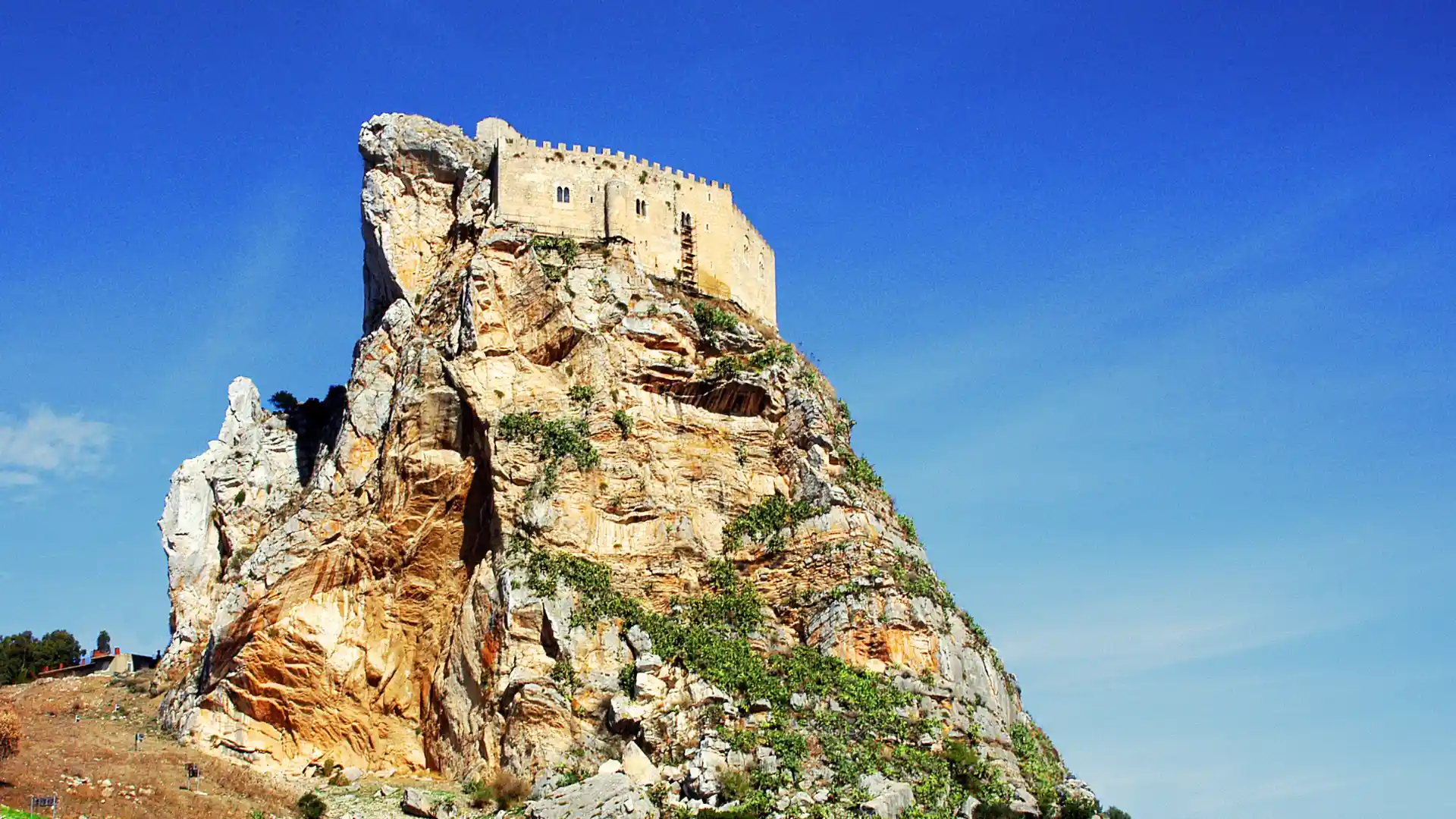
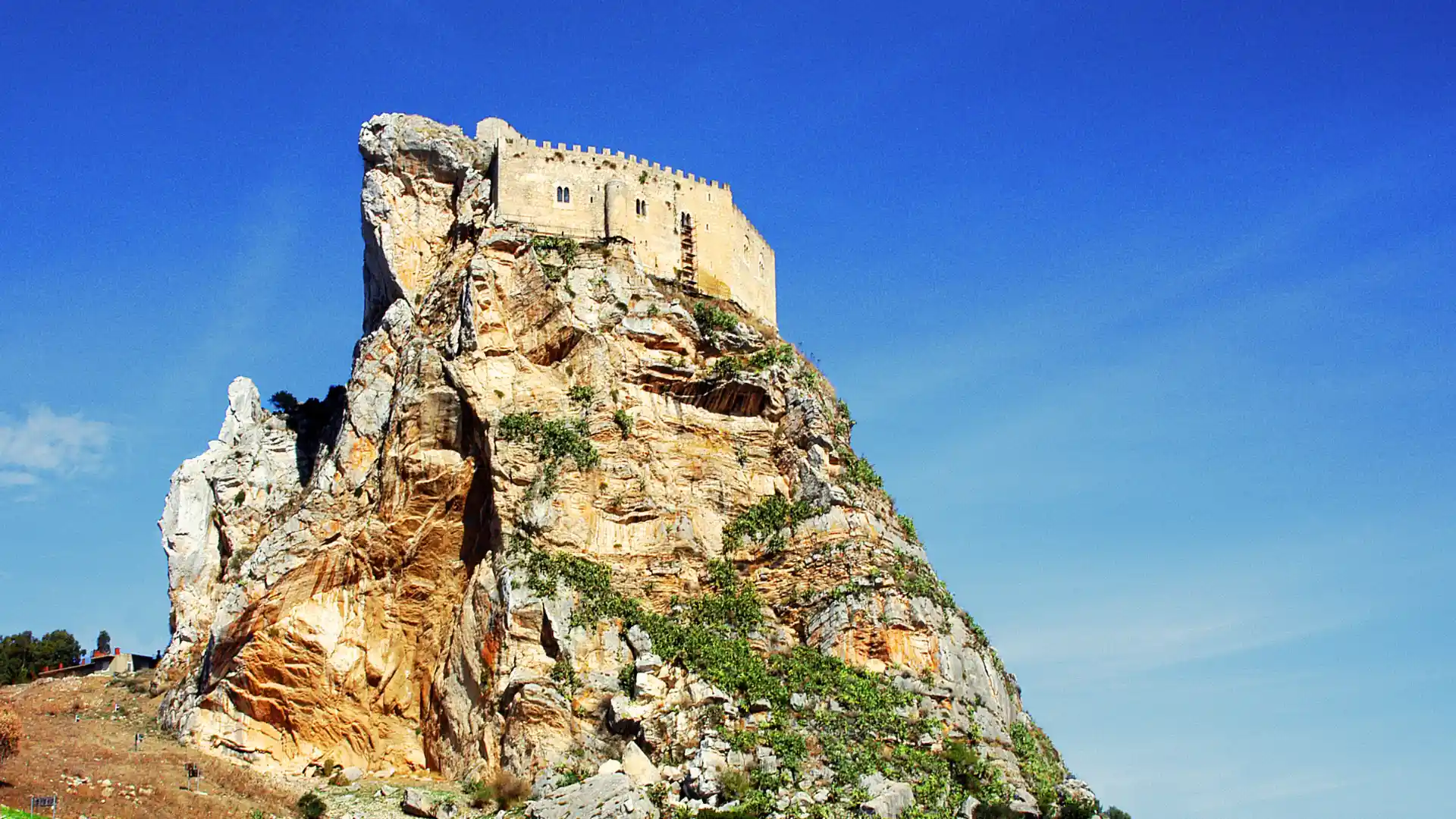
The journey begins with a must-see destination: the Manfredonico Chiaramontano Castle in Mussomeli, one of the most captivating castles in Sicily. Built in the 14th century on a rocky spur at 778 meters above sea level, it overlooks the entire valley below. Its halls, towers, and legends—such as that of the “lady walled alive”—draw enthusiasts and travelers year after year. You can reach it on foot from the historic center via a panoramic trail, perfect for light trekking and photography lovers.
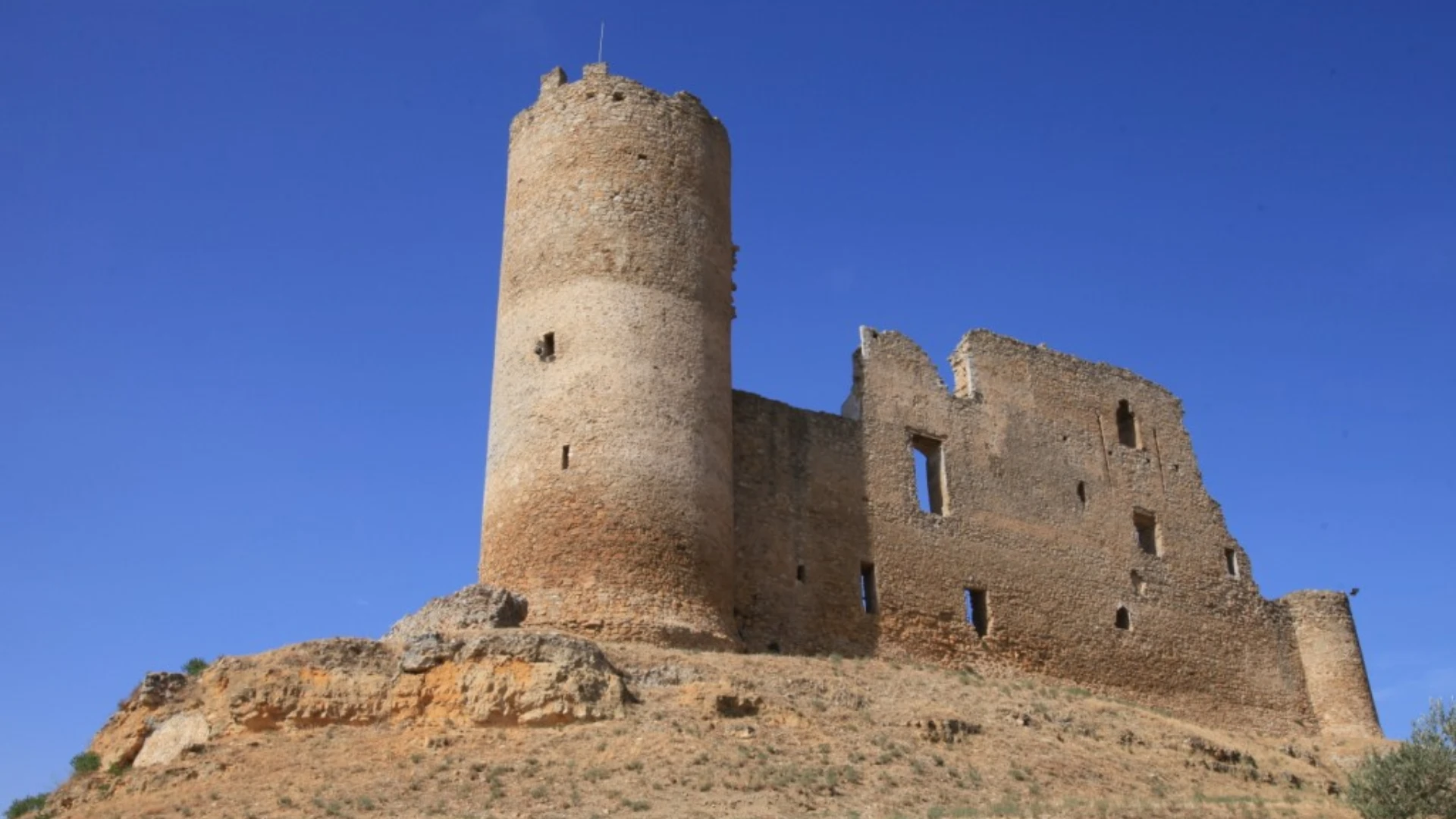
Continuing eastward, you reach Mazzarino, home to the evocative remains of the Grassuliato Castle, also known as “U Cannuni” for its cylindrical tower. Little known but highly atmospheric, it lends itself to on-foot explorations through olive groves and rural trails. Once a Norman stronghold, it retains a mysterious aura that captivates hikers and scholars alike.
The final stage leads to the coast, where the Falconara Castle rises—the only coastal fortress in the Nisseno region. Overlooking the Mediterranean, it belonged for centuries to the noble Chiaramonte Bordonaro family. Today, it can be admired from the outside or during special events. It marks the perfect conclusion to a historical route that combines medieval architecture and seaside beauty.
A journey through Sicily’s sulfur and salt mines is an immersion into industrial history, geology, and local identity. A key stop is the Trabia Tallarita Sulfur Mine Museum, located on the gypsum-sulfur plateau between Riesi and Sommatino, along State Road 190. The museum offers the chance to explore a fascinating landscape shaped by centuries of mining activity.
Along the “Via delle Zolfare” in Caltanissetta lies another invaluable stop: the Mineralogical and Paleontological Museum of the Sulfur Mine. Nestled among olive groves and wheat fields, it recounts mining activity in the Gessolungo, Junco-Tumminelli, and Trabonella mines. The museum features rare minerals, fossils, vintage tools, and scale reconstructions of Sicilian mining structures.
Named after writer Angelo Petyx, the Montedoro Sulfur Mine Museum stands near the former “Nadurello Sociale” mine. It hosts the permanent exhibition “Zolfare e Zolfatari di Montedoro”, featuring ethno-historical testimonies, tools, photographs, and minerals. Once bustling with life, these places now also serve as natural art galleries, where shapes and colors tell stories of labor and landscape.
This itinerary through medieval castles and sulfur mines is much more than a historical route: it is a profound experience of trekking and cultural tourism. Perfect for independent travelers, families, and small groups interested in:
On Discovering Rural Sicily, you can explore itineraries dedicated to the medieval castles and sulfur mines of the Nisseno area, complete with maps, recommended stops, and tips for themed experiences. Plan an authentic journey through the most hidden side of Sicily, where every trail tells an ancient story.
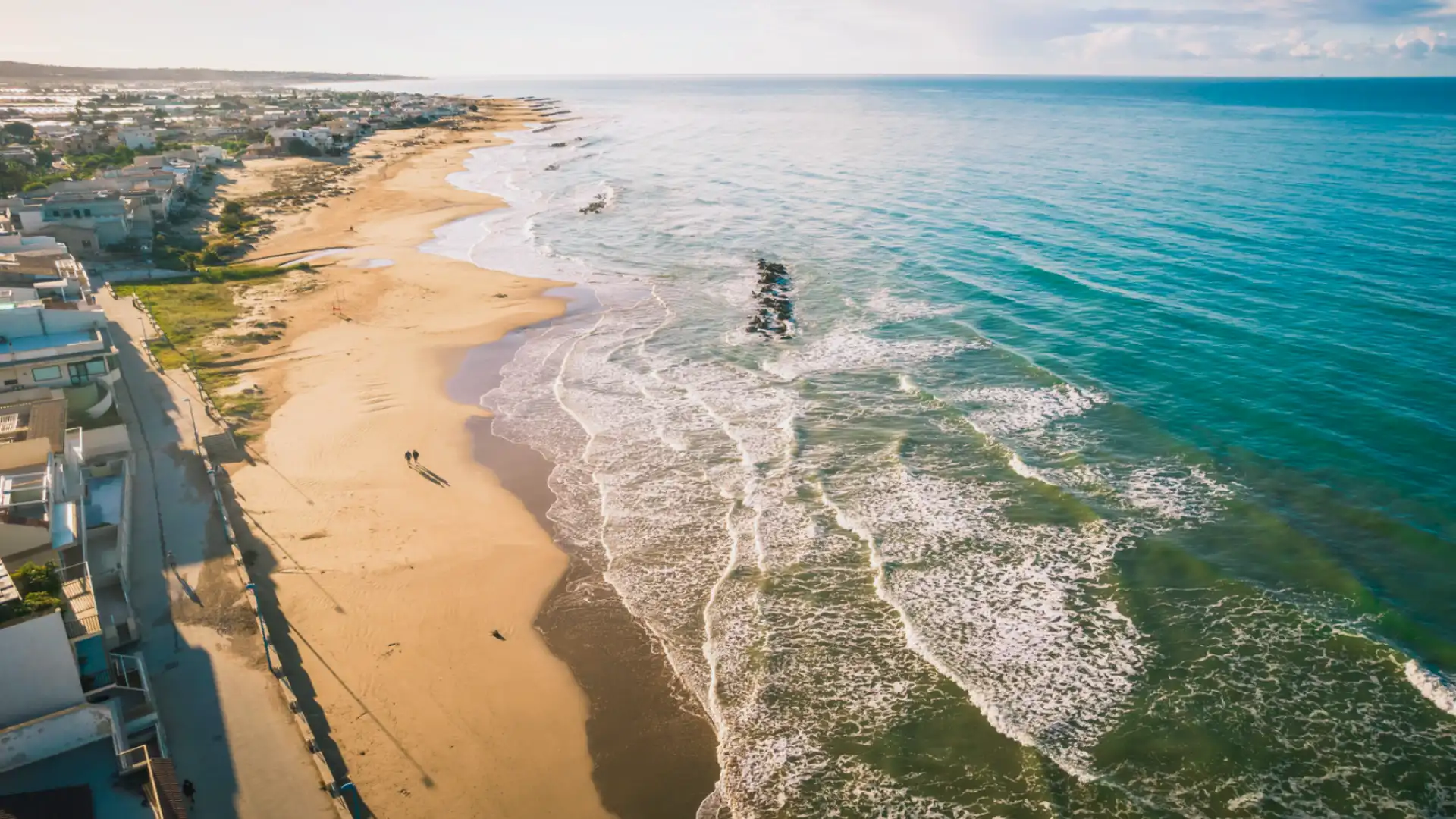
The southeastern coast of Sicily is one of the island’s most captivating and family-friendly beach destinations. Here, crystal-clear waters meet long golden beaches and sandy dunes perfect for little ones. Ideal for those seeking a relaxing and authentic holiday, this stretch of coastline represents the heart of the most genuine and accessible Baroque Sicily.
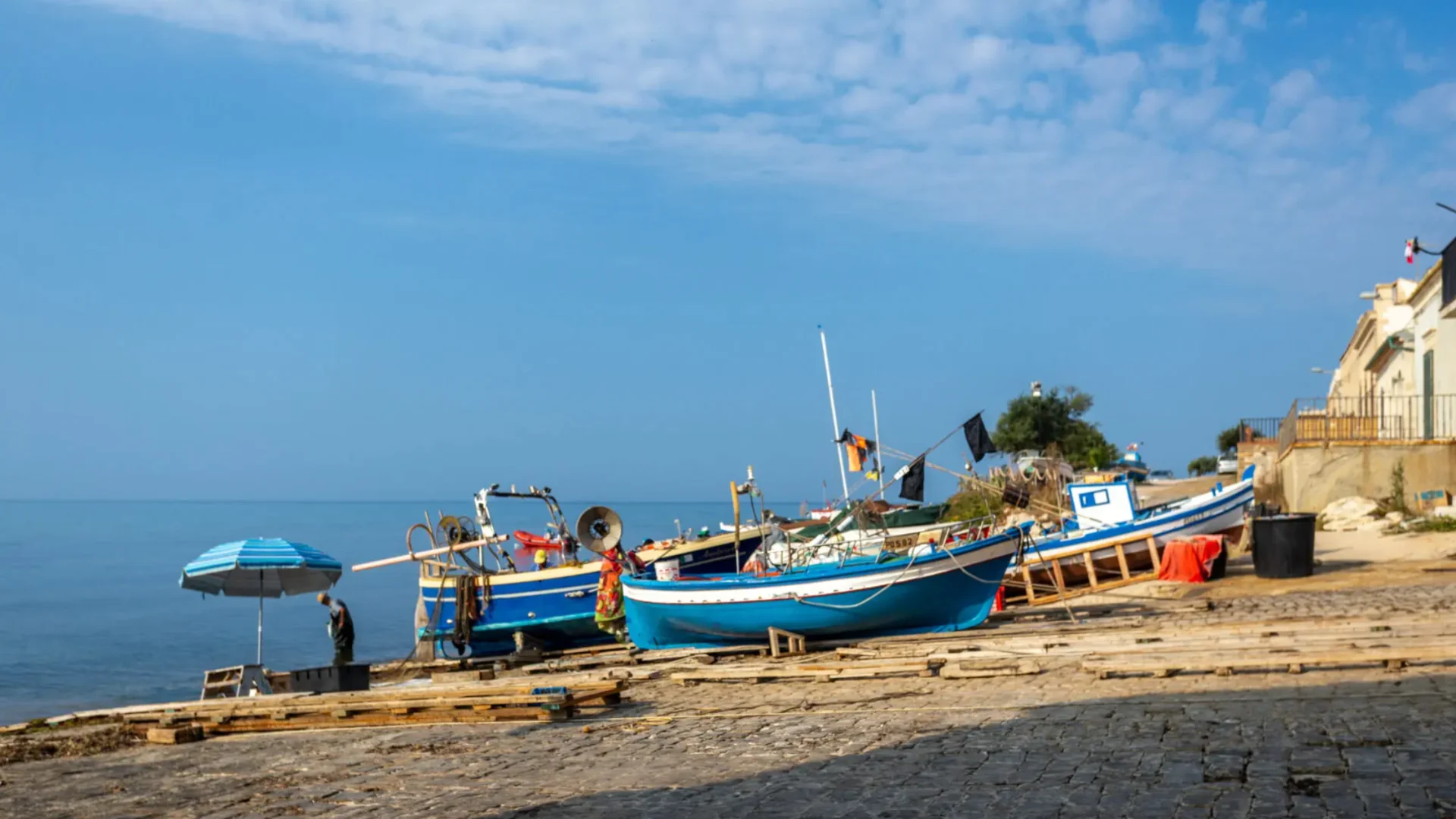
From Marina di Ragusa to Punta Secca, famous for Inspector Montalbano’s house, and on to Torre di Mezzo, Marina di Modica, Sampieri, Santa Maria del Focallo, and Marina di Marza: each location offers wide sandy beaches with shallow waters, perfect for children and less experienced swimmers.
For those seeking a closer connection with nature, the coves of Punta Cirica offer a wilder and more secluded experience, set in an unspoiled natural landscape.
Many of the beaches in this area boast important recognitions: the Blue Flags awarded to Ragusa, Modica, Ispica, and Scicli certify environmental excellence and the sustainability of the services offered. Additionally, destinations such as Santa Maria del Focallo, Marina di Ragusa, Casuzze, Caucana, Punta Secca, and Sampieri have been awarded the Green Flag, a symbol of quality and safety for children.
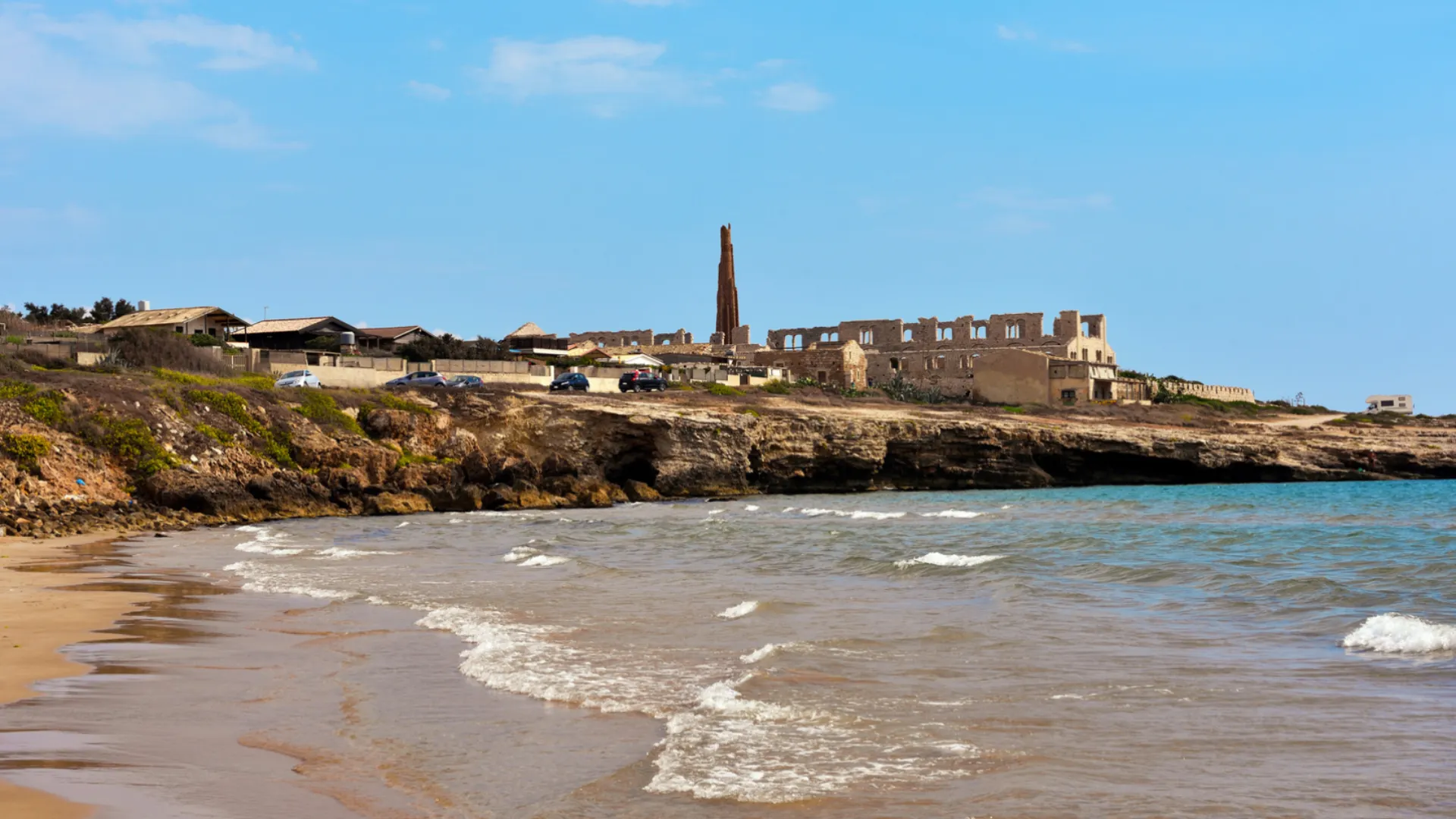
Il litorale del sud-est siciliano non è solo mare: il territorio è punteggiato da affascinanti centri storici in stile tardo-barocco, siti UNESCO come Scicli, Modica e Ragusa Ibla, e una ricca tradizione gastronomica che rende ogni soggiorno un’esperienza completa.
Do you want to experience a vacation focused on relaxation, nature, and local traditions? Explore the southeastern territories of Sicily with Discovering Rural Sicily, the project that highlights rural experiences, food and wine tourism, culture, and the natural wonders of the island.
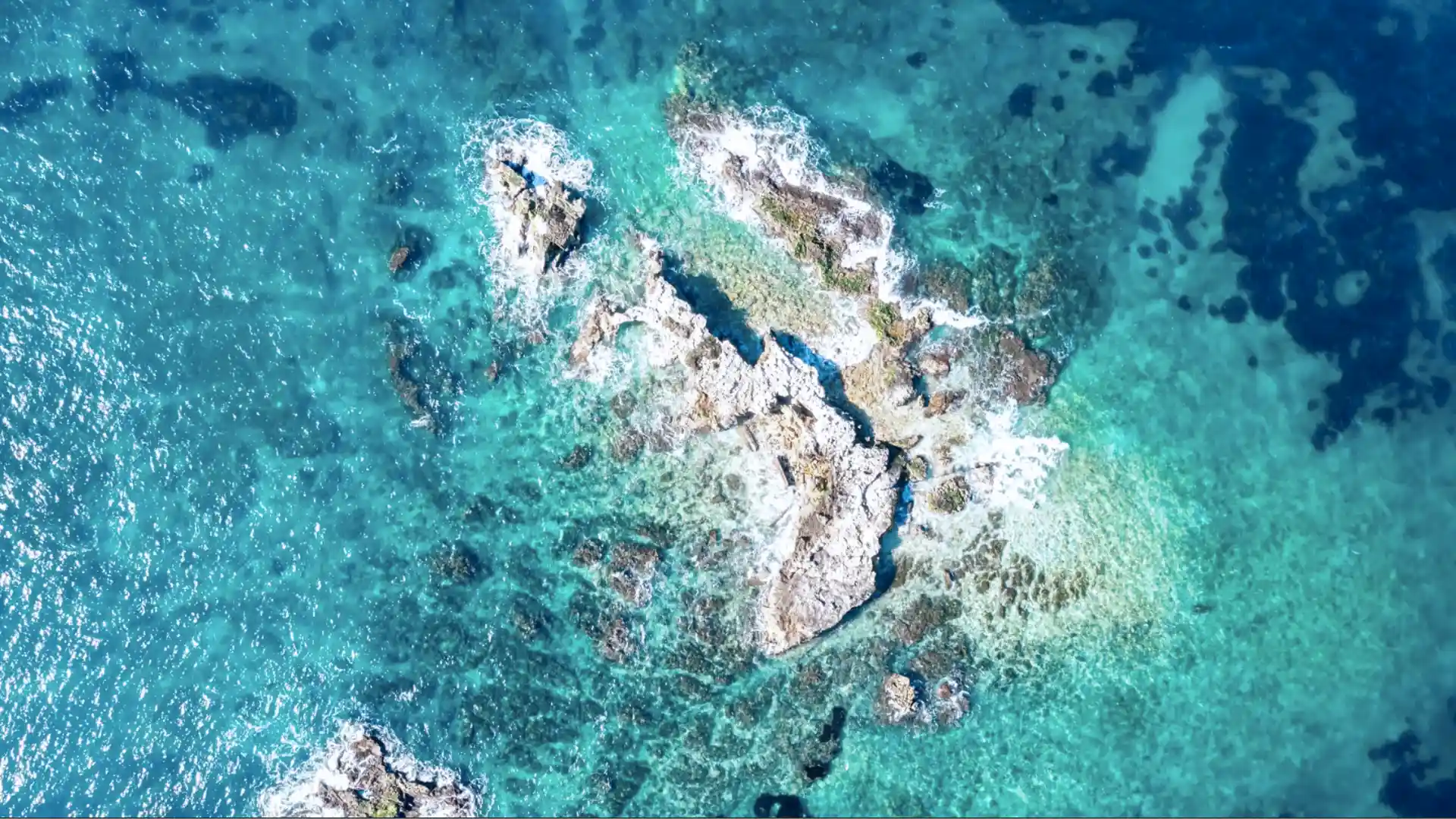
Tra le campagne lussureggianti di Aci Catena, nel territorio delle Aci, si nasconde un tesoro poco noto ma di straordinaria importanza: l’area archeologica di Santa Venera al Pozzo. Un sito unico nel suo genere, dove le antiche terme romane si intrecciano con culti greci, leggende cristiane e un paesaggio naturale rigoglioso. Scopri uno dei più affascinanti siti archeologici della Sicilia, emblema perfetto del dialogo tra cultura e natura nel cuore dell’isola.
On a verdant hill in the territory of Aci Catena, near the area known as Piano Reitana, lies the archaeological site of the Terme di Santa Venera al Pozzo, which extends over approximately nine hectares, reaching as far as Capo Mulini, a coastal hamlet of Acireale.
This landscape, where nature and history intertwine, is rich in sulfurous water springs and holds a millennia-old memory of ancient cults, thermal settlements, and religious traditions. Beyond its archaeological and scenic value, the site is deeply connected to Greek myths and Christian traditions. The archaeological area, now managed as part of the Archaeological and Landscape Park of Catania and the Vallata delle Aci, preserves a strong cultural identity deeply rooted in the territory.
It was the Greeks, between the 5th and 4th centuries BC, who settled around the springs in the area, likely constructing spaces intended for thermal use. Around the spring, a sanctuary dedicated to Demeter and Kore arose, as evidenced by the discovery of votive figurines.
Among the most important findings is the so-called “House of the Pithos”, a sacred building from the 4th century BC located next to an ancient watercourse. Inside, a large terracotta container (pithos) was found, fed by a channeling system.
With the arrival of the Romans, the Greek buildings were demolished to construct a thermal complex, dating back to after the 1st century AD, which is still visible today. The site, identified with the ancient Acium, was one of the mansiones along the route between Catania and Messina. According to Christian tradition, Saint Venera was martyred right in this place: her head was thrown into the thermal well, whose waters were considered sacred. The sulfurous spring, regarded as one of the finest in Europe, was long a vital therapeutic resource, although it is no longer in use today.
Over time, the area underwent numerous transformations: next to the baths, a Roman rural villa was converted into a production facility with 37 rooms and three kilns for ceramic and brick manufacturing, active until the 5th century.
In the Middle Ages, the Church of Santa Venera was built, documented as early as 1192 and officially dedicated to the saint in 1397.
In 1422, Alfonso the Magnanimous established the fiera franca, a duty-free fair that remained active for two centuries and contributed to the area's economic and religious development.
The thermal pools were closed in 1895 for health reasons and replaced by the modern facility of the Terme di Acireale.
Today, the former residence of the Pennisi family hosts an antiquarium displaying artifacts that trace the settlement phases of the site.
A recent discovery revealed that the baths extend over an area at least four times larger than previously known, including facilities for the sterilization of therapeutic muds.
The area’s ecosystem, marked by gas emissions that color the waters, also inspired the myth of Acis and Galatea, as told by Ovid. Next to the spring, a Greek temenos—a sacred space for water-related rituals—was discovered, along with artifacts from daily life dating back over 2,500 years.
From 2005 to 2011, the area hosted the CineNostrum festival, thanks to the installation of an amphitheater.
In January 2014, a decree reintegrated the area into the regional park system, defining the boundaries of the “Valle dell’Aci” Archaeological Park and ensuring the site's protection against urban expansion.
Regional archaeological parks enjoy administrative autonomy and can reinvest locally the resources they generate.
In July 2023, a fire damaged part of the site, but it also prompted a prompt institutional response: the Regional Department, the Catania Superintendency, the Catania Archaeological Park, and the Municipality of Aci Catena signed a Collaboration Agreement for shared management and the site's revitalization.
Santa Venera al Pozzo is a precious fragment of history and identity for the territory of the Aci.
A place where memory and nature intertwine, deserving to be passed down to future generations.
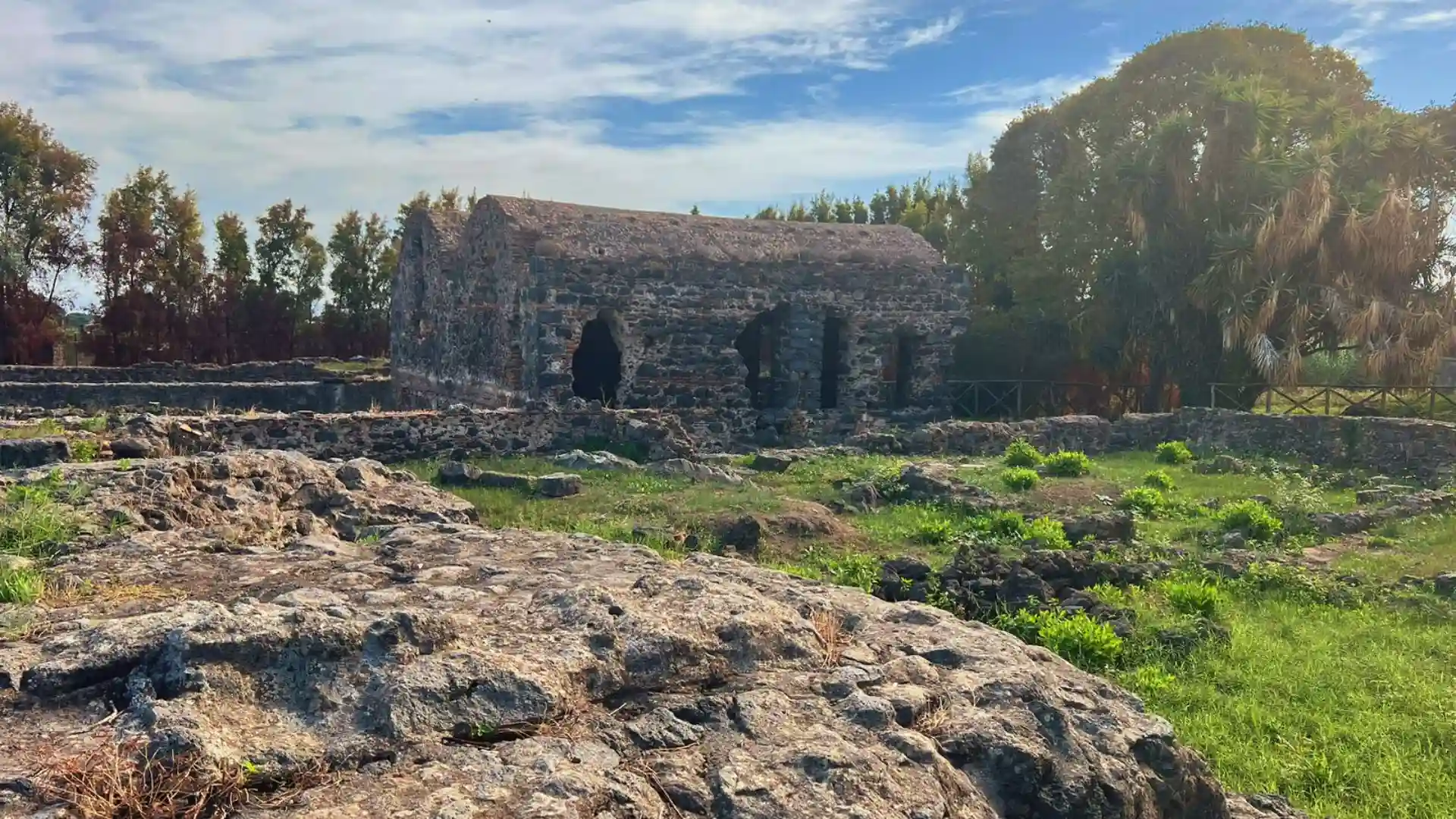
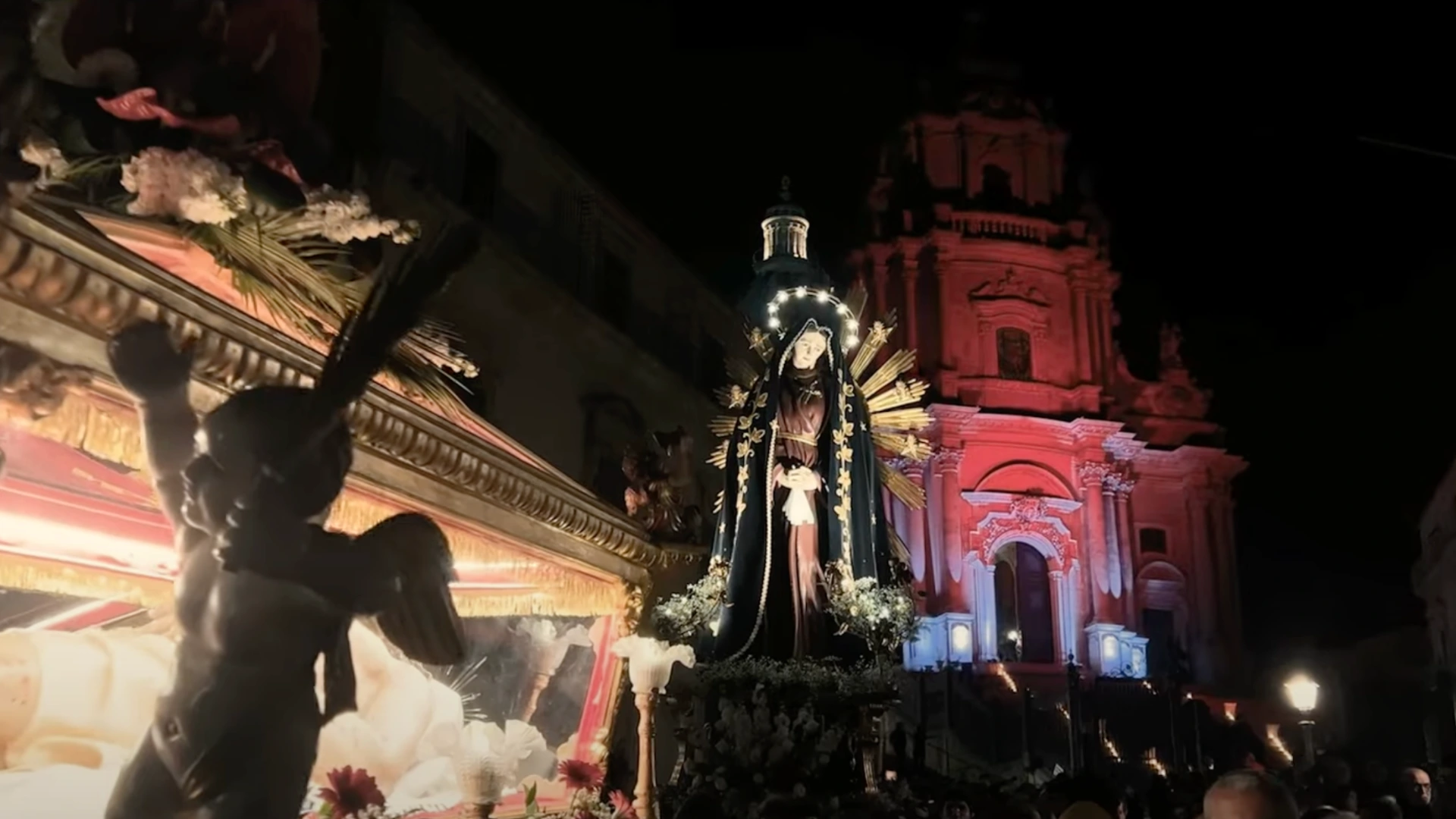
Trepidation, colors, faith, and explosive joy: this is how Easter in the Iblei is experienced, in the heart of southeastern Sicily. In this unique territory, where Baroque art meets popular devotion, Easter celebrations become overwhelming spectacles, capable of involving the visitor in an exciting journey through ancient rituals, folklore, and authentic spirituality. Every year, thanks to the Enjoy Barocco initiative, the Iblean region, and particularly the province of Ragusa, transforms into the ideal stage for religious and cultural events that attract thousands of visitors from all over Italy and beyond.
 © Enjoy Barocco
The journey begins in the splendid Ragusa Ibla, a UNESCO World Heritage site and a key stop on the Baroque Routes. Here, on Palm Sunday, a captivating procession takes place: the 80 confreres of the Church of Santa Maria dell’Itria accompany the effigy of the Addolorata to the majestic Chiesa Madre of San Giorgio, an icon of Sicilian Baroque architecture. In the following days, the other churches of the city continue with rituals and celebrations, culminating on Holy Thursday with the arrangement of the traditional Sepolcri.
Our journey continues to Ispica, another hub of Baroque Easter in Sicily. Here, Holy Thursday is marked by the procession of the cavàri, which carry the effigy of Christ at the Column. Good Friday is instead dedicated to the nunziatàri, who accompany Christ to the Cross in an atmosphere of intense popular participation.
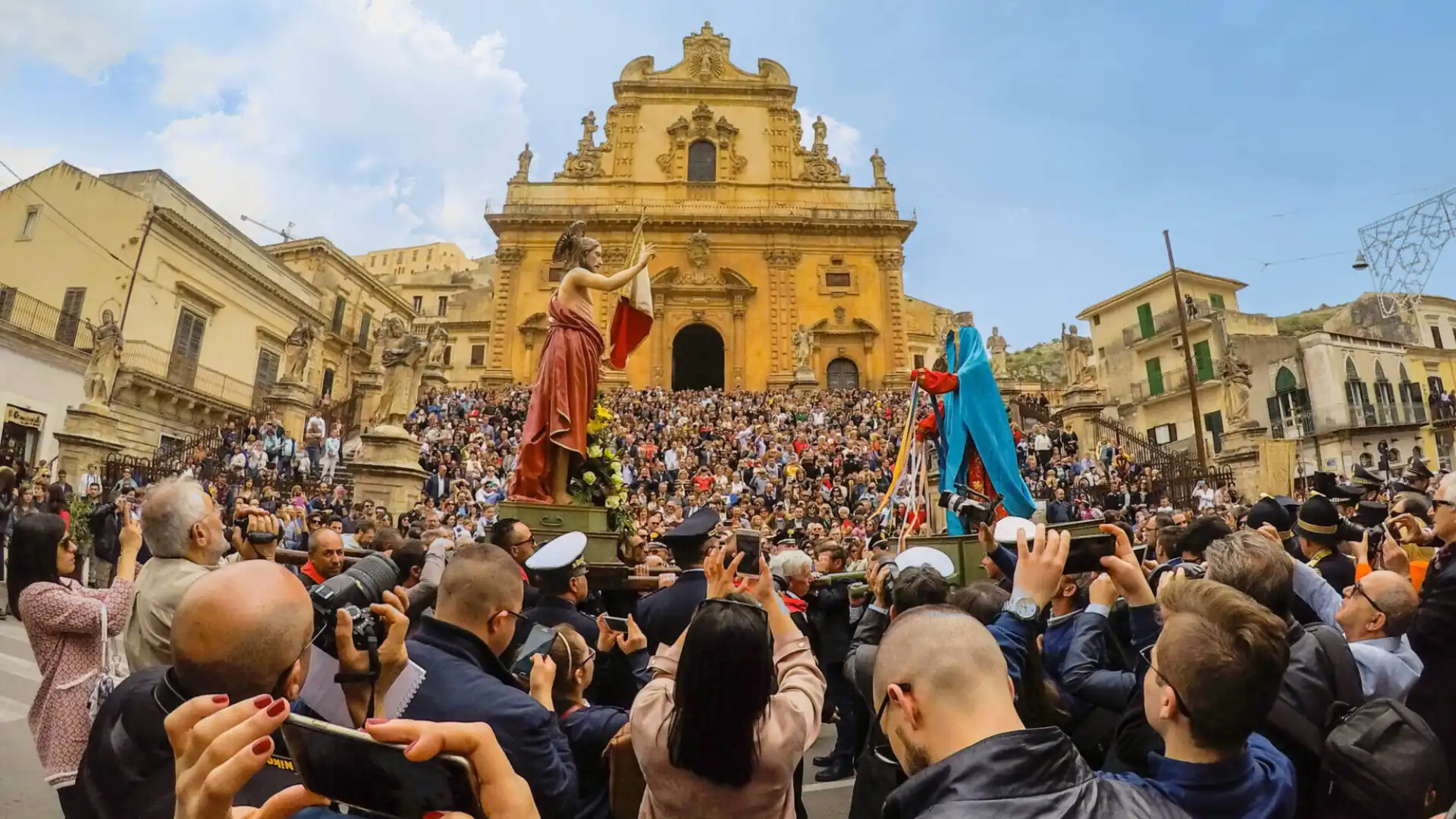
Easter Sunday represents the pinnacle of the celebrations. In Modica, a city known for its IGP Chocolate, the emotional ritual of the Madonna Vasa Vasa takes place. From dawn, the central Corso Umberto fills with locals and tourists ready to witness the "noon kiss": the symbolic meeting between the Madonna and the risen Christ, marking the transition from mourning to joy with the removal of the black veil.
 © Enjoy Barocco
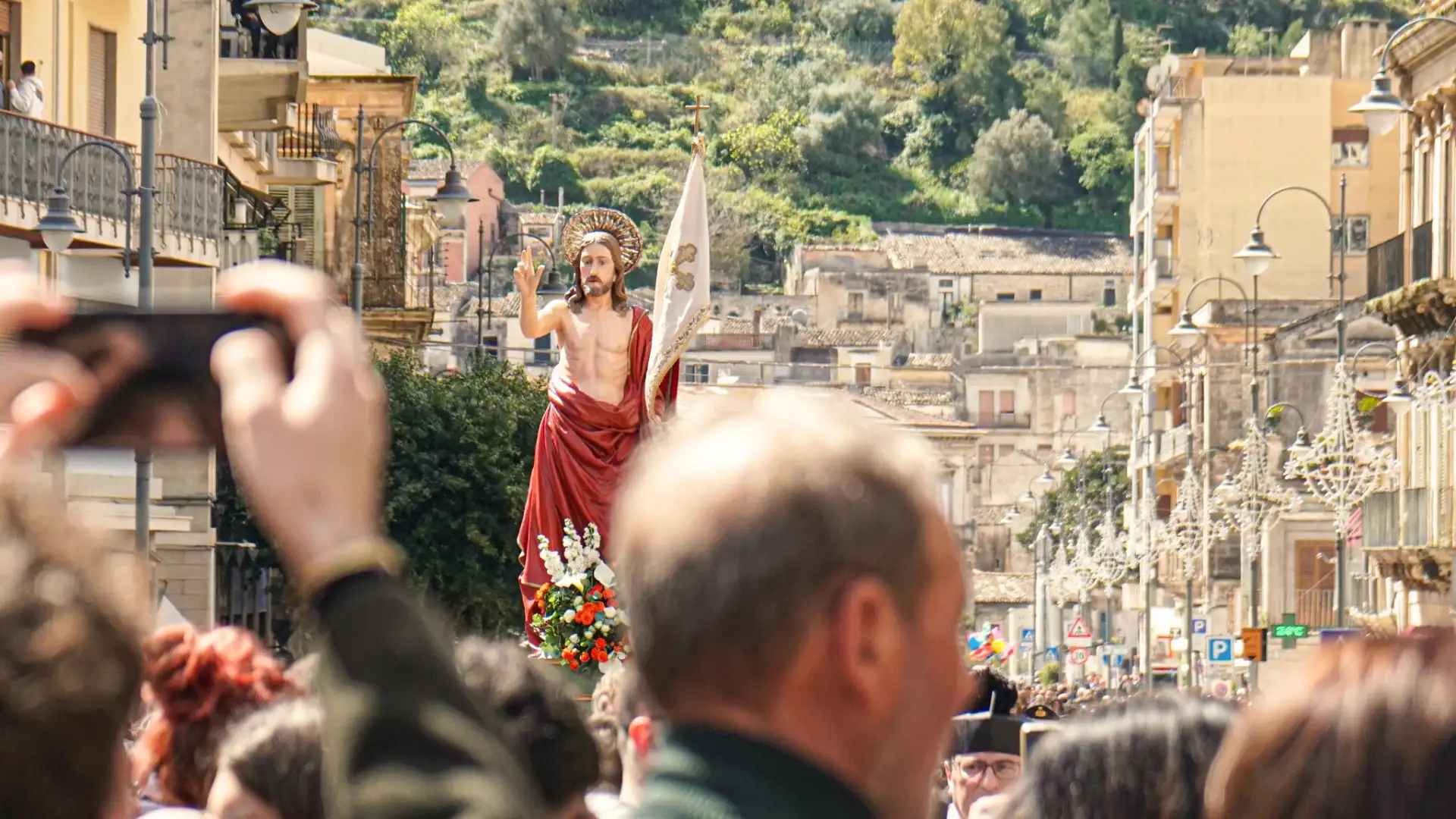
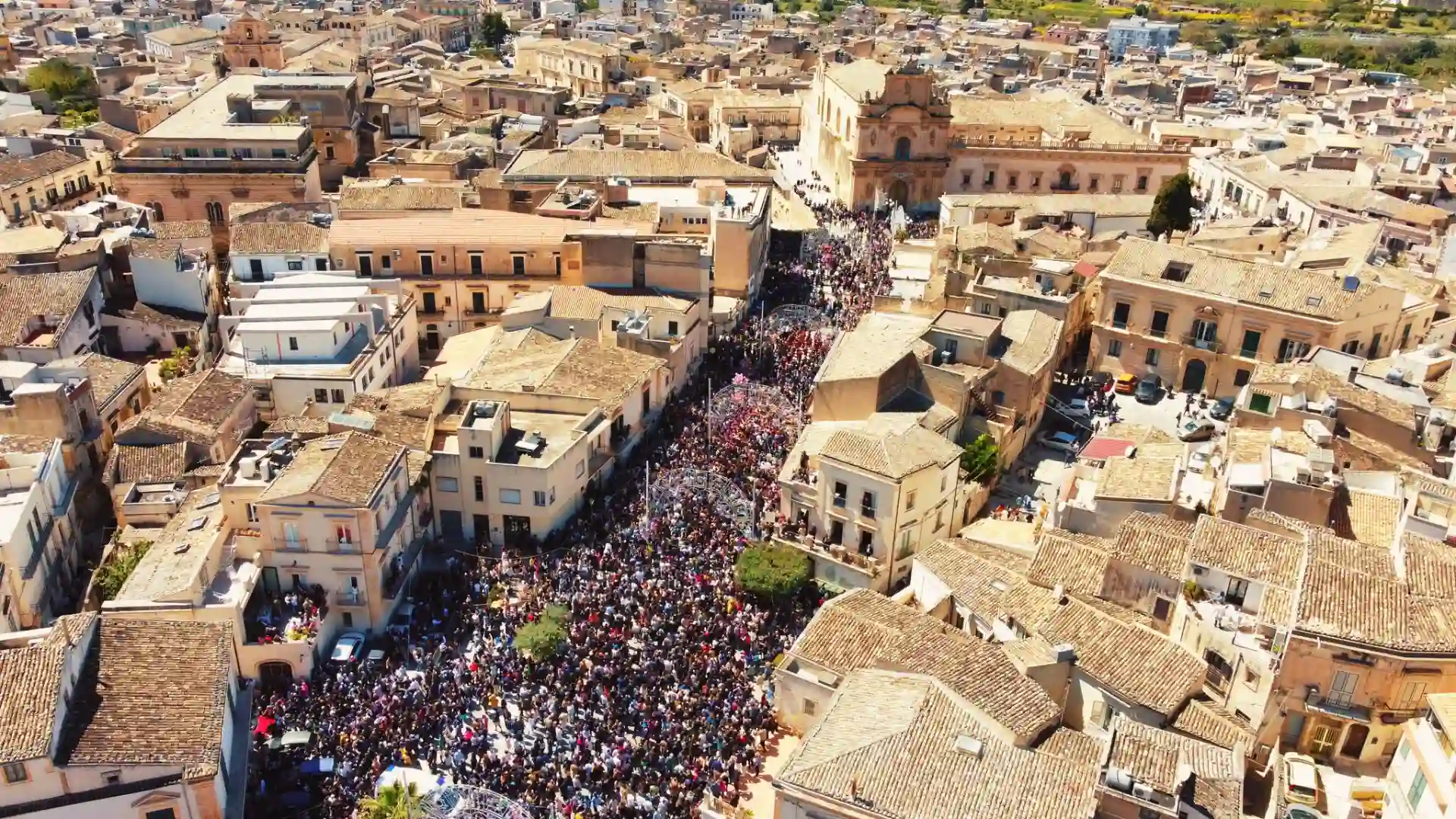
In Scicli, the celebrations explode in the collective cry of “Gioia!”. The effigy of the Risen Christ, affectionately called U Gioia, is triumphantly carried through the streets of the town, accompanied by songs, fireworks, and the contagious enthusiasm of the crowd. It is a moment of genuine celebration, truly embodying the spirit of Baroque Sicily.
To conclude this Easter itinerary in the Val di Noto is U Ncuontru of Ispica: the poignant meeting between the Madonna and the Risen Christ, also celebrated on Easter Sunday morning. A deeply felt event, capable of merging faith, tradition, and a strong sense of community.
Scopri i riti più intensi della Pasqua nella Sicilia barocca con Enjoy Barocco e lasciati emozionare da un’esperienza autentica tra arte, spiritualità e folclore.
Organize your itinerary with Discovering Rural Sicily, the project that enhances the cultural and religious heritage of Sicily's rural areas.
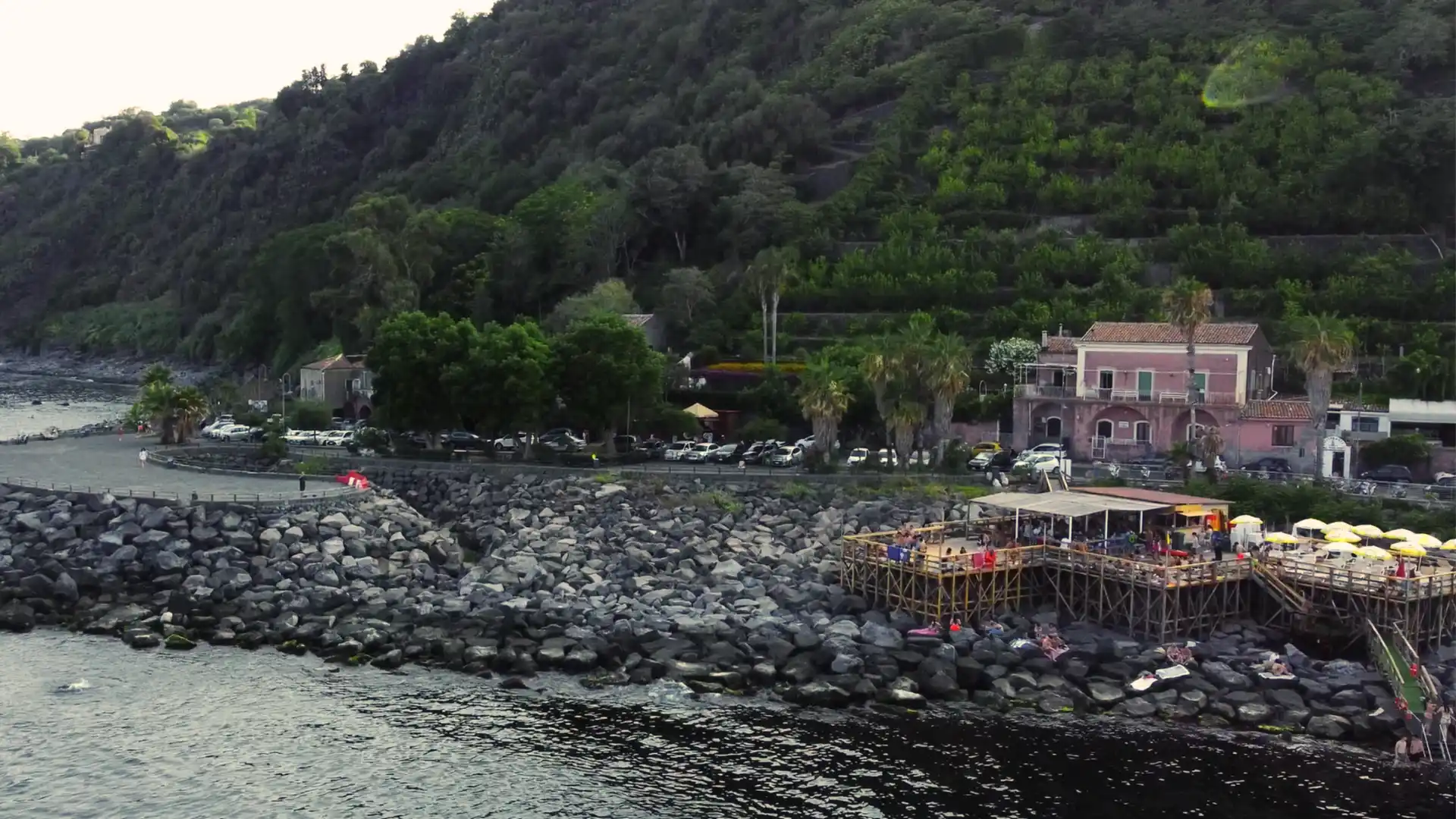
The Riserva Naturale Orientata della Timpa in Acireale is one of the most captivating places in eastern Sicily. Located along the Ionian coast, this protected reserve is a true paradise for nature lovers, biodiversity enthusiasts, and sustainable tourism.
A journey through the Timpa means immersing yourself in a unique landscape, where geology, flora, fauna, and tradition blend in perfect harmony.
© Gal Terre di Aci
Copy
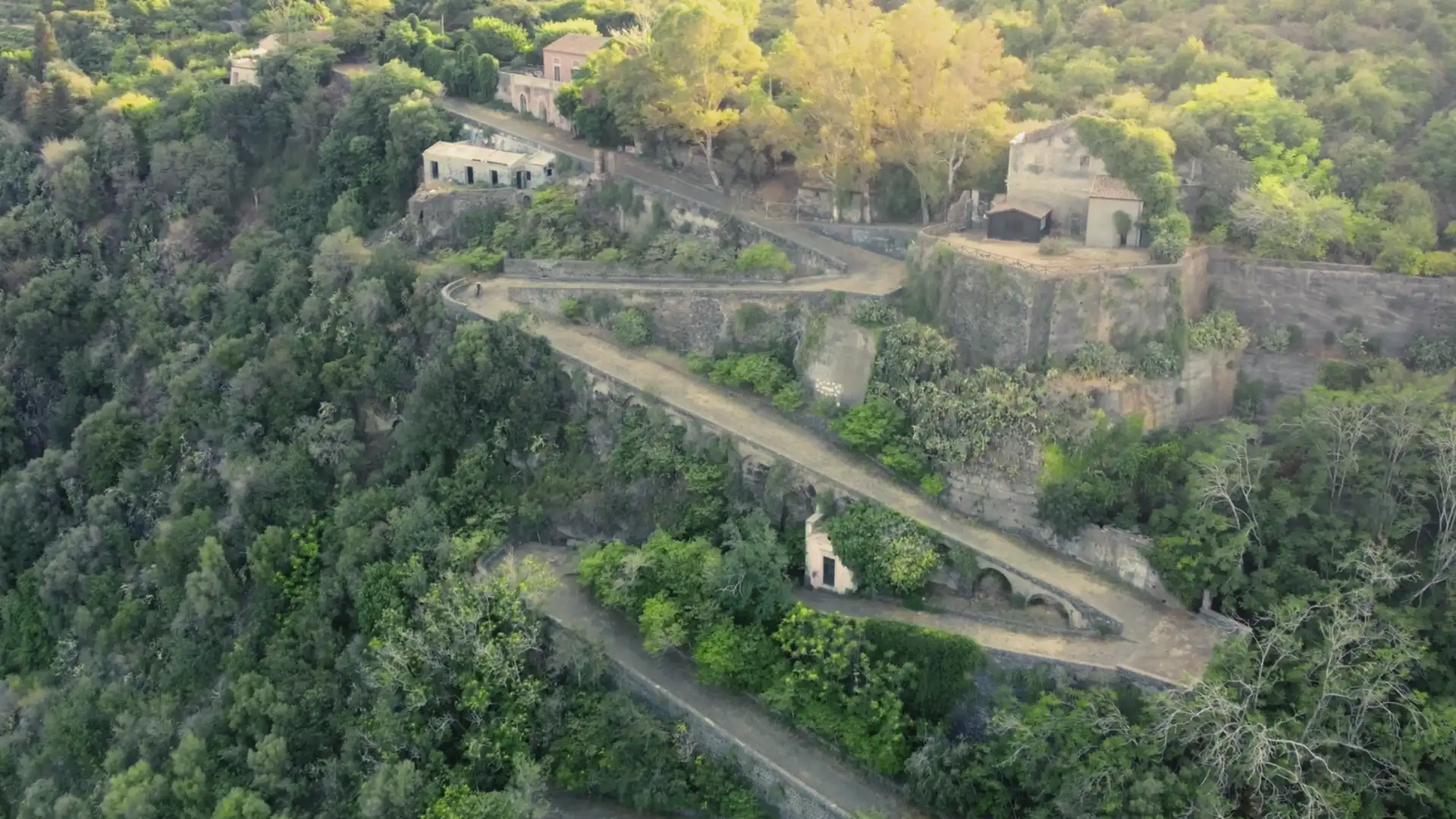
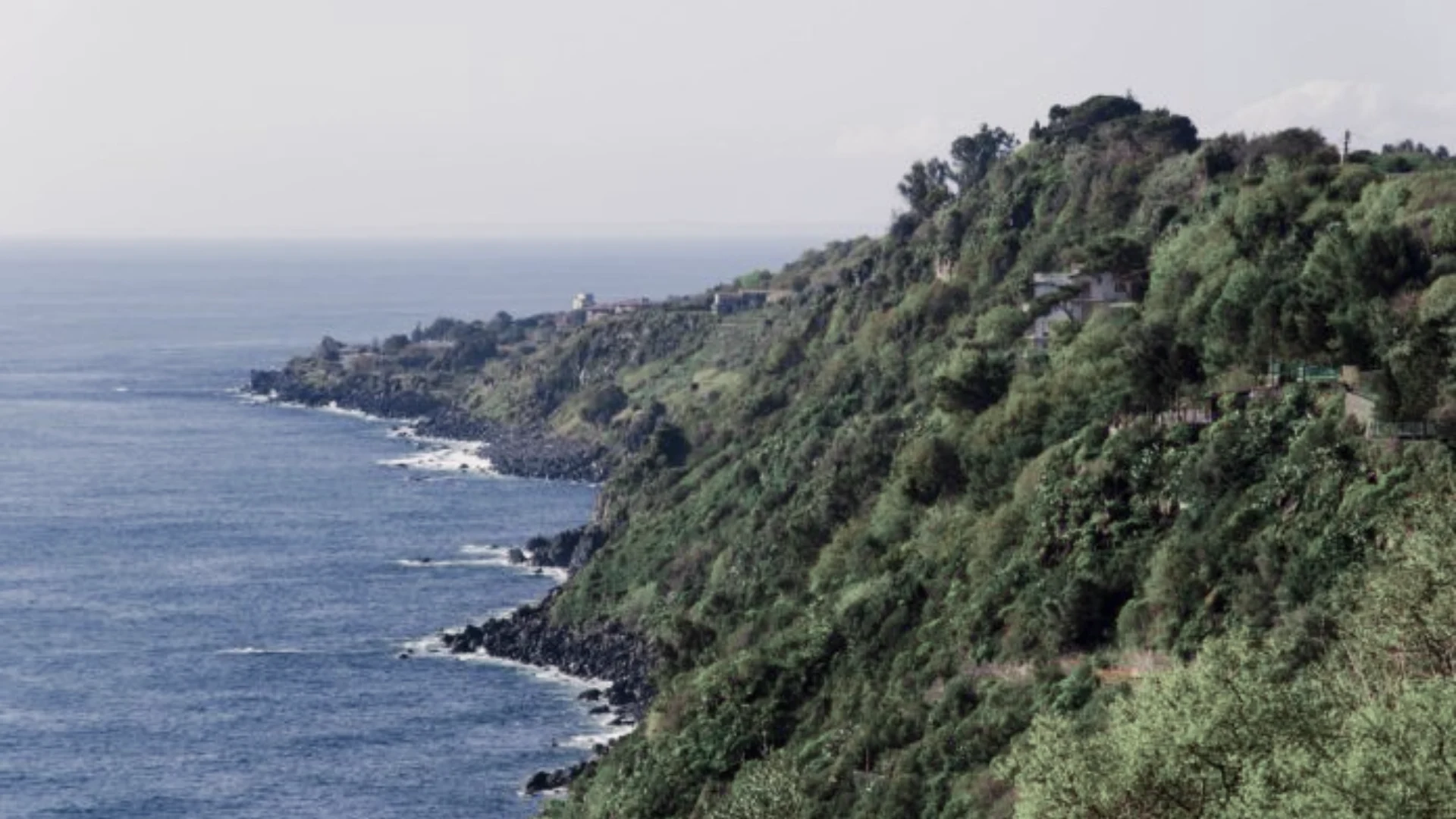
Established in 1999, the Timpa Reserve stretches across a 150-meter escarpment formed by millennia of volcanic activity and tectonic movements. Its sheer sea cliffs offer breathtaking views and reveal the geological history of Mount Etna.
The landscape is diverse and captivating: volcanic rocks, freshwater springs, Mediterranean scrub, and citrus groves alternate across the terrain. Geological formations like tuff, lahars, and ancient lava flows make this area a natural open-air laboratory.
 © Gal Terre di Aci
The Reserve hosts a remarkable biodiversity with species typical of the Sicilian landscape. Among the most representative plants are:
The wildlife is equally diverse: wild rabbits, foxes, hedgehogs, reptiles, and raptors like the Buzzard, Kestrel, and Peregrine Falcon. In spring, hoopoes and swallows join in, painting the sky with their flights and songs.
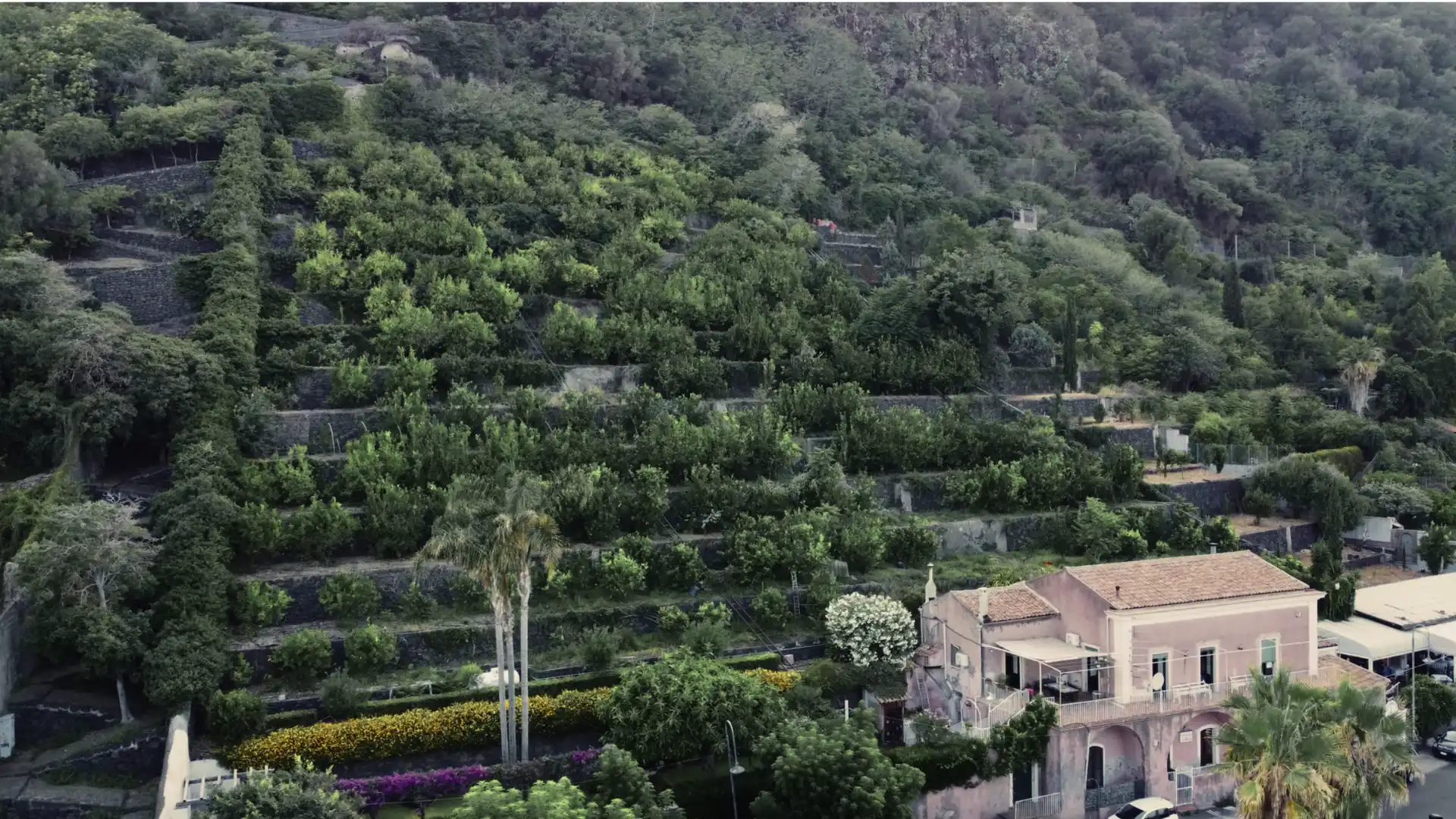
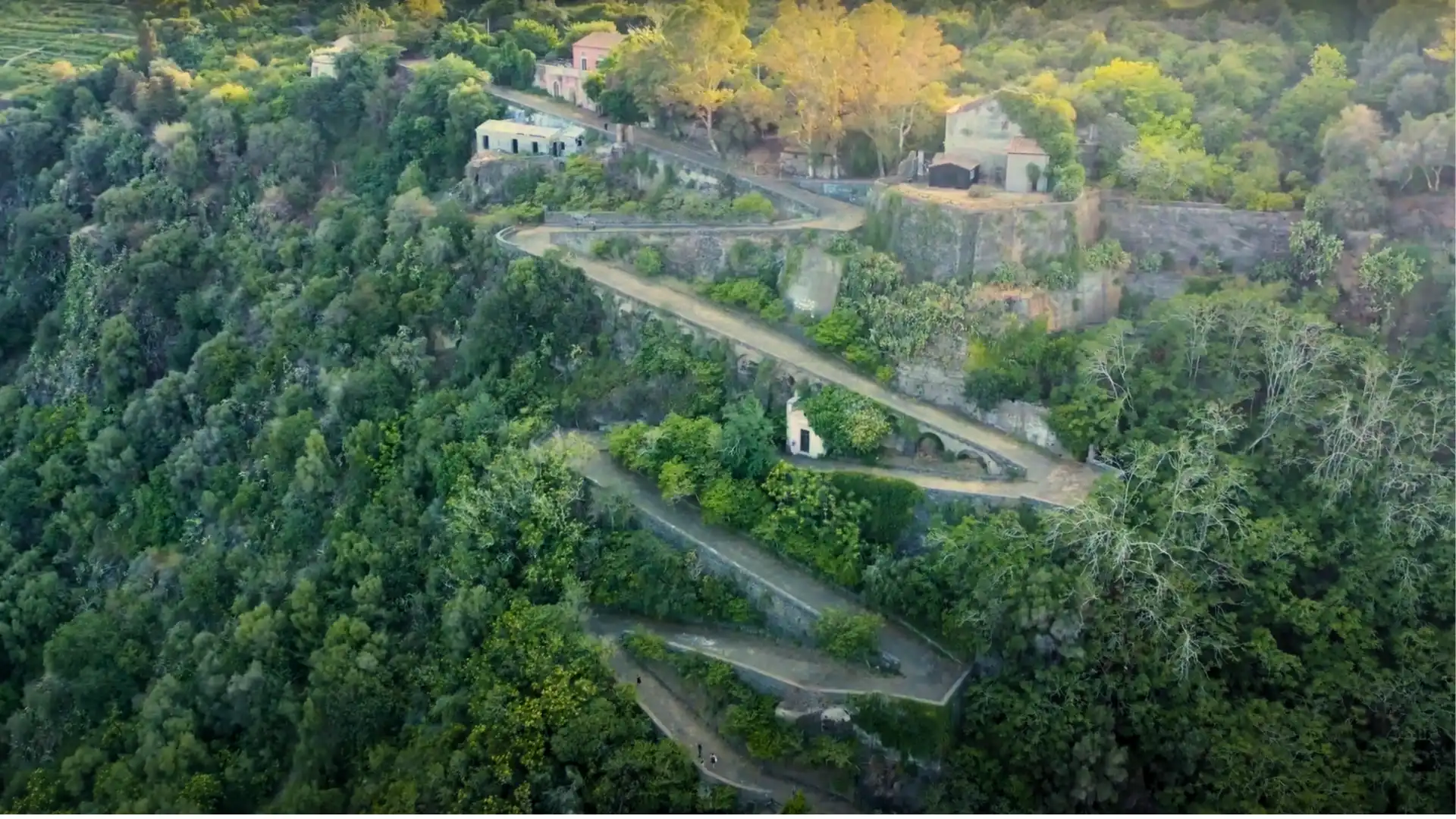
Uno dei percorsi più suggestivi è la via delle Chiazzette, antica mulattiera che collega Acireale con Santa Maria La Scala. Il sentiero è circondato da cappelle votive, tornanti panoramici e dalla storica Fortezza del Tocco.
Al termine, si può scegliere se:
The Riserva Naturale della Timpa di Acireale is an ideal destination for those seeking authentic experiences and direct contact with Sicilian nature.
Where coastal panoramas meet protected biodiversity and vibrant traditions, the Timpa stands as one of Sicily's crown jewels of rural tourism.
Explore the Timpa through Discovering Rural Sicily where authentic, sustainable adventures begin.
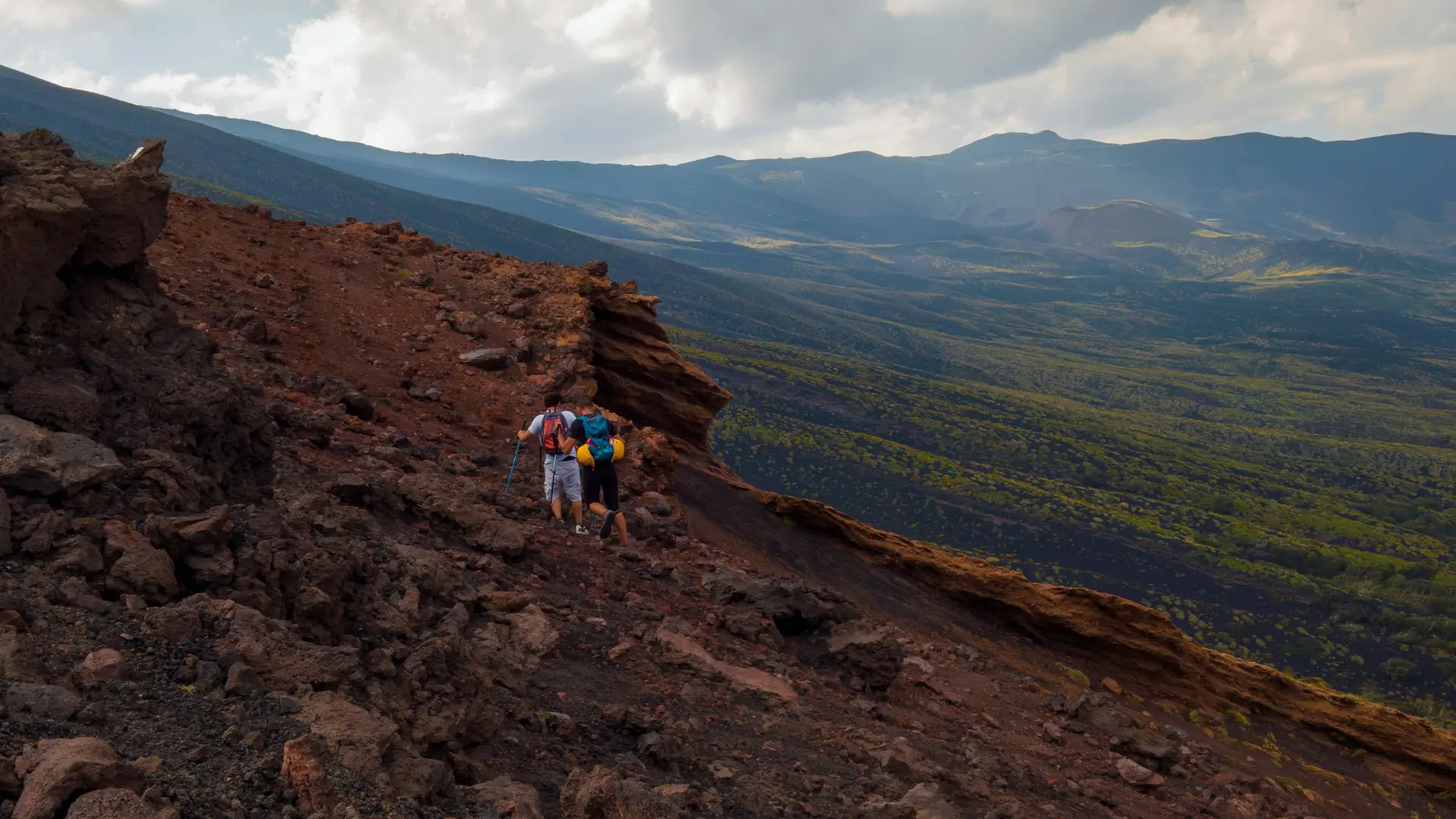
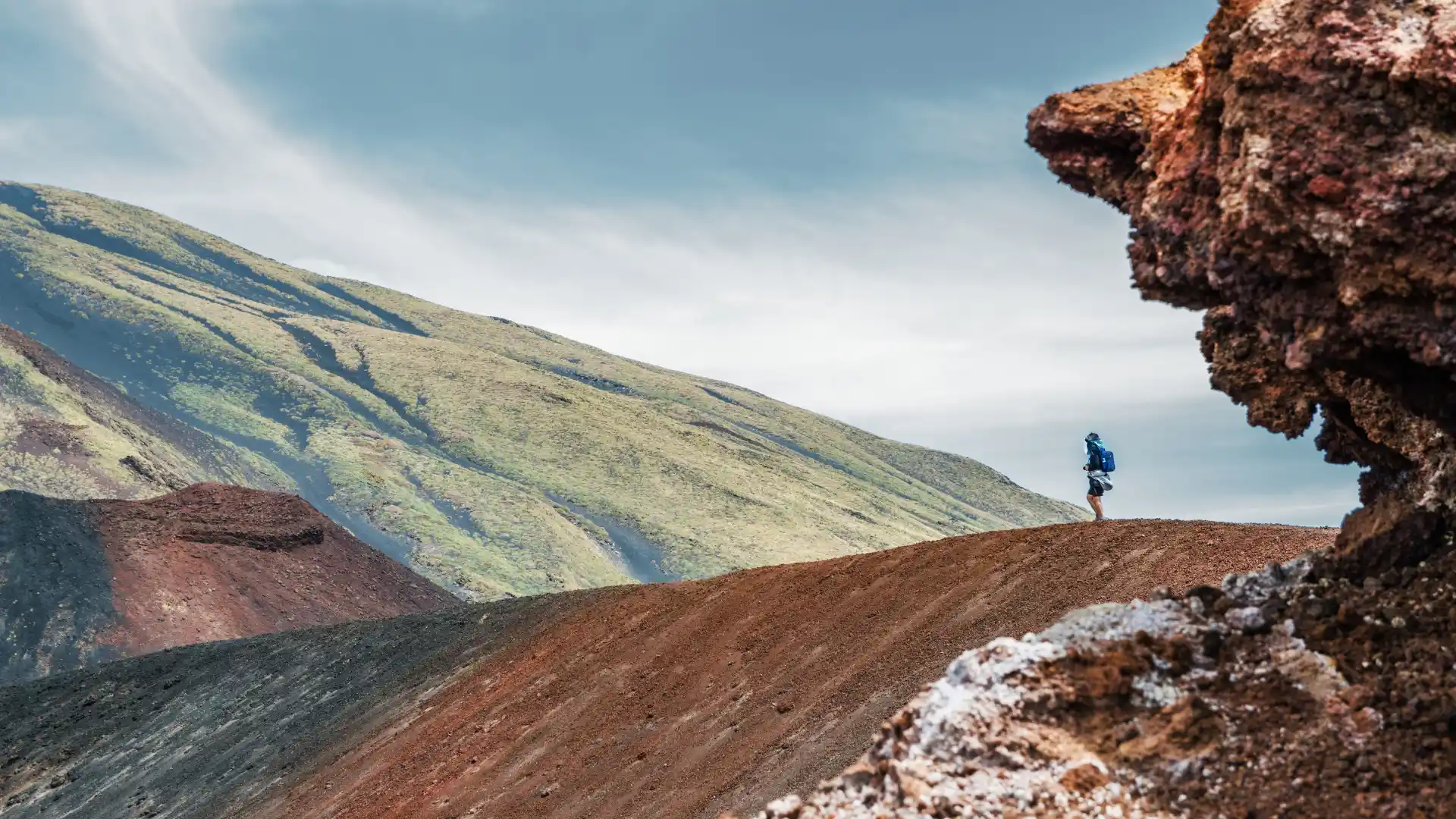
Mount Etna, Europe's tallest active volcano and UNESCO World Heritage Site, offers breathtaking landscapes and an extensive network of hiking trails. On its southern slopes, paths wind through volcanic craters, ancient forests, and lava flows, creating the perfect setting for trekking enthusiasts, nature lovers, and those seeking authentic local traditions.
Exploring Mount Etna on foot means living an authentic experience, filled with spectacular landscapes, surreal silences, and typical flavors. Let's discover together the two must-see itineraries on the southern slope.
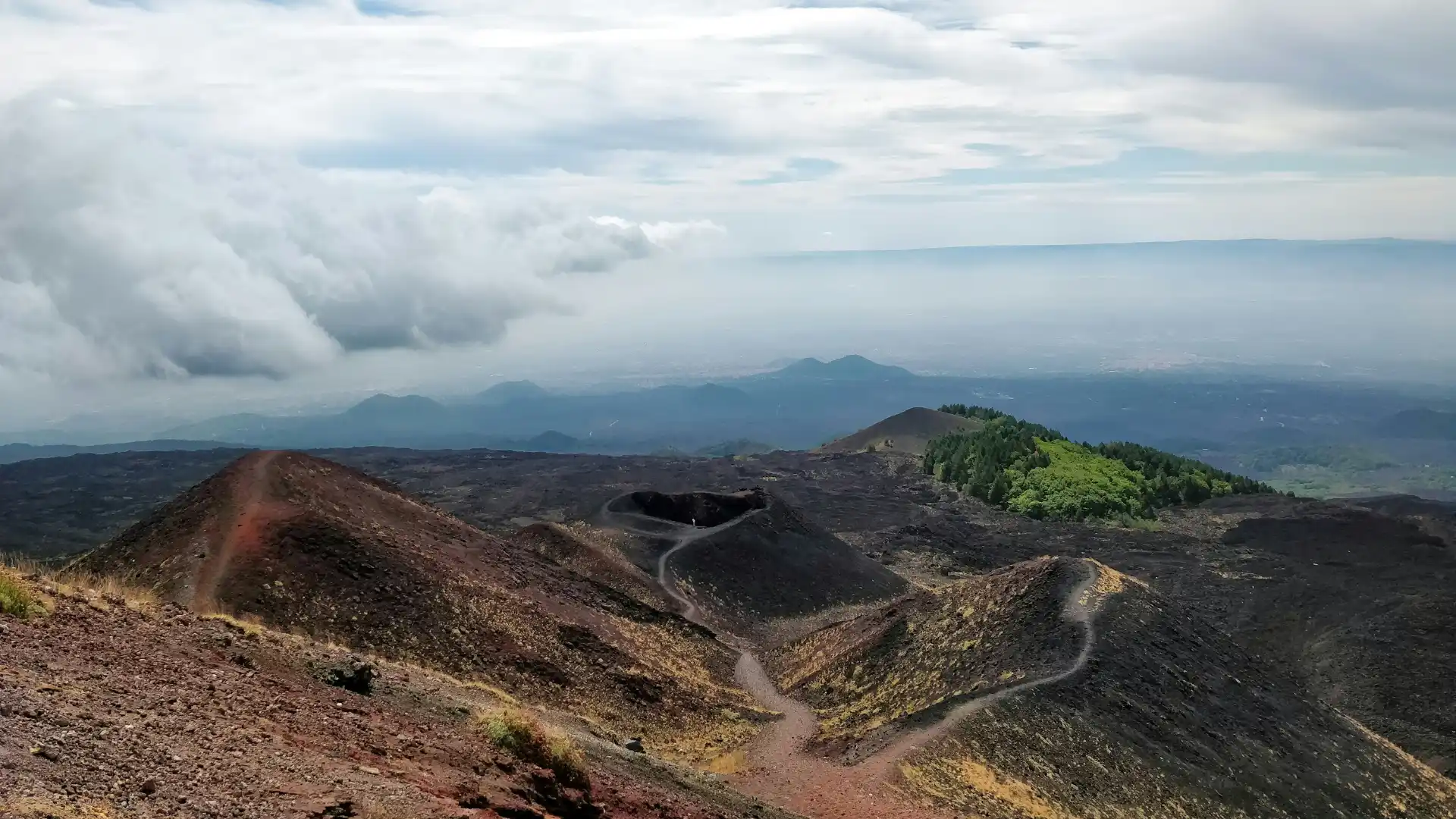
Among the most scenic trails on Etna's southern slopes, Schiena dell'Asino offers a panoramic route suitable even for less experienced hikers. The trail begins at approximately 1,800 meters altitude, winding through pine forests and broom fields with continuous views of the spectacular Valle del Bove - a volcanic depression formed over millennia. Highlights along the route:
Un’esperienza ideale per chi desidera coniugare natura e fotografia in un contesto paesaggistico unico.
The Rifugio Sapienza, at 1,900 meters above sea level, is the perfect starting point for exploring Etna's craters and lunar landscapes. From here, a trail leads to Montagnola, one of the highest areas reachable without alpine guides.
The hike traverses:
Il percorso, seppur più impegnativo, è perfetto per chi cerca un’esperienza immersiva nel cuore del vulcano.
Southern Etna isn't just about hiking. After a day on the trails, it's worth discovering the local food and wine traditions.
Among the typical products:
These flavors tell the story of a profound bond between people and land, completing the experience of authentic, sustainable tourism.
Grazie ai percorsi accessibili e alla varietà delle esperienze offerte, questa zona rappresenta una tappa imperdibile per chi ama la natura e la cultura.
Exploring the trails of southern Etna is much more than a hike: it's a journey through volcanic craters, breathtaking landscapes, and ancient Sicilian traditions.
Discover Etna with Discovering Rural Sicily: experience an authentic journey through land, fire, and identity.
The Alcantara Valley is one of the most fascinating places in Eastern Sicily, located between the slopes of Mount Etna and the Ionian coast. This territory, rich in wild nature, millennia of history, and authentic villages, is the ideal destination for those wishing to experience sustainable and experiential rural tourism.
Thanks to the Discovering Rural Sicily project, we invite you to discover the wonders of the Alcantara Valley: from the famous lava gorges to the ancient local traditions, in
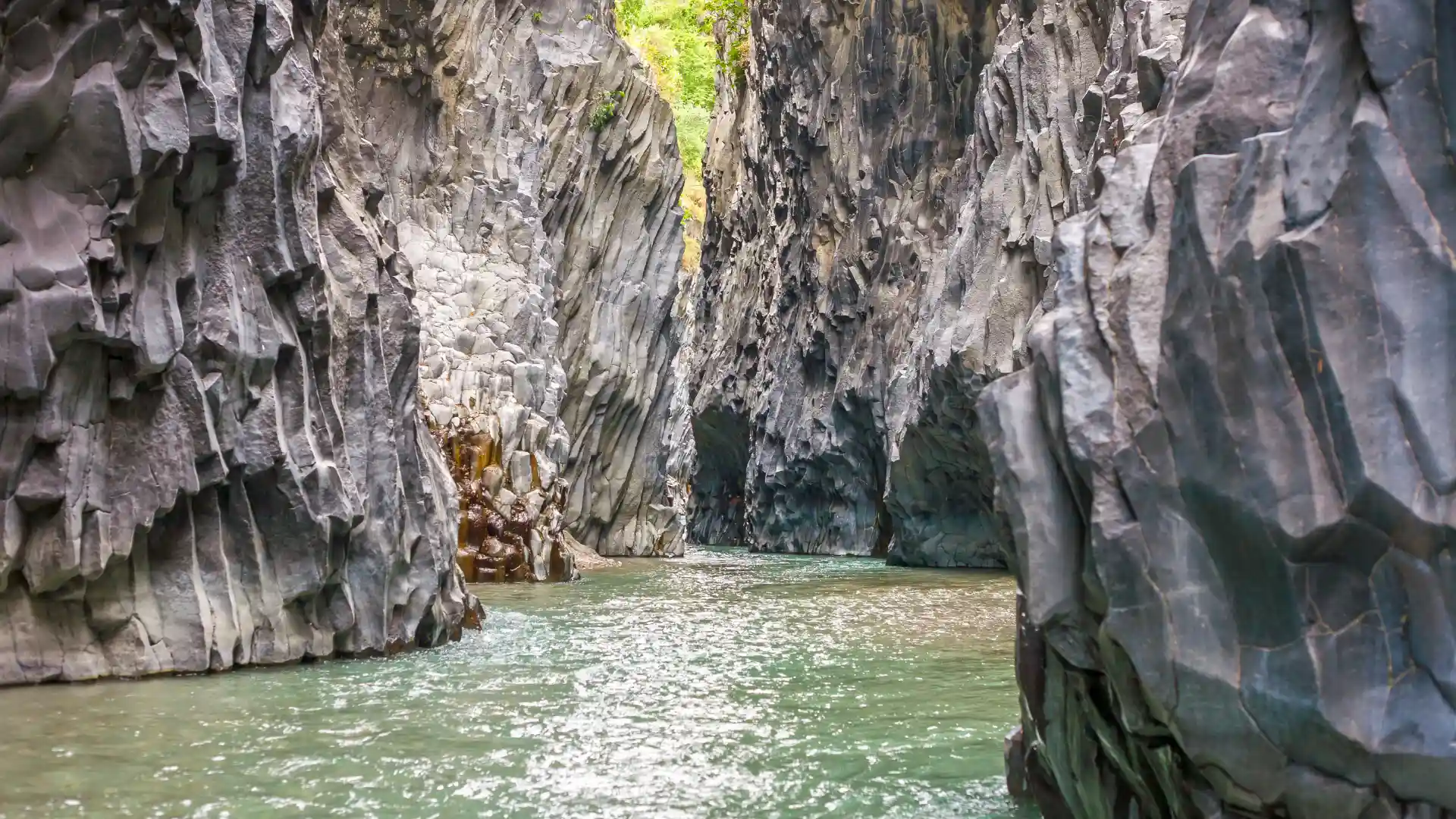
Among the most iconic attractions of the valley, the Alcantara Gorges represent one of the most striking geological spectacles in Sicily. The tall basaltic lava walls, shaped over centuries by the river's waters, create a unique landscape, perfect for nature lovers and photography enthusiasts.
Here, you can go on naturalistic trekking along the river, practice rafting and canyoning in the gorges, and admire waterfalls and rock formations that are unique in the world. The valley's trails wind through beech and oak forests, fragrant citrus groves, and ancient lava rocks, in a constantly changing and fascinating landscape.
The valley is not only nature; it is also a custodian of an authentic rural culture. The villages of Castelmola, Gaggi, and Graniti are small gems suspended in time, with cobblestone alleys, ancient churches, and unforgettable views.
Among the experiences you shouldn’t miss, we recommend:
Discovering these villages means connecting with the local communities and experiencing true Sicilian hospitality.
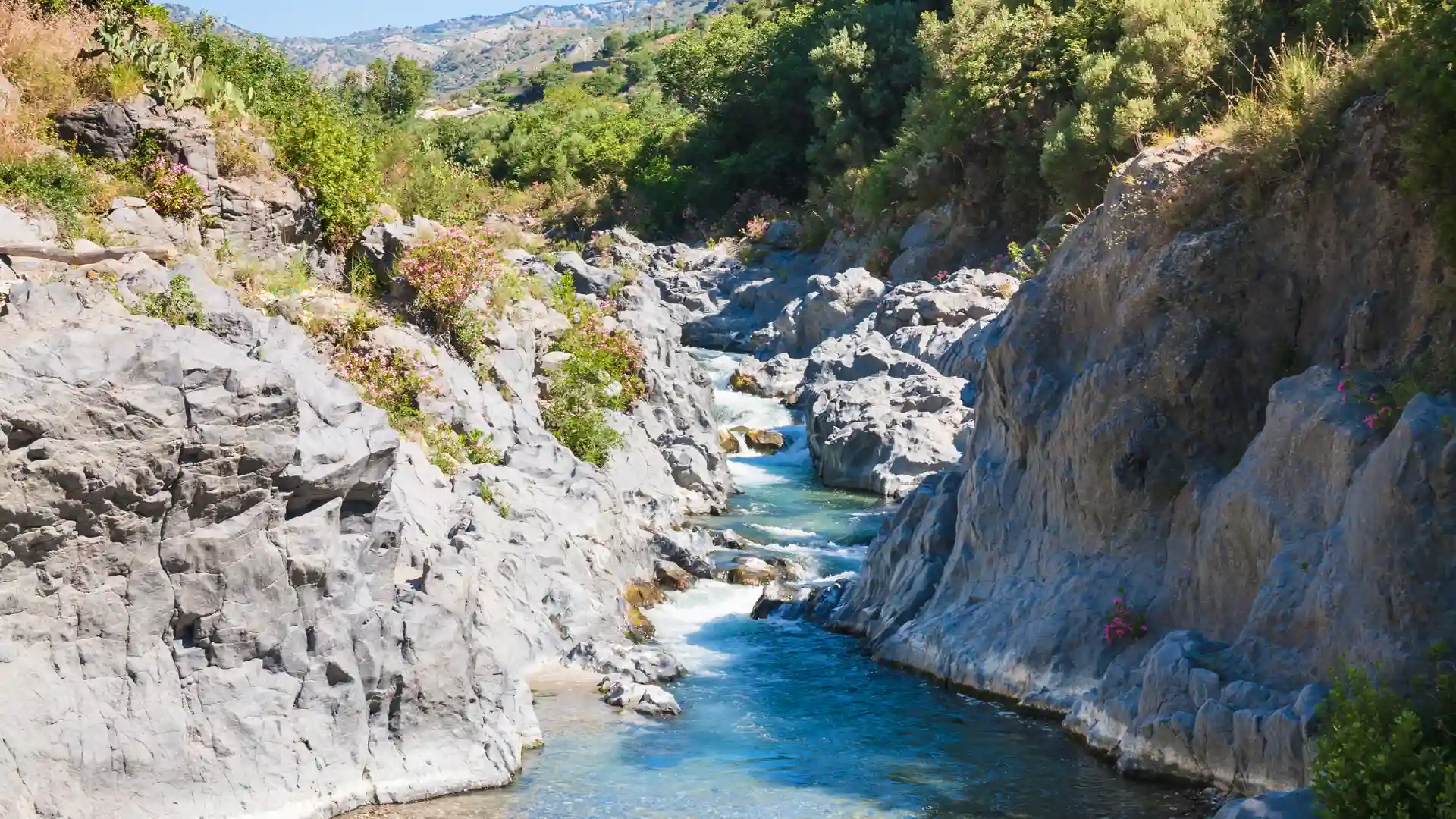
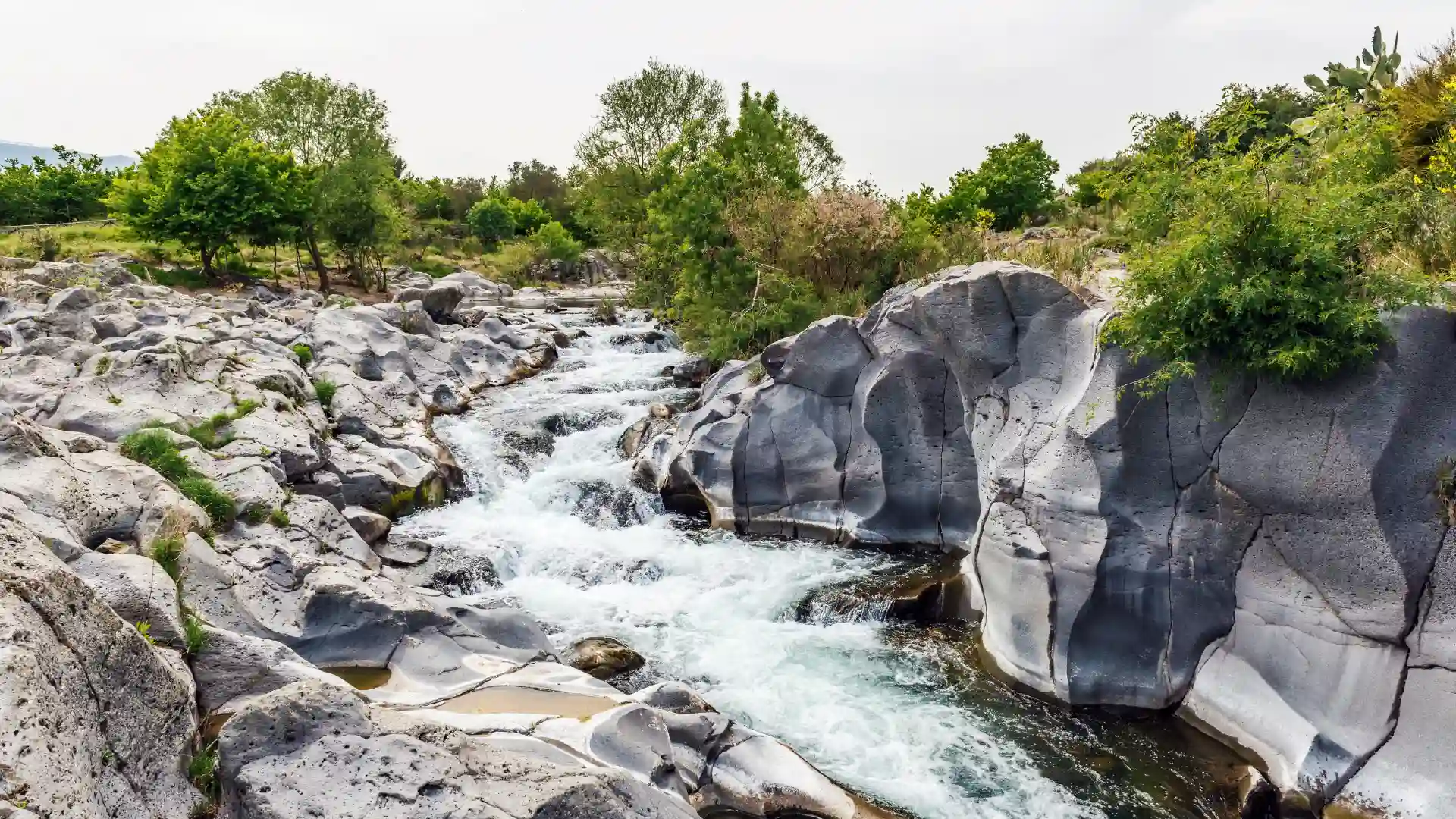
The Valley of Alcantara is perfect for those who love adventure and outdoor activities. Among the most appreciated experiences:
Ogni esperienza è pensata in ottica di turismo responsabile, valorizzando il territorio e rispettando l’ambiente.
Scoprire la Valle dell’Alcantara significa vivere una Sicilia autentica, fatta di paesaggi spettacolari, tradizioni millenarie e comunità accoglienti. Che tu cerchi avventura, relax o cultura, questa valle ti saprà sorprendere.
Come and discover the Alcantara Valley with Discovering Rural Sicily: your next trip to Sicily starts here.
In the geographical heart of Sicily, the Terre del Nisseno hold a heritage made of history, architecture, and authentic landscapes. A region little affected by mass tourism, but rich in cultural heritage, popular traditions, and ancient crafts.
Thanks to the Discovering Rural Sicily project, we take you on a journey to discover five must-see stops: medieval castles, baroque palaces, sulfur mines, and contemporary art centers will guide you through a journey into the truest Sicily.
In the historic center of Caltanissetta, the Palazzo Moncada is an unfinished baroque masterpiece that today hosts cultural events and exhibitions. A symbol of the historical richness of the city, it is located alongside other important landmarks such as the Castello di Pietrarossa, the Abbazia di Santo Spirito, and the Cattedrale di Santa Maria La Nova.
Orari: Lun–Dom (09:30 – 13:00, 17:00 – 20:00)
Accessibilità: Totale
Ingresso: Gratuito

A journey through Sicily’s mining memory. The Gabbara Mining Park in San Cataldo is a site of historical and environmental significance that tells the story of sulfur extraction, one of the most important economic activities in the region until the 20th century.
A perfect destination for lovers of industrial archaeology and nature hiking.
Opening hours: Tue–Sun (1 AM – 1 PM, 3 PM – 7 PM) – Closed on Mondays
Accessibility: Full
Admission: Free

Perched on a cliff, the Manfredonico Castle is one of the most fascinating in Sicily. Built in the 14th century, it overlooks the landscape of Mussomeli and offers breathtaking views. The surrounding village is a treasure trove of Baroque architecture, enriched with historic churches, traditional cheeses, and local sweets such as the ricotta-filled cassatella.
Hours: Tue–Sun (09 AM – 00:45 PM) – Closed on Monday
Accessibility: Fully accessible
Admission: €4.00
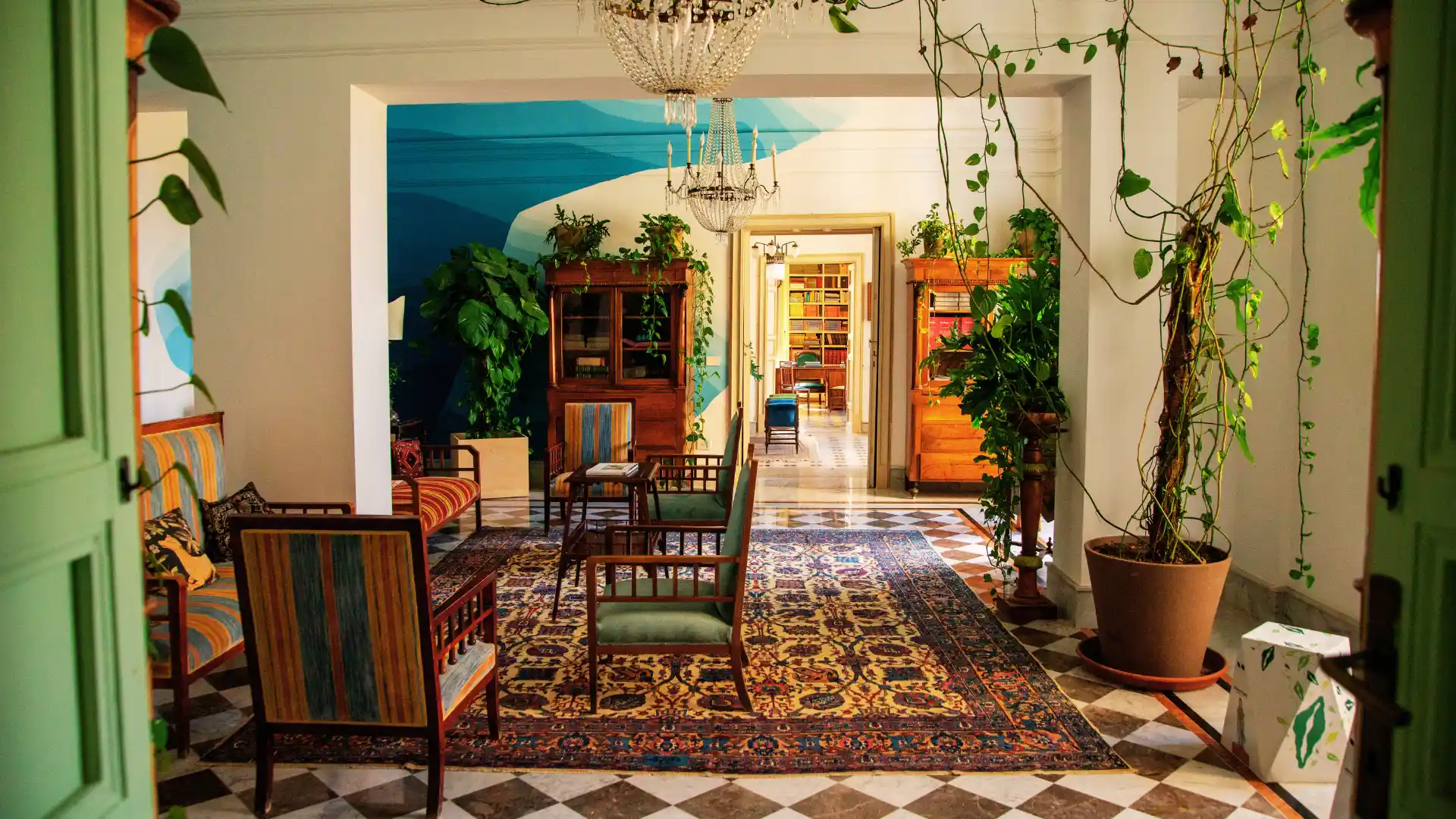
In the Baroque historic center of Mazzarino, Palazzo Tortorici is now home to Farm Cultural Park, a space dedicated to contemporary art and social regeneration.
Events, exhibitions, and creative activities make this place a true example of cultural innovation in the Sicilian context.
Hours: Tue–Sun (10 AM – 1 PM, 3 PM – 7 PM) – Closed on Monday
Accessibility: Fully accessible
Admission: Free
Between Riesi and Sommatino lies the Trabia Tallarita Mine, now converted into a museum. Once a hub of the sulfur industry, the mine employed thousands of workers, including young “carusi” who were forced to endure harsh underground labor. Today, the museum tells the story of mining in Sicily, the lives of the miners, and the economic and social transformation of the region.
Hours:
Mon–Tue–Thu (2:30 PM – 6:30 PM); Wed–Fri–Sun (9 AM – 1 PM)
Accessibility: Fully accessible
Admission: €6.00

The Terre del Nisseno represent a different Sicily, far from the more touristy routes, but extraordinarily rich in stories, landscapes, and traditions.
A journey that combines mining history, architecture, spirituality, and artistic innovation.
Discover the authentic face of central Sicily with Discovering Rural Sicily: explore, taste, and let yourself be surprised.
Gibellina, in the heart of the Belìce Valley, is much more than a tourist destination: it is an example of how art can be a tool for rebirth. Gibellina lies in the heart of the Belìce Valley, amidst the hills of western Sicily, and tells a story of destruction and creativity, becoming a true open-air museum.
Today, it is one of the most interesting destinations for those seeking cultural and sustainable tourism in Sicily, a place where art merges with memory, landscape, and everyday life.
In 1968, a violent earthquake razed the old Gibellina to the ground, leaving behind ruins and pain. But it was from these ruins that a visionary project was born: to rebuild the city through art. Thanks to Mayor Ludovico Corrao, Gibellina became a laboratory of avant-garde ideas, involving artists, architects, and intellectuals from Italy and abroad. Thus, Gibellina Nuova was born, a city symbolizing the artistic and urban experimentation of the 20th century. The most iconic work is Grande Cretto by Alberto Burri: a white cement flow that covers the ruins of the destroyed city, transforming them into a monument to memory and silence.
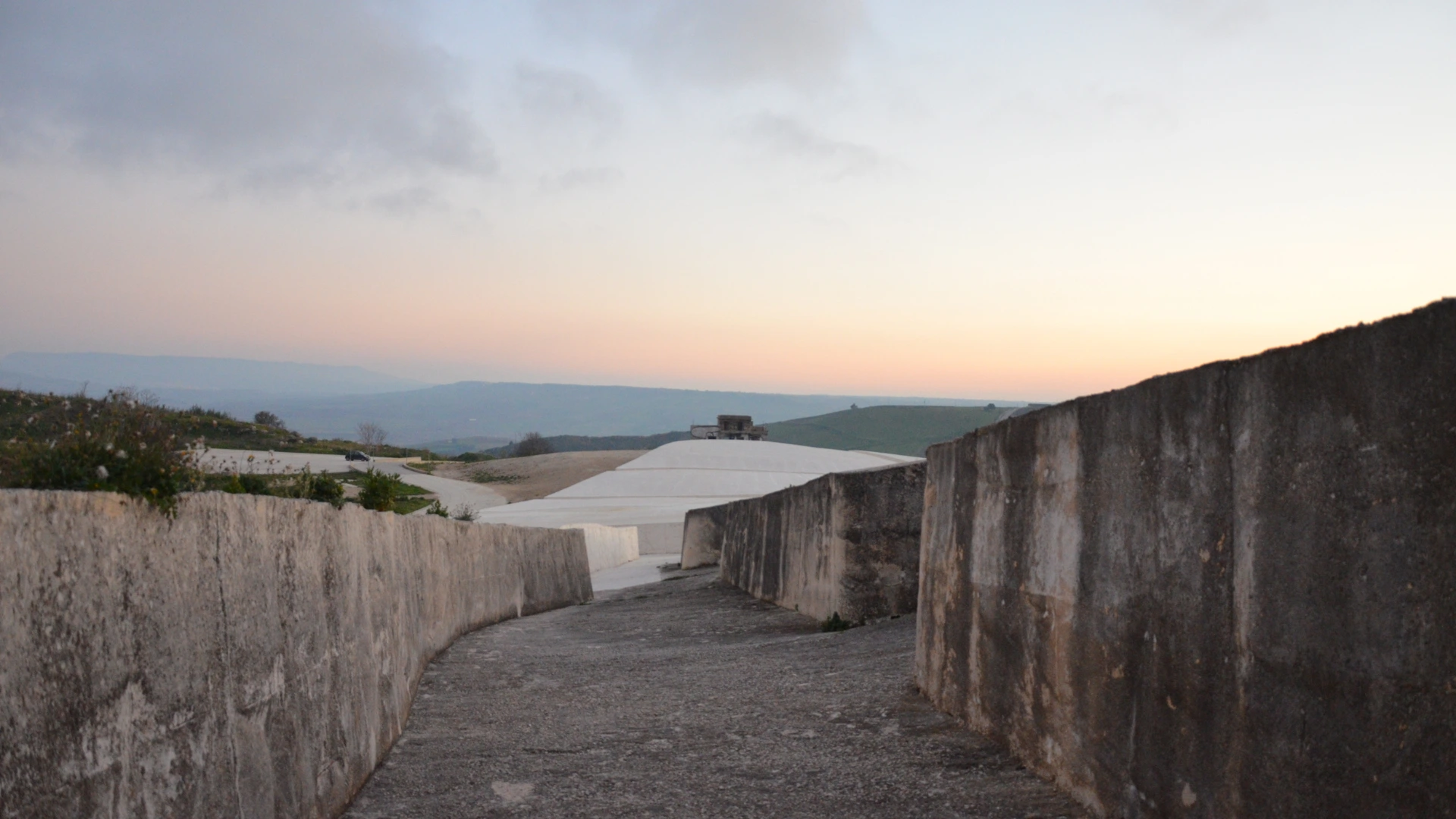
Visitare Gibellina è come camminare dentro un’opera d’arte. Il MAC – Museo d’Arte Contemporanea custodisce una vasta collezione di opere, fotografie e documenti legati alla ricostruzione della città ed è il punto di partenza ideale per comprendere la visione che ha animato la ricostruzione di Gibellina.
A dominare la città la Chiesa Madre, progettata da Ludovico Quaroni, con la sua imponente cupola, simbolo della fusione tra sacro e moderno. Il Sistema delle Piazze, ideato da Franco Purini e Laura Thermes, rappresenta il cuore urbano della nuova Gibellina, dove architettura e spazio pubblico si fondono.
Tra le grandi opere all’aperto:
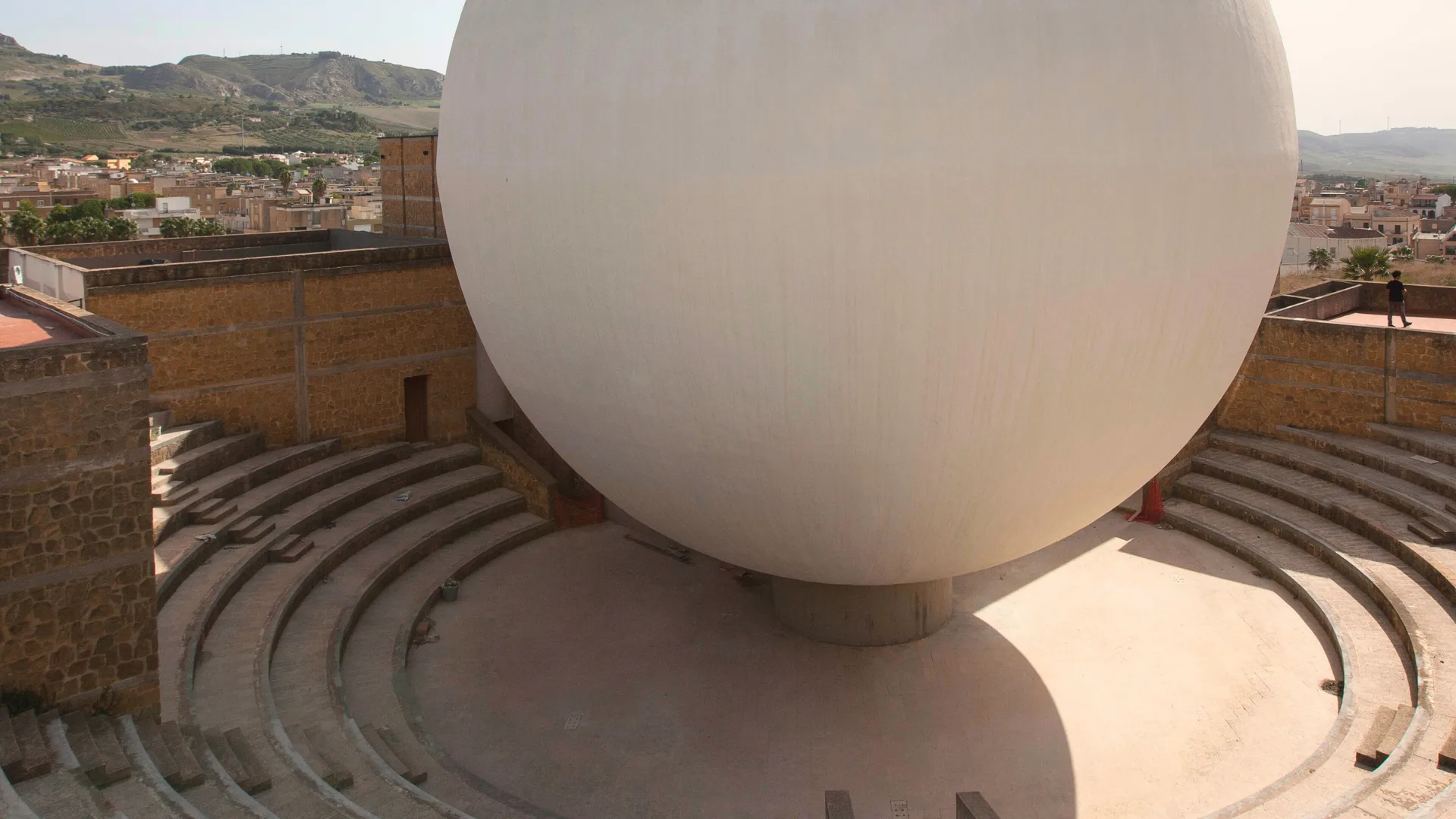
Oltre all’arte, Gibellina è immersa in un contesto rurale autentico: vigneti, colline e sentieri panoramici la rendono ideale per un turismo lento e consapevole. Le cantine locali offrono degustazioni di vini pregiati accompagnati dai piatti tipici della tradizione siciliana, un’occasione unica per scoprire i veri sapori della sicilia. La Strada Provinciale 105, che collega Trapani a Siracusa, attraversa paesaggi incantevoli perfetti per chi ama viaggiare in bici alla scoperta dei borghi più caratterisatici della Sicilia.
Gibellina is also an ideal destination for those who wish to rediscover their roots, immersing themselves in a land that preserves the soul and history of past generations.
Today, this city is a powerful symbol of resilience, culture, and innovation, a place where art is not just beauty, but also a tool for memory, identity, and local development.
Discovering Gibellina means living an immersive experience between contemporary art, tradition, and breathtaking rural landscapes. Visit our blog for more itineraries or book your experience with Discovering Rural Sicily.
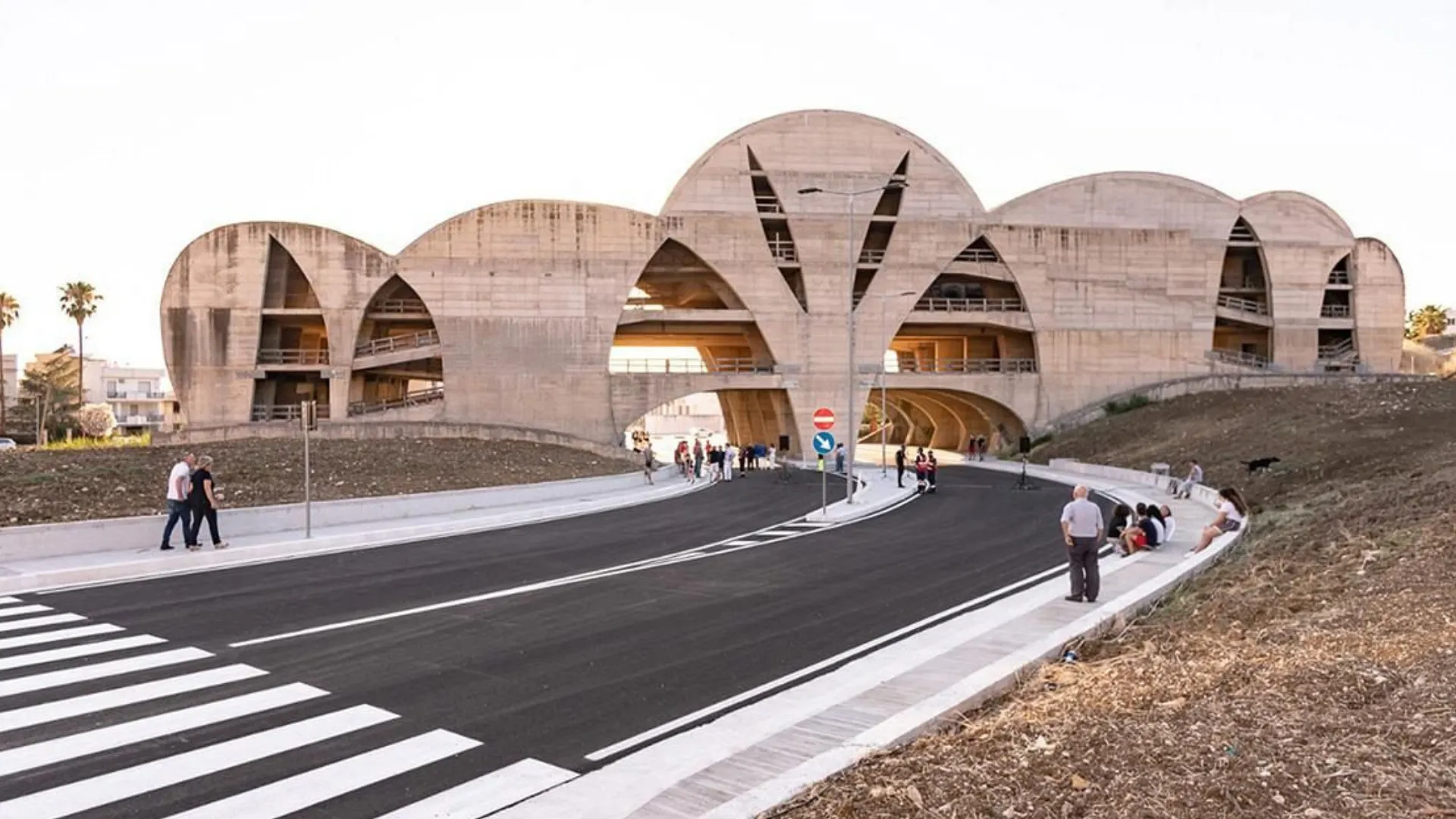
The Terre di Aci, on the eastern coast of Sicily, encompass a unique heritage of history, nature, and culture. Nestled between Mount Etna and the Ionian Sea, these lands offer a perfect mix of volcanic landscapes, Baroque architecture, and ancient traditions.
Thanks to the Discovering Rural Sicily project, we take you on a journey to discover 5 must-see stops for an authentic experience in the heart of rural Sicily.
Acireale is a Baroque gem known for its monumental basilicas and its charming historic center. Don’t miss:
Cathedral of the Duomo, dedicated to the Blessed Annunciation, famous for its Solar Meridian.
Basilica of San Pietro and Paolo, a sublime example of Sicilian Baroque.
Basilica of San Sebastiano, with its decorated façade and deep religious history.
Visiting hours: 9:00 AM - 1:00 PM (recommended to check official websites)
Admission: Free. Bell Tower of the Duomo: €2.50
 © Gal Terre di Aci
This reserve extends over a lava cliff overlooking the sea, with breathtaking natural views and panoramic trails. Not to be missed:
Perfect for those who love trekking and nature photography.
Visiting hours: Always open, recommended in daytime
Entrance: Free
© Gal Terre di Aci
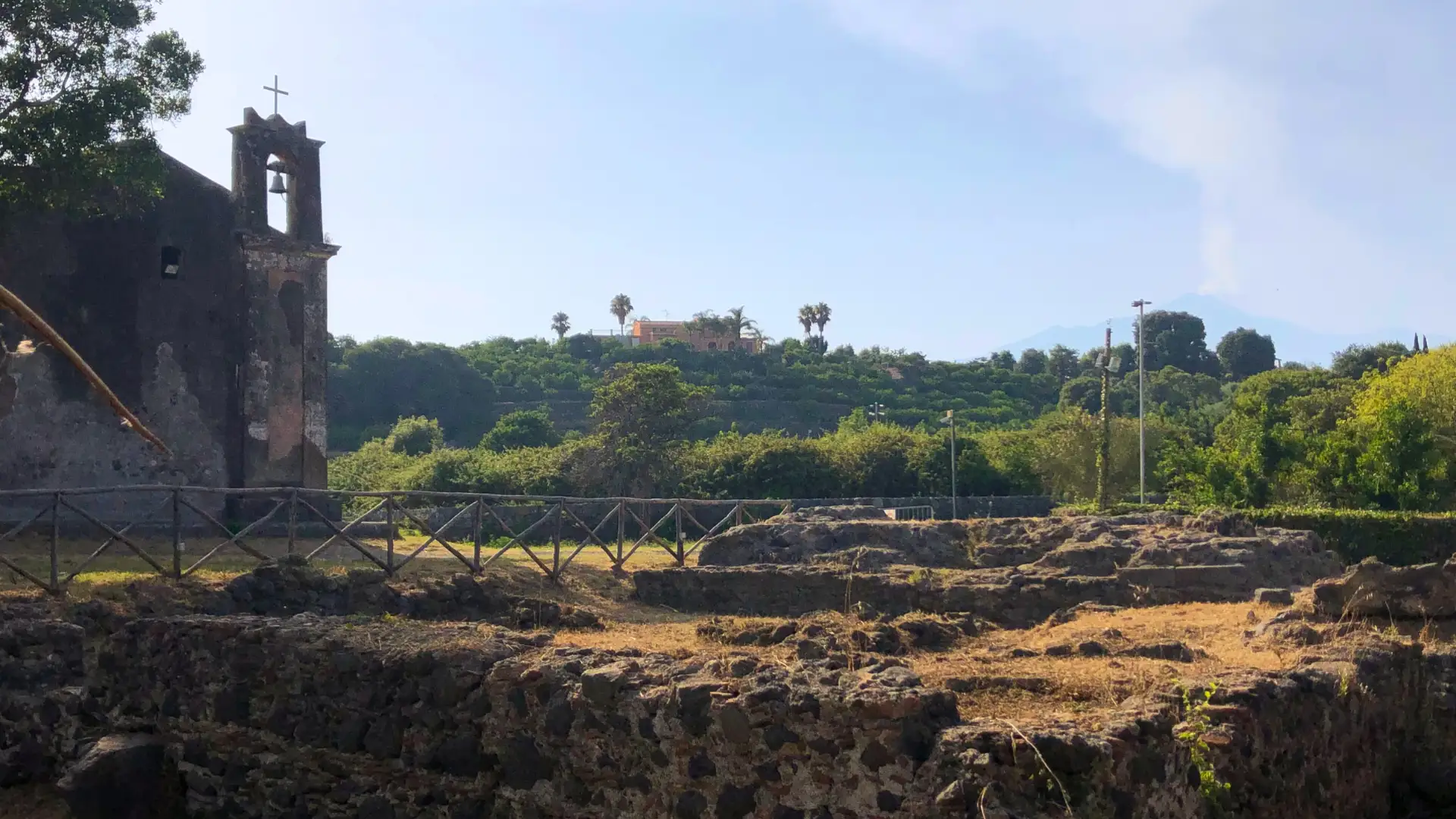
A spiritual and historical journey along the ancient Pompean consular road. Recommended stops:
Visiting Hours: 9 AM- 6 PM (variable)
Entrance: Free
 © Gal Terre di Aci
Founded in 1671, the Zelantea Library holds ancient books and unique museum collections. What to see:
Visiting hours: 9:00 AM – 1:00 PM (some afternoon openings)
Admission: Free
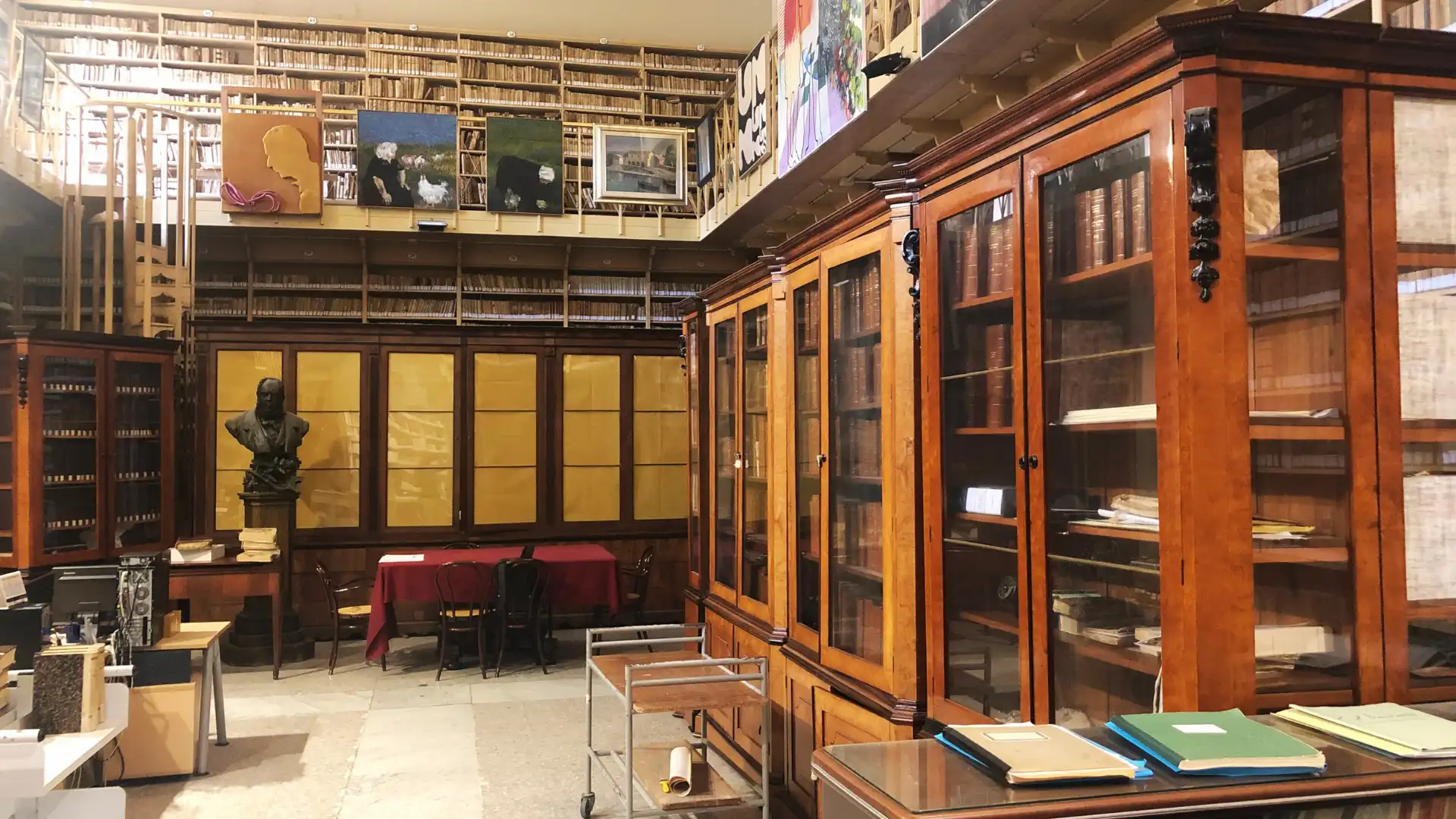
© Gal Terre di Aci
Symbol of Sicilian craftsmanship, the Sicilian cart tells stories and traditions passed down through generations. In the town's museum, you can admire a unique collection of carts painted by local masters.
Visiting hours: Mon–Fri 9 AM–00 PM and 4:30 PM–7:30 PM. Sat–Sun by reservation. Admission: Free
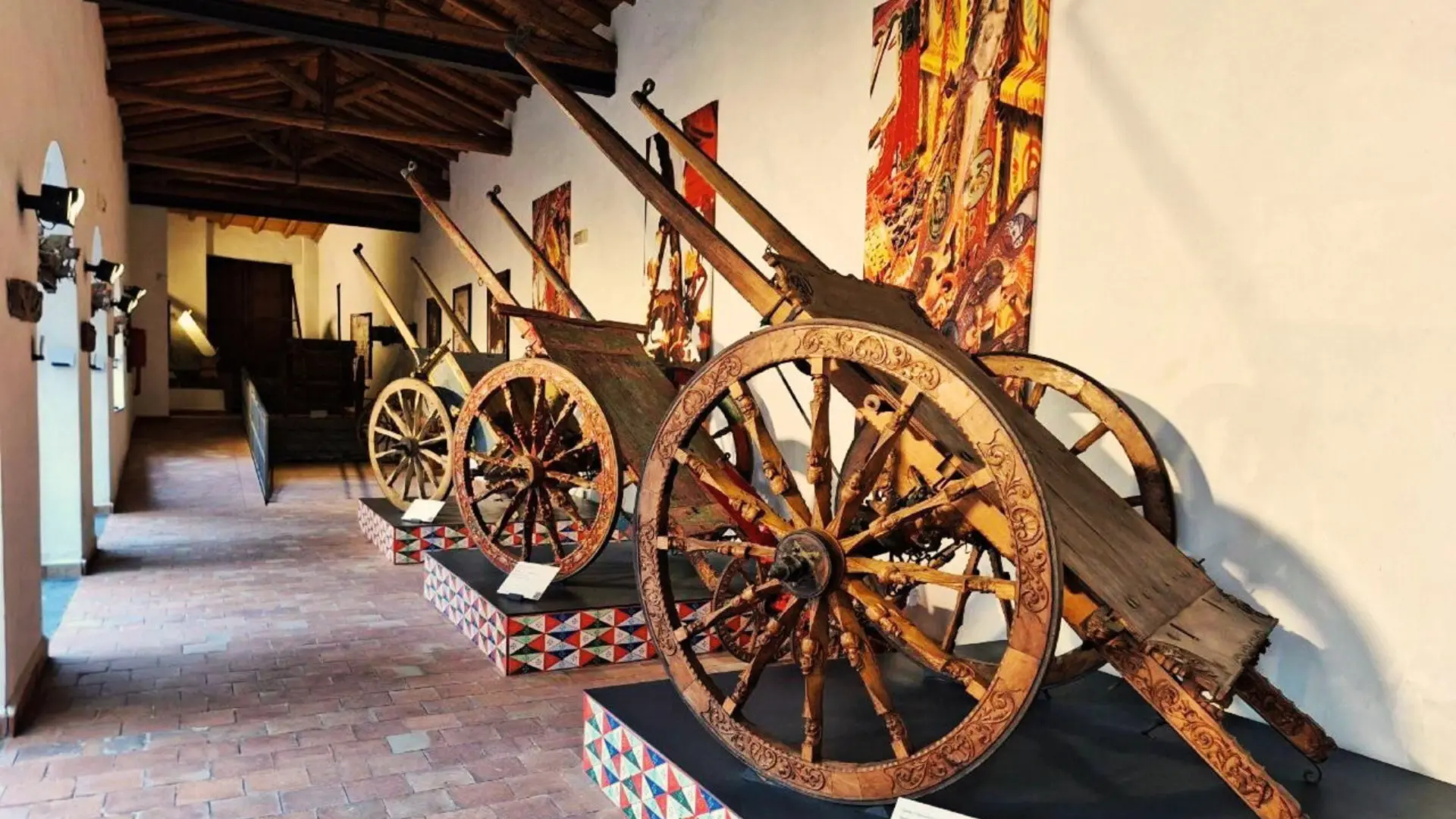
© Gal Terre di Aci
The Terre di Aci are much more than a tourist destination: they are a journey into the soul of authentic Sicily.
History, nature, and culture await you at every stop on this itinerary.
Want to discover more destinations like this? Explore the articles on our blog or book an authentic experience with Discovering Rural Sicily!

Subscribe to our newsletter to stay updated on all the latest experiences.