In the Baroque heart of Acireale, a must-see itinerary in the “city of 100 bell towers” takes us through the three basilicas, exploring the iconic sites of faith and the distinctive art of the Aci area.
The foundation of the Basilica Cathedral dedicated to Mary Most Holy of the Annunciation dates back to the early 15th century, but already in the previous century a small chapel dedicated to the Annunciation had been built nearby. At the beginning of the 16th century, just a few meters from the chapel, a small single-nave church with a bell tower was constructed, whose plan corresponds to the current central nave. After several expansions, which saw in 1651 the holy virgin and martyr Venera proclaimed patroness of the city of Acireale, and in 1683 the beginning of works for the construction within the basilica of a chapel intended to house the sacred relics and the precious statue of the Saint, on January 11, 1693, a terrible earthquake devastated southeastern Sicily, destroying much of its historical and artistic heritage, including a large part of the Mother Church, whose restorations were completed at the beginning of the 18th century. Following the establishment of the Diocese of Acireale, between 1887 and 1890, at the behest of the first bishop, Monsignor Gerlando Maria Genuardi, the main façade was completed with the construction of the northern bell tower, the rose window, and a connecting gallery composed of small columns and arches. Between 1905 and 1907, the painter Giuseppe Sciuti from Zafferana Etnea created the frescoes on the vault. The current façade is the result of interventions that took place over the centuries, featuring bell towers, Corinthian capitals, polychrome glazed bricks, a white stone portal consisting of four Corinthian columns, and, of course, the indispensable lava stone.
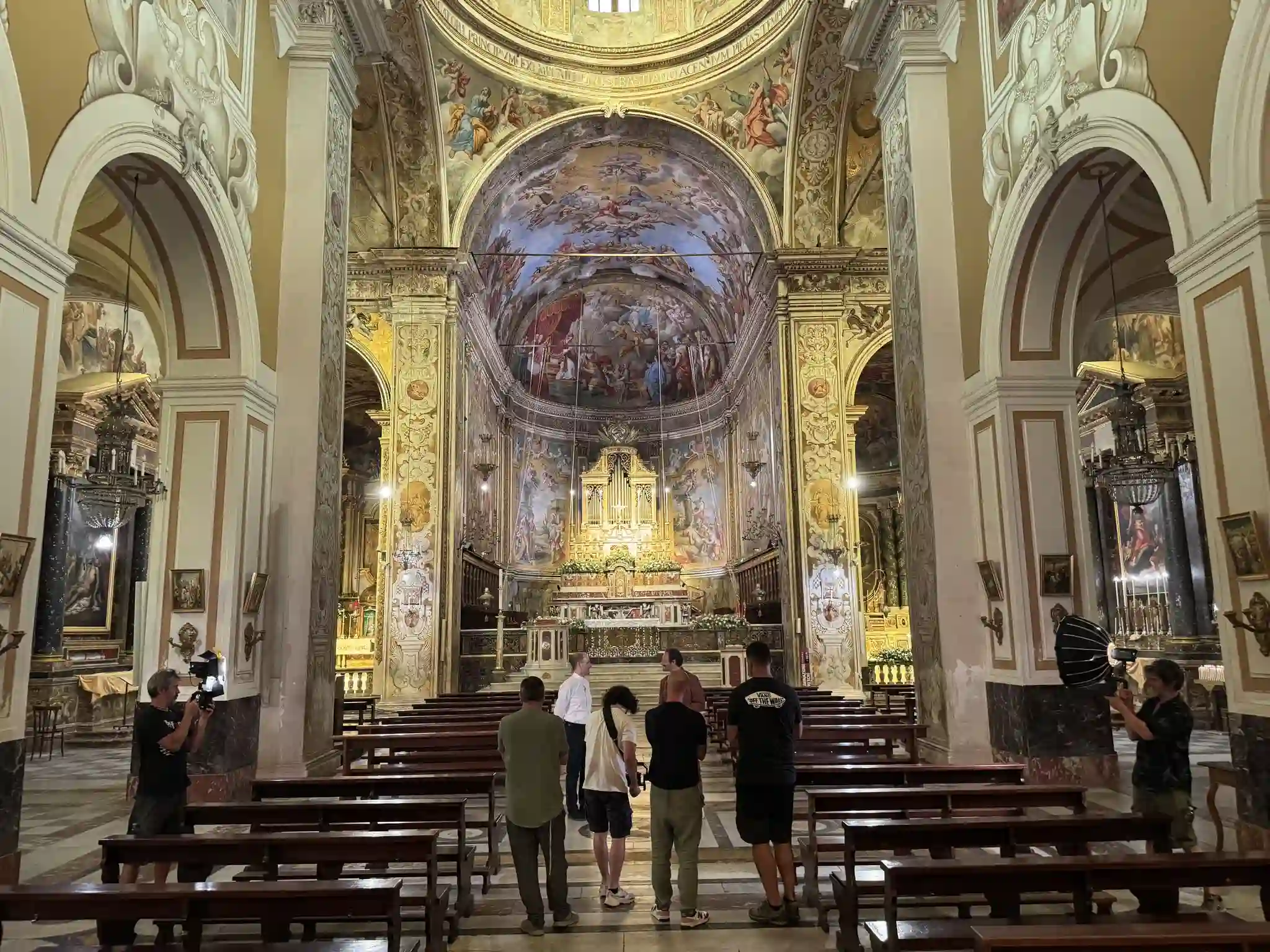
Crossing Piazza Duomo upon exit, the Basilica dedicated to Saints Peter and Paul rises, connected to an ancient confraternity that, to practice devotion in honor of the two Princes of the Apostles, used to gather in a small church located next to the then Mother Church of Acireale. The construction of the church dates back to the 16th century, but the violence of the 1693 earthquake destroyed the dome and caused serious damage to the entire structure. Starting in 1705, the church governors commissioned Pietro Paolo Vasta to design the new façade, which began in 1740. The bell tower, still admirable today, is decorated with floral motifs and masks placed at the end of each level. The main portal is topped by a broken pediment supported by two smaller columns, also in Corinthian style. The second level is enriched by six composite-style columns framing the central window, whose stained glass displays the basilica's emblem. Following are two circular plaques and the statues of Saint Peter on the left and Saint Paul on the right. The second level is closed by a triangular pediment of clear classical influence.
Continuing past the City Palace southward with just a few steps, the majestic Basilica dedicated to the veneration of the city’s co-patron, Saint Sebastian rises. It developed between the late 16th and early 17th centuries and was invoked as protector against the 1577 plague, when a terrible epidemic struck the Aci territory and the statue of the saint was placed on the altar as an object of supplication by the faithful. The city remained immune to the contagion, and the devotees, confident in the Saint’s intercession, increased to the point that they could no longer be accommodated in the small church. The rectors of the confraternity then decided to build a monumental three-nave basilica. The approximately 60,000 victims of the mentioned Val di Noto earthquake, including 739 in the city of Aci, saw much of the building collapse, which, as an inscription on the right side of the façade recalls, was rebuilt between 1695 and 1699. The façade was completed in 1715, and in 1732 Pietro Paolo Vasta painted the frescoes of the choir and presbytery, while between 1899 and 1901 Francesco Patanè executed the frescoes on the two sides of the transept using encaustic technique. The basilica’s façade is a perfect example of Sicilian Baroque: designed by the Acireale-born Angelo Bellofiore, it is adorned with columns decorated with acanthus scrolls and anthropomorphic figures. Its view abounds with statues of saints and cherubs holding garlands of flowers and fruits, representing a true hymn to life. Not surprisingly, UNESCO has declared the basilica a “monument conveying a culture of peace.”

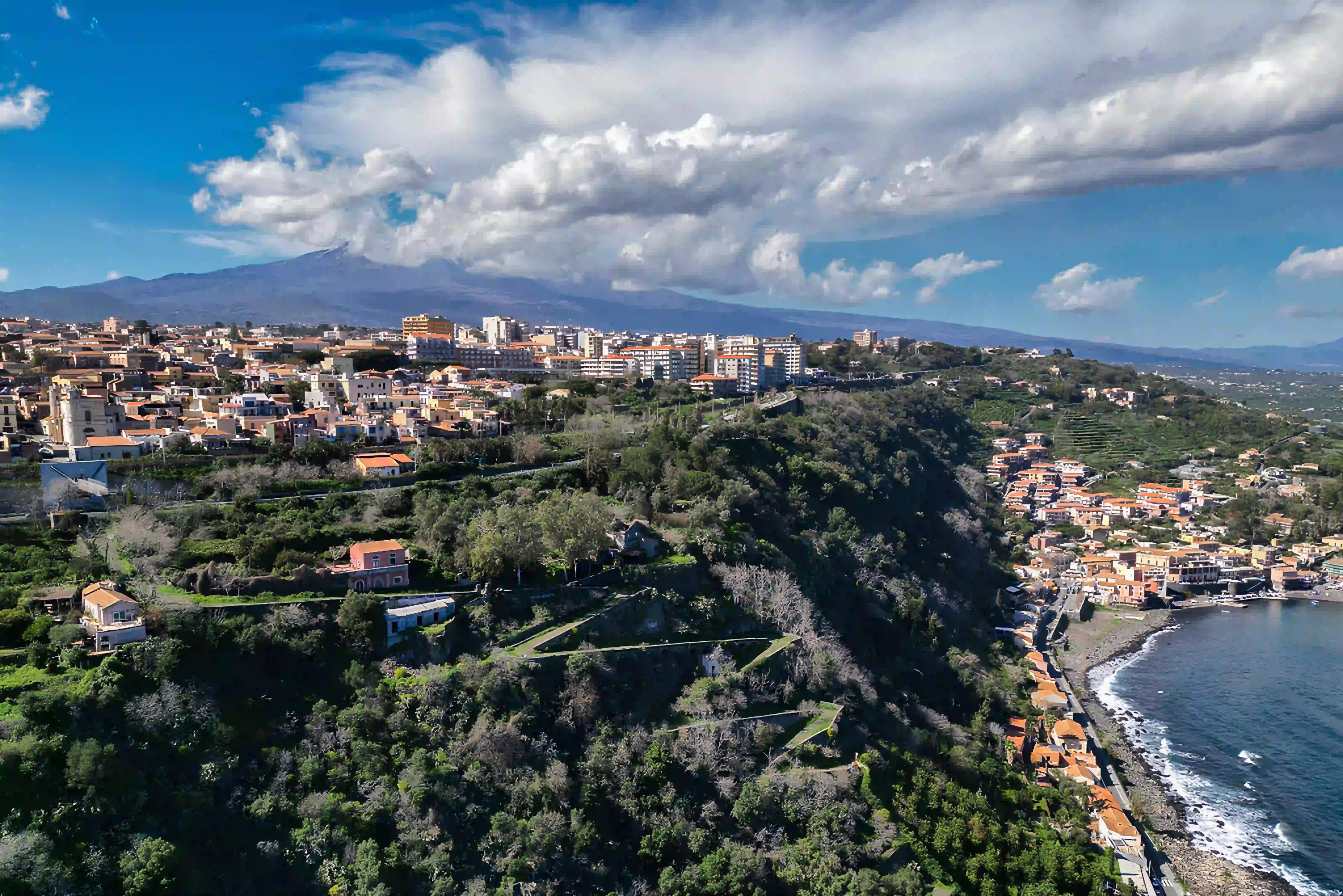
Visitare le Aci significa immergersi in un angolo di Sicilia incantevole in grado di concentrare una ricchezza di attrazioni e peculiarità così vicine da avere ben pochi eguali nel mondo per unicità. Incastonate tra il blu del mar Jonio e l’imponenza dell’Etna con le sue piste, i suoi rifugi e i suoi scorci mozzafiato, le terre di Aci rappresentano un inimitabile mix di natura, cultura e tradizione.
You can be swept away by the joy and colors of the most beautiful Carnival in Sicily, set in the open-air museum that is the historic center of Acireale—the city of a hundred bell towers, also renowned for its refined Baroque style and majestic basilicas. At the same time, you can embrace the contemplative silence of the Hermitage of Sant’Anna in Aci Catena, the Sanctuary of Our Lady of Valverde, or the evocative 18th-century life-size Nativity scene set within one of Aci’s lava caves.
You can embrace the sea along the Acireale coastline, with its diving spots, fishermen and their boat tours, as well as its watchtowers and natural pools, for a summer that here lasts at least five months each year. You can relax in farmhouses and elegant villas in the Valverde area or ride along the cycling paths of Aci Bonaccorsi and Aci Sant’Antonio—the town of artists and an unmissable stop for its Museum of the Sicilian Cart. You can experience intense religious and folkloric traditions, wandering through Baroque alleys or retracing ancient paths such as the famous Chiazzette in the Timpa nature reserve, the watermill route of Aci Catena, or its Thermal Baths of Santa Venera al Pozzo.
By staying in boutique hotels or delightful farmhouses, it is easy to enjoy the warm hospitality of Sicily, where every stay holds unique and memorable experiences. The Lands of Aci are not just a tourist destination, but an experience to live—through excursions, relaxation, or immersion in the local culture—where every corner tells a story waiting to be discovered.
In the meantime, we recommend contacting the I.A.T. Tourist Information and Welcome Office, located at Via Vittorio Emanuele II No. 133, Acireale (CT), by phone at 0952282031 or via email at iat.acireale@gmail.com
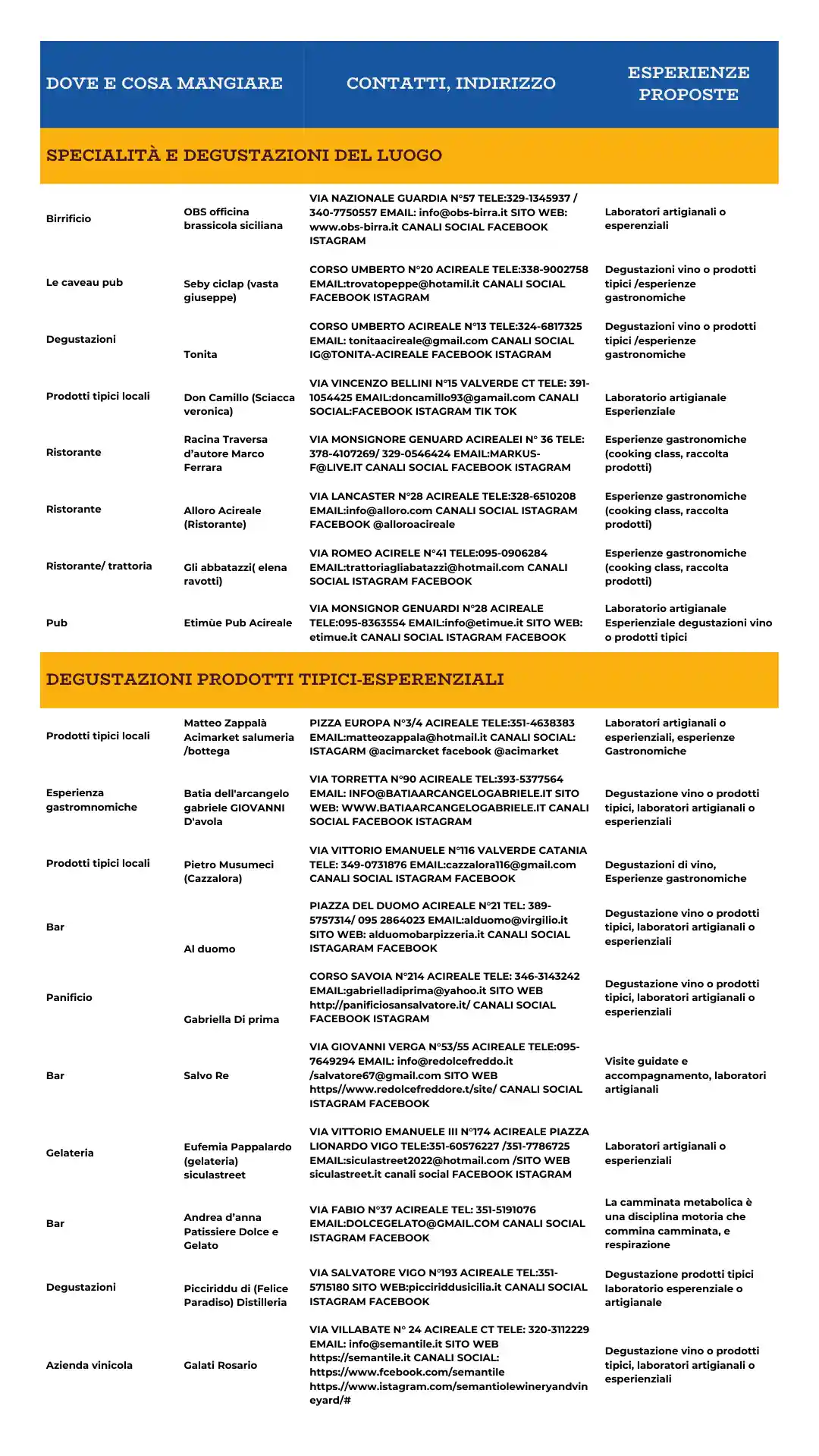
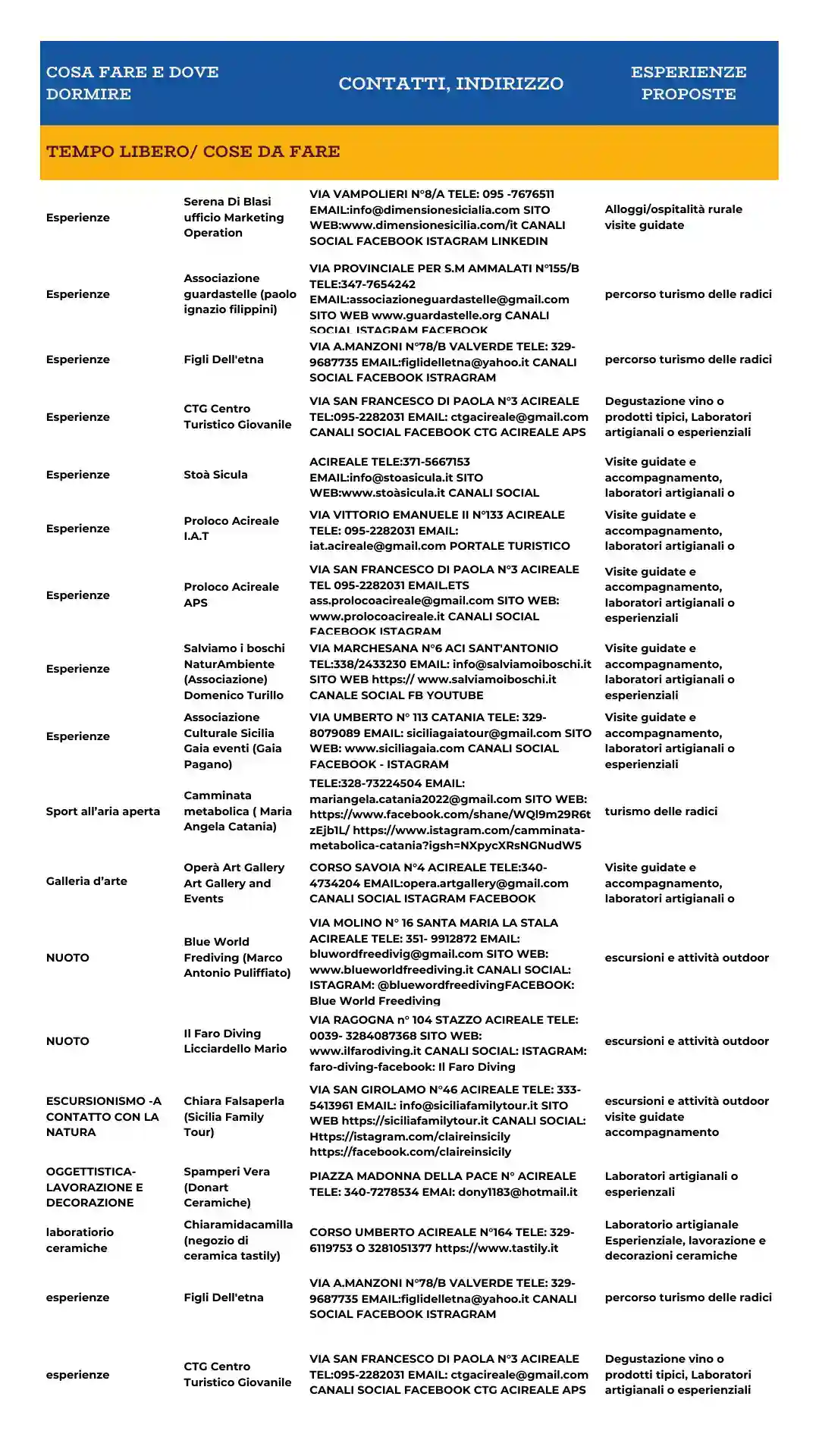
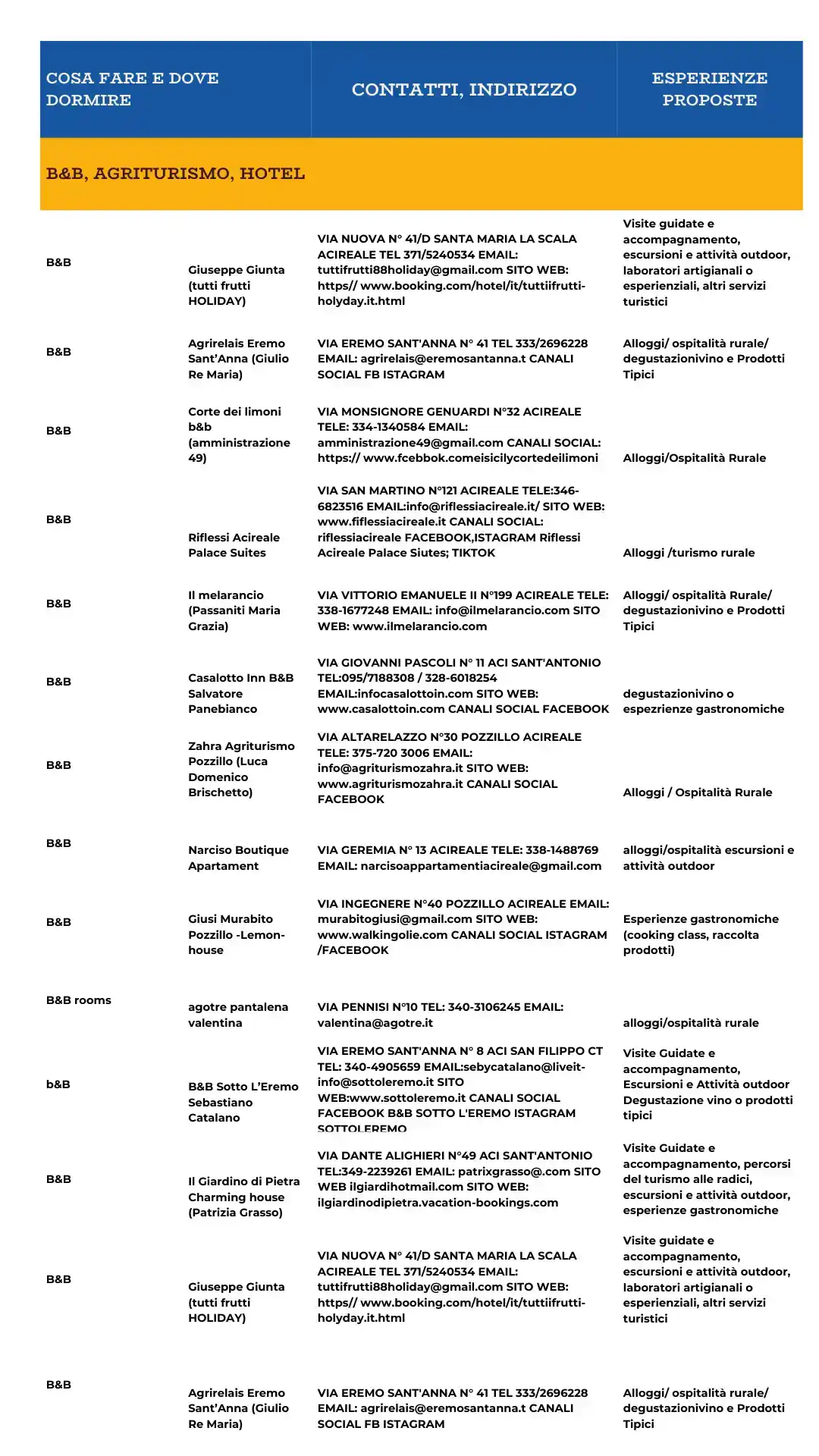
Here is a selection of recommendations from local operators who have made their contacts available to travelers thanks to GAL Terre di Aci:
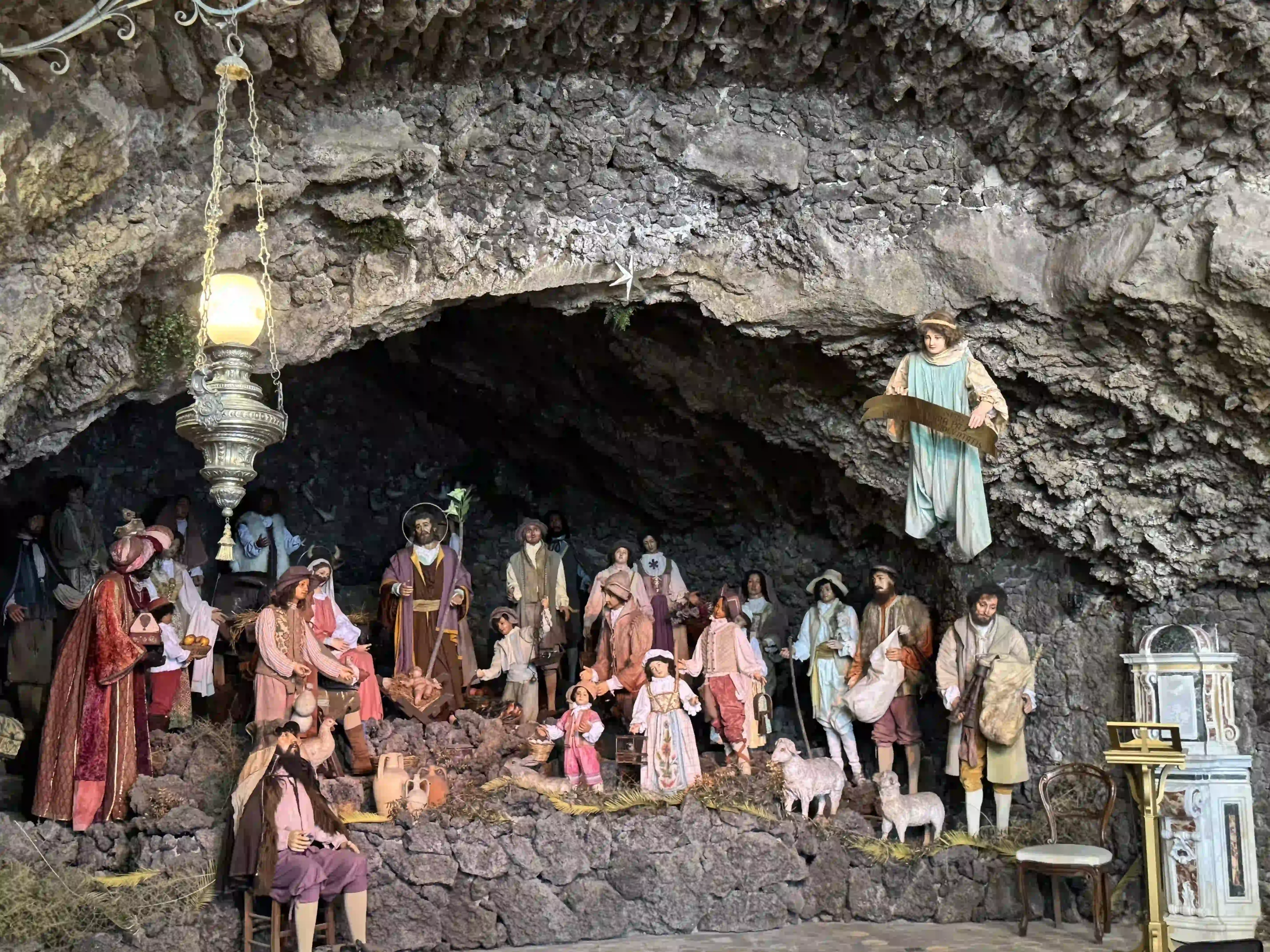
Nel cuore barocco di Acireale, tra la pietra nera che racconta storie e il profumo dell’attesa natalizia, un capolavoro senza tempo...
There is a place in Acireale where the black stone and the light speak to each other in silence, and art is not displayed, but preserved by the earth itself. It is the natural lava-flow cave, formed centuries ago at the foot of Mount Etna, which today houses a rare and precious treasure: the 18th-century Nativity scene of Acireale. Protected within the Church of Santa Maria della Neve, between volcanic shadows and sacred stillness, it takes shape like a dream suspended between art and devotion. What makes it unique is not only the natural environment that hosts it, but also its very composition.
The statues, at life size with wax faces, are dressed in traditional peasant attire, crafted with artisanal care and moving sensitivity: shepherds, vendors, artisans, and children, as if frozen in a suspended moment in time. The rocky setting and the living lava material enveloping the scene create an unrepeatable atmosphere: a place of the soul, where the sacred and the popular coexist among scenes of daily life, in a harmonious balance between realism and spirituality, where every detail enhances an intense experience that is not only visual but emotional. The 18th-century Nativity scene, a cultural and spiritual heritage of the city, is open daily during the Christmas season, but guided tours can also be booked throughout the year.
Paola Riccioli
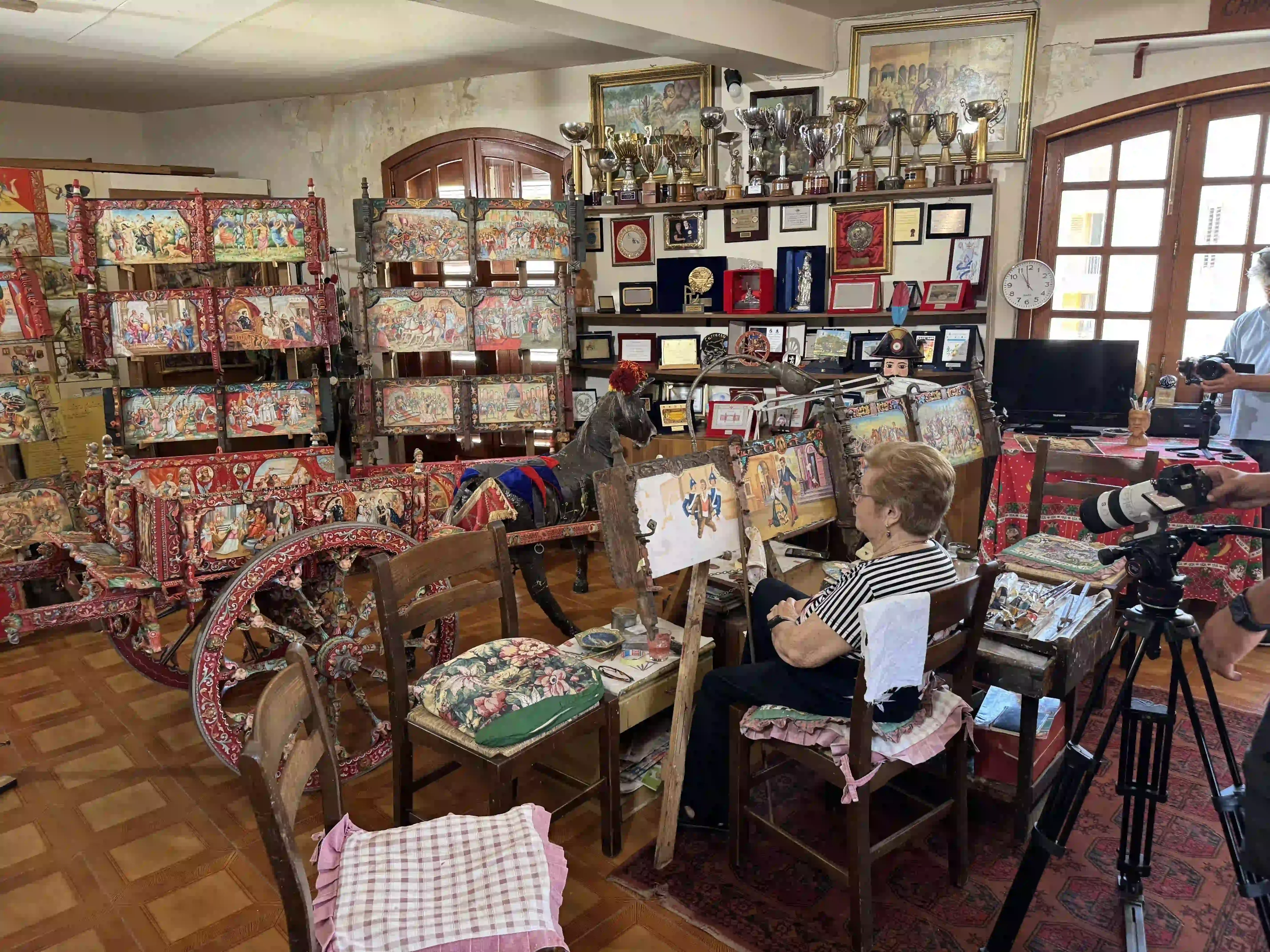
Nel cuore del territorio etneo, tra l’Etna e il mare, sorge Aci Sant’Antonio, la “Città del carretto siciliano”. La leggenda vuole che, come le altri Aci che sorgono nel verde più lussureggiante della Sicilia, tragga le sue origini dalla mitica Xiphonia, e il suo nome sia collegato a quello del pastore Aci citato dai classici. Al di là della leggenda, le notizie storiche risalgono al 1169, quando il primo insediamento della zona di origine greca (“Jachium”) venne distrutto da un’eruzione: gli abitanti dei luoghi devastati ritirandosi in parte in una contrada ricca di vegetazione diedero vita al borgo del Casalotto.
Quasi cinquecento anni dopo, in seguito a una sempre più forte necessità d’autonomia, il borgo ottenne dal Vicerè di Palermo la scissione da Aquilia (oggi Acireale) che crescendo aveva inglobato diversi centri, che nel tempo riuscirono ad autodeterminarsi. Nacque quindi Aci Sant’Antonio, che crebbe sempre più, tanto da meritare l’appellativo “totius Acis mater et caput”. Nel 1826, poi, un Regio Decreto la separò da Aci San Filippo e Aci Catena, conferendo alla prima l’investitura di capo del mandamento. Il XVIII secolo rappresentò un periodo fiorente, soprattutto nell’ambito del commercio, con il prospero sviluppo dei carrettieri che fece nascere l’arte del carretto, dalla costruzione alla decorazione, portata nei decenni al massimo livello dal maestro di fama internazionale Domenico Di Mauro, morto a 103 anni nel 2016. Il carretto, divenuto quasi una tela per artisti il cui nome ha valicato mare, Alpi e continenti, ha oggi un museo dedicato, che oltre a diversi esemplari di grande pregio e valore conserva anche una piccola bottega nella quale operano alcuni giovani e già affermati maestri. La connotazione definitiva del Comune, infine, risale al 1951, anno del distacco del territorio di Valverde.
Today, the historic center radiates from one of the most important palaces, which has also served as a film set: Palazzo Riggio-Carcaci, from which a street, Via Vittorio Emanuele, begins and, if traveled in its entirety, would lead all the way to Mount Etna. Ideally, however, the street, passing through an intersection known as Quattru Cantuneri (with buildings featuring a typical Sicilian urban motif, with symmetrical windows, corbels, and balconies), a former cloistered convent from 1812, and a marvelous example of Baroque architecture such as Palazzo Puglisi (with a main entrance whose stone bears the year 1799), culminates with the façade of the Church of San Michele, which on its right faces the Church of San Biagio (with an irregular façade that makes its structure captivating) and on the left Piazza Maggiore and the third and most important of the nearby central places of worship, the imposing Mother Church with its façade (designed by architect Battaglia) divided into two levels with semi-columns connected by pediments.
The church is dedicated to the patron saint, Anthony the Abbot, celebrated on January 17 and honored every other summer with a grand event capable of attracting thousands of devotees: in August, with its ancient statue, the four candelore—enormous works of art typical of the Catania area—are carried through the streets by several bearers. One of these, considered the most imposing in the territory, is called ’U Tronu, and its bearers are admired as much as the structure itself.
Finally, numerous historic and religious buildings are scattered throughout the territory, which, with its fifteen square kilometers, almost reaches the Ionian coast and enjoys the mountain air.
Today, the historic center radiates from one of the most important palaces, which has also served as a film set: Palazzo Riggio-Carcaci, from which a street, Via Vittorio Emanuele, begins and, if traveled in its entirety, would lead all the way to Mount Etna. Ideally, however, the street, passing through an intersection known as Quattru Cantuneri (with buildings featuring a typical Sicilian urban motif, with symmetrical windows, corbels, and balconies), a former cloistered convent from 1812, and a marvelous example of Baroque architecture such as Palazzo Puglisi (with a main entrance whose stone bears the year 1799), culminates with the façade of the Church of San Michele, which on its right faces the Church of San Biagio (with an irregular façade that makes its structure captivating) and on the left Piazza Maggiore and the third and most important of the nearby central places of worship, the imposing Mother Church with its façade (designed by architect Battaglia) divided into two levels with semi-columns connected by pediments.
The church is dedicated to the patron saint, Anthony the Abbot, celebrated on January 17 and honored every other summer with a grand event capable of attracting thousands of devotees: in August, with its ancient statue, the four candelore—enormous works of art typical of the Catania area—are carried through the streets by several bearers. One of these, considered the most imposing in the territory, is called ’U Tronu, and its bearers are admired as much as the structure itself.
Finally, numerous historic and religious buildings are scattered throughout the territory, which, with its fifteen square kilometers, almost reaches the Ionian coast and enjoys the mountain air.
The feast of the patron saint of Aci Sant’Antonio, Saint Anthony the Abbot, is a deeply felt celebration that takes place every year in January, on the solemnity of the hermit of the Thebaid, and every two years in August, on the third Sunday of the month, when the event known by the locals as “’A festa ranni” is celebrated.
It is a patronal festival with very ancient origins, actively involving the entire local community. During the celebrations, managed every two years by a different organizing committee, the statue of the Saint is carried in procession through the streets of the town, accompanied by songs and prayers, and includes, among other things, the blessing of animals, over which Saint Anthony is traditionally considered protector.
The central festive day begins with the ringing of the bells and cannon fire. This is followed by Eucharistic celebrations and the blessing of bread, with the climax being the unveiling of the statue of the Saint, which is displayed for the veneration of the faithful.
The evening procession then sees the statue of Saint Anthony the Abbot carried on an artistic “vara,” a decorated platform with Corinthian columns, arches, and silver lamps. Along with the “vara,” the four cerei—the “candelore,” enormous wooden works of ancient historical memory—parade through the streets of the town center, representing four civic categories: the Peasants’ Cereo, also known as “’U Tronu” for its size, making it the largest in the territory, dating back to 1896; the Master Artisans and Workers’ Cereo, dating back to 1911, also called “’A Signurina”; the Cart Drivers/Merchants’ Cereo, also from 1911, which preserves elements recalling the Sicilian cart; and finally, the Farmers’ (or Employees’) Cereo, built in 1947, also called “La Bomboniera” for its refined style. It is customary that, during a grand fireworks display, the cerei perform dances, with the bearers almost competing to execute the best movements for an extended duration, despite the weight of the works they carry. At the end of the fireworks, each cereo is positioned in front of the saint’s platform as a sign of devotion. A truly spectacular event, capable of attracting a large number of visitors.
È online la graduatoria delle selezioni per “Belìce a 1 Euro”!
Un’esperienza autentica nel cuore della Sicilia, al costo simbolico di un euro: questo è lo spirito di “Leisure-learning weekend a 1 Euro nella Valle del Belìce”, l’iniziativa promossa dal GAL Valle del Belìce con operatori turistici e culturali locali.
Dal 22 al 24 agosto 2025, 20 partecipanti vivranno tre giorni tra laboratori pratici guidati da artigiani, cuochi, contadini e produttori, pernottamenti, pasti, escursioni e visite culturali, scoprendo in prima persona i saperi e i sapori della Valle del Belìce.
La graduatoria ufficiale è ora disponibile: scopri se sei tra i selezionati e preparati a un’esperienza indimenticabile tra paesaggi rurali, tradizioni e comunità accoglienti.
Un’esperienza autentica nel cuore della Sicilia, al costo simbolico di un euro. È questo lo spirito di "Leisure-learning weekend a 1 Euro nella Valle del Belìce", l’iniziativa promossa dal GAL Valle del Belìce in collaborazione con operatori turistici e culturali del territorio.
From August 22 to 24, 2025, 20 adult participants will have the opportunity to take part in a leisure-learning experience — a format that combines travel and education. Participants will engage in hands-on workshops totaling 12 hours, led by local experts — artisans, chefs, farmers, and producers — to explore the traditions and skills of the Belìce Valley in a tangible way: from ceramics to bread making, from coral craftsmanship to Sicilian pastry.
The experience also includes accommodation, meals, excursions, and cultural visits, offering total immersion in the life, landscapes, and communities of the Belìce Valley, located between the provinces of Trapani and Agrigento.
To apply, candidates must fill out the online form between July 28 and August 5, attaching a short motivational video. Selected participants will be asked to document the experience through social media content and take part in a collective video story.
Una proposta originale e inclusiva per raccontare la Sicilia dei borghi, dei mestieri e dell’accoglienza.
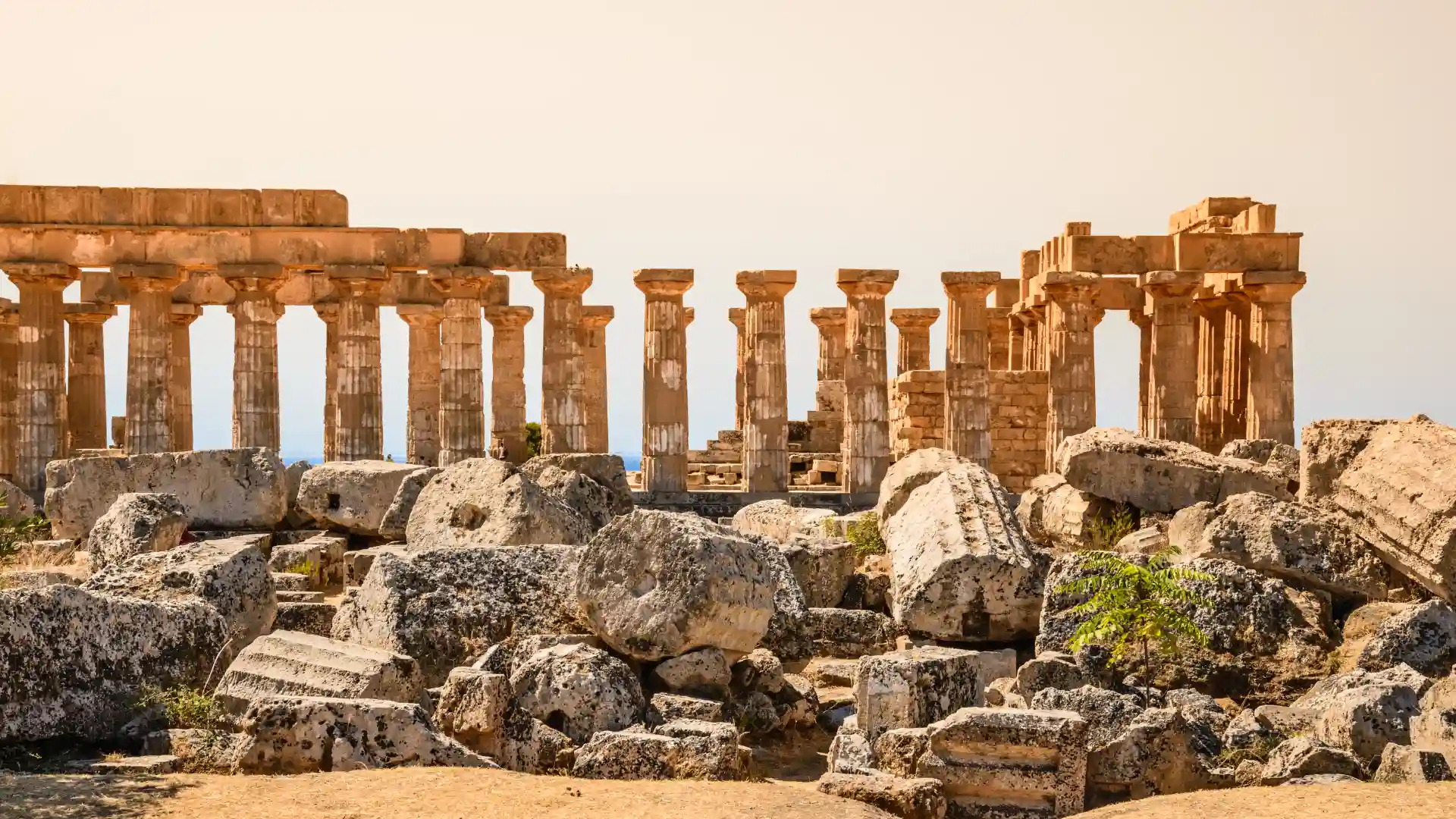
Nel cuore della Sicilia sud-occidentale, il Parco Archeologico di Selinunte è uno dei siti più estesi d’Europa. Qui, il silenzio della campagna siciliana si intreccia con le imponenti rovine dei templi dorici, offrendo un’esperienza unica che unisce cultura, natura e mobilità sostenibile.
Grazie al progetto Archeobike, oggi è possibile scoprire Selinunte in bicicletta. Un percorso cicloturistico pensato per chi ama esplorare lentamente, respirando il paesaggio e godendo della bellezza di un patrimonio archeologico straordinario. Il tour prevede tratti pedalati e camminati, accompagnati da audioguide multilingua e segnaletica dedicata.
Il tragitto in bici parte dalla collina orientale, dove si erge il maestoso Tempio E, passando per i resti dei Templi F e G. Tappa imperdibile è la mostra Ars Aedificandi, con fedeli riproduzioni delle tecniche costruttive usate dagli antichi greci. Il percorso prosegue verso Baglio Florio e culmina nella suggestiva Acropoli, affacciata sul mare e immersa nella vegetazione mediterranea.
Il Parco di Selinunte è stato il primo in Sicilia a promuovere il cicloturismo nei siti archeologici. Un modo autentico e sostenibile per valorizzare il territorio, rispettando l’ambiente e incentivando forme di turismo lento e consapevole. Gli itinerari si snodano tra strade sterrate, uliveti e paesaggi rurali, offrendo scorci ideali per fotografia, birdwatching e meditazione.
Durante l’anno, il Parco organizza giornate a ingresso gratuito, visite guidate speciali e attività stagionali dedicate a famiglie, scolaresche e viaggiatori slow. Occasioni perfette per unire la scoperta del patrimonio storico con la bellezza naturale della costa selinuntina.
Su Rural Sicily trovi idee, itinerari e consigli per esplorare la Sicilia rurale in modo autentico e sostenibile. Il tour in bici nel Parco di Selinunte è solo una delle tante esperienze che ti aspettano: dalle vie del vino alle strade del grano, dalle riserve naturali ai borghi marinari.
Che tu sia un cicloturista esperto o un viaggiatore curioso, Selinunte è una meta ideale per vivere la Sicilia con lentezza. Prenota ora il tuo tour Archeobike e lasciati guidare tra rovine antiche e profumi di macchia mediterranea.

Subscribe to our newsletter to stay updated on all the latest experiences.